Motion Simulation Platform: How Payload Verification and Servo Control Decisions Affect Real Motion Accuracy
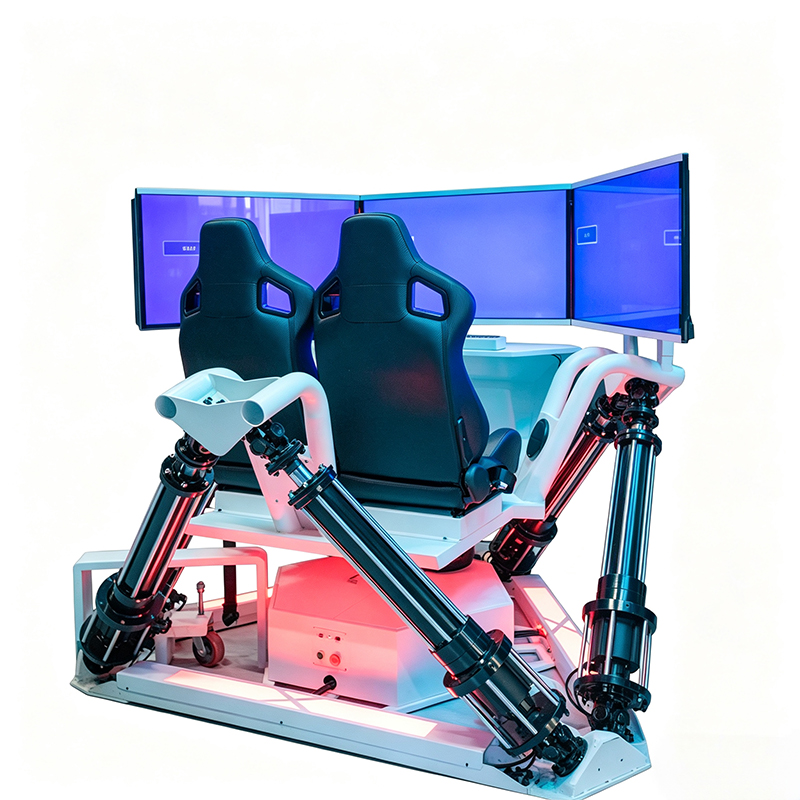
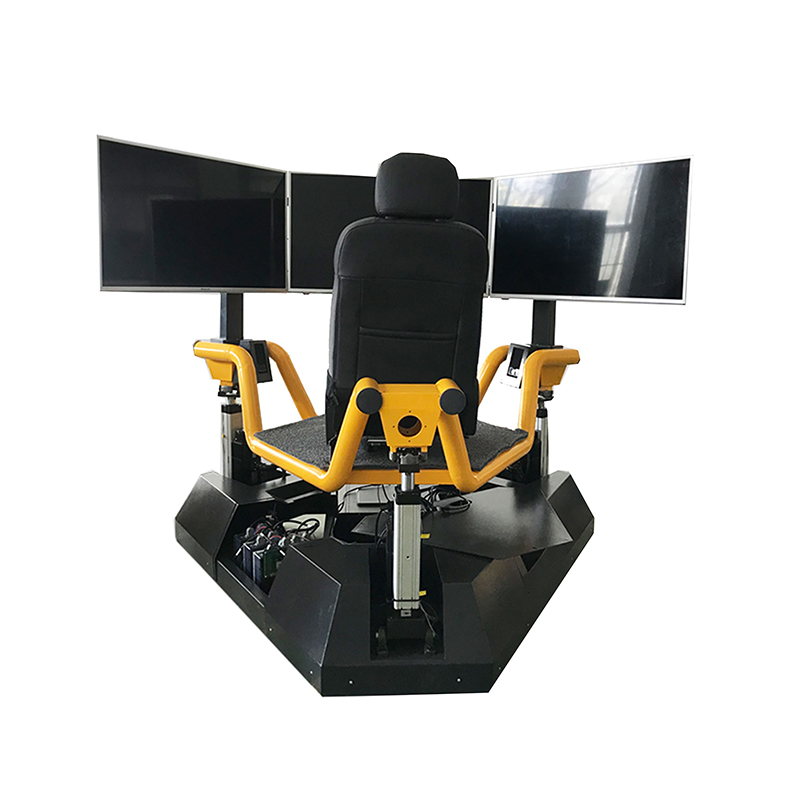
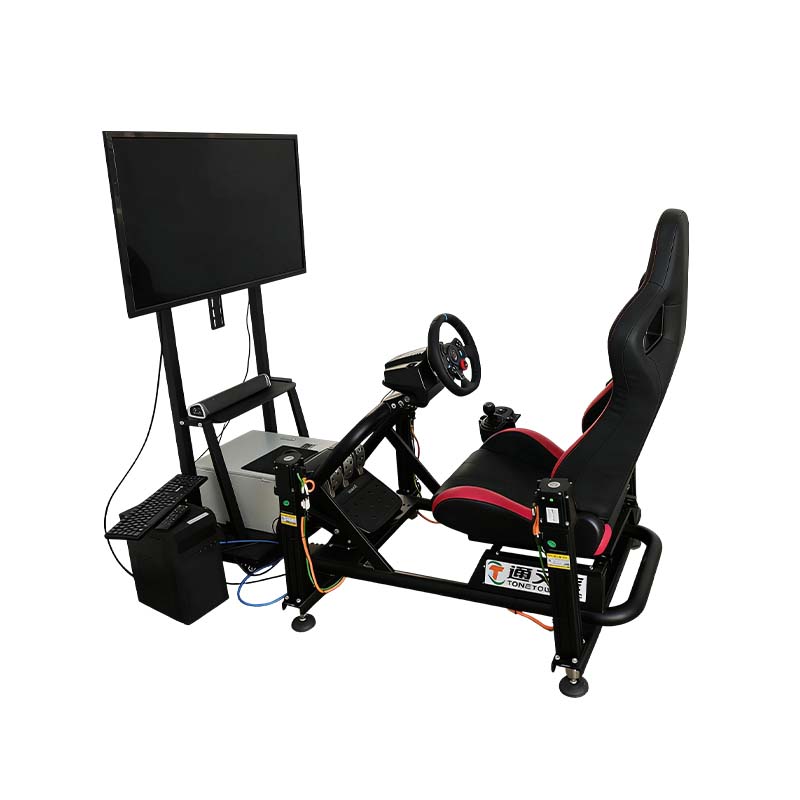
A motion testing project for a vehicle simulation system encountered an issue during final commissioning. The platform had passed the factory load check, and the total payload was within the rated specification. However, after the customer installed the complete cabin structure, display frame, control equipment, and operator seat, the motion response changed during rapid pitch and roll movements. The actuator system could still move the load, but the settling time increased and small deviations appeared between the commanded trajectory and the actual platform movement. The cause was not a failure of the motion simulation platform itself. The original verification condition simply did not represent the actual payload distribution, center of gravity position, and operating cycle of the final application.
Rated Load Verification Requires More Than Checking Total Weight
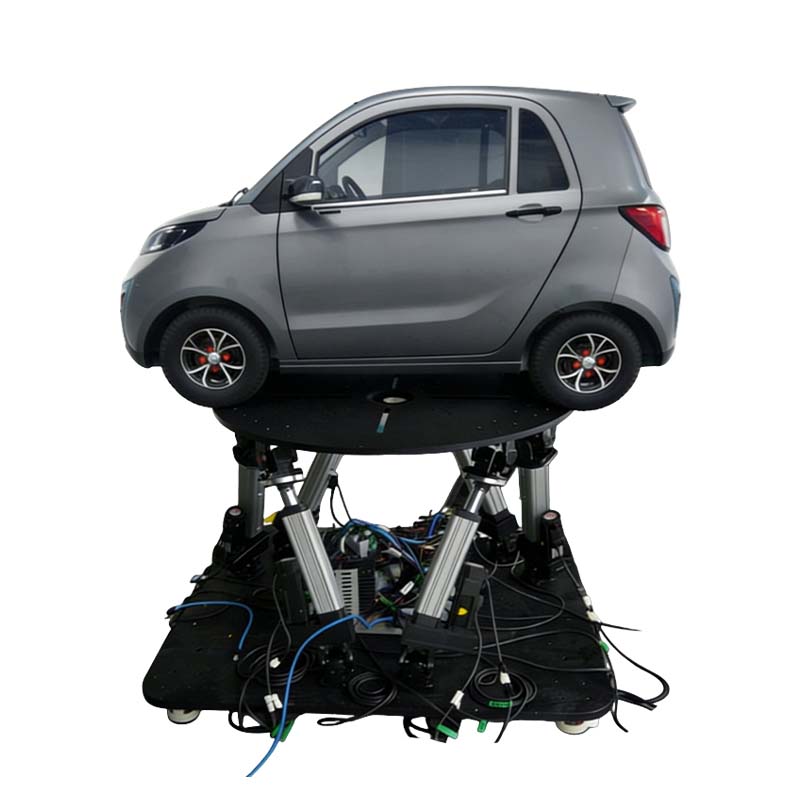
For a motion simulation platform, rated load is often determined under a defined test condition, including payload position, movement range, acceleration profile, and duty cycle. The total mass value provides a basic reference, but it does not fully describe how the platform will behave after installation. A 300 kg payload positioned close to the rotation center creates a different mechanical demand compared with the same weight mounted on an extended frame several hundred millimeters away from the center.
The offset distance creates additional moment loading on actuators, joints, linear guides, and the mounting structure. During dynamic movement, the servo system must not only generate motion force but also compensate for the changing load caused by inertia. For this reason, suppliers usually need application information such as payload dimensions, mounting position, motion angle, acceleration requirements, and operating frequency before confirming the suitable platform configuration.
Engineering Data That Should Be Reviewed Before Platform Acceptance
During a customized motion simulation platform project, acceptance testing normally focuses on the relationship between mechanical loading and actual motion behavior. Data such as actuator current variation, position tracking error, vibration level, and temperature rise can reveal whether the selected configuration has enough operating margin.
| Application Condition |
Key Data Checked During Validation |
Possible Adjustment Direction |
| Centered payload with stable movement |
Basic load capacity, positioning repeatability, actuator synchronization |
Confirm standard mechanical configuration and control parameters |
| Offset payload with large moment load |
Actuator current change, joint stress, platform deformation |
Modify actuator capacity or optimize payload mounting layout |
| Long-duration operation |
Temperature rise, cycle stability, control response consistency |
Review duty cycle and thermal management requirements |
Why Payload Distribution Influences Motion Performance
The mechanical structure of a motion simulation platform works as a coordinated system. The actuator output, platform stiffness, connection joints, and control algorithm all interact when the payload position changes. An uneven load distribution can increase the force demand on individual actuators, especially during combined movements such as pitch with heave or roll with yaw.
In practical applications, the center of gravity is often affected by equipment added after the main platform is delivered. A seat assembly, sensor bracket, simulation display support, or test fixture may move the mass center away from the original calculation point. These changes can influence acceleration capability, motion smoothness, and the time required for the platform to stabilize after a command change.
Servo Control Is Closely Related to Motion Tracking Accuracy
The mechanical load is only one part of motion performance. Servo control determines how accurately the platform follows the planned trajectory. A motion simulation platform relies on continuous feedback from encoders, servo drives, and control software to reduce the difference between commanded position and actual position.
During low-speed movement, small position errors may not create obvious effects. However, high-frequency simulation tasks require faster correction because the platform must respond to continuous changes in acceleration and direction. Control parameters such as proportional gain, feedforward compensation, response bandwidth, and filtering settings influence how the system handles these dynamic conditions.
Encoder Feedback and Control Cycle Need to Match the Application
Improving motion accuracy is not only related to selecting a higher-resolution feedback device. The complete servo control chain must work together. An encoder with fine measurement capability cannot provide its full value if the controller updates too slowly, while a fast control loop may amplify mechanical vibration when the feedback signal does not provide enough resolution.
| Control Element |
Engineering Concern |
Effect on Motion Simulation Platform Operation |
| Encoder feedback accuracy |
Ability to detect small position changes |
Affects repeatability and trajectory tracking |
| Servo loop response |
Correction speed during movement changes |
Influences dynamic response and settling behavior |
| Mechanical stiffness |
Resistance to deformation and vibration |
Impacts stability under changing loads |
Manufacturing Capability Behind Platform Reliability
The performance of a motion simulation platform is also determined during manufacturing. Machining accuracy of structural parts, assembly alignment between motion axes, preload control of transmission components, and inspection procedures all affect the final system behavior. Small deviations in mounting surfaces or connection points can accumulate into noticeable errors when multiple axes operate together.
Suzhou Tongyousheng Electronic Technology Co., Ltd. integrates precision machining, automation equipment development, and motion system assembly experience when developing customized motion platforms. During configuration and production, factors such as actuator matching, structural strength, and customer-specific motion requirements are considered together instead of treating mechanical design and control adjustment as separate stages.
Supplier Evaluation Should Include Testing Process and Integration Experience
When selecting a motion simulation platform supplier, customers often focus on payload rating, travel range, and motion speed. These specifications are important, but they do not fully describe how the platform will perform after being integrated into a real testing environment. A supplier's ability to analyze payload conditions, adjust motion parameters, and complete system validation directly affects project implementation.
For customized applications, Suzhou Tongyousheng Electronic Technology Co., Ltd. considers factors including platform structure, electric actuator selection, servo control requirements, and operating conditions during the design process. This approach helps match the platform configuration with the actual working environment, especially when the equipment needs to operate under changing loads or complex motion profiles.
Acceptance Testing Based on Actual Application Conditions
Before a motion simulation platform enters service, acceptance testing is often arranged around the customer's operating scenario rather than only a factory reference condition. Payload position, motion sequence, acceleration requirement, and continuous working time all influence the final evaluation criteria. Reviewing these details during the project stage allows mechanical design, servo tuning, and application requirements to remain aligned throughout installation and commissioning.



 English
 Français
 русский
 عربى
عربى Español
 Deutsch