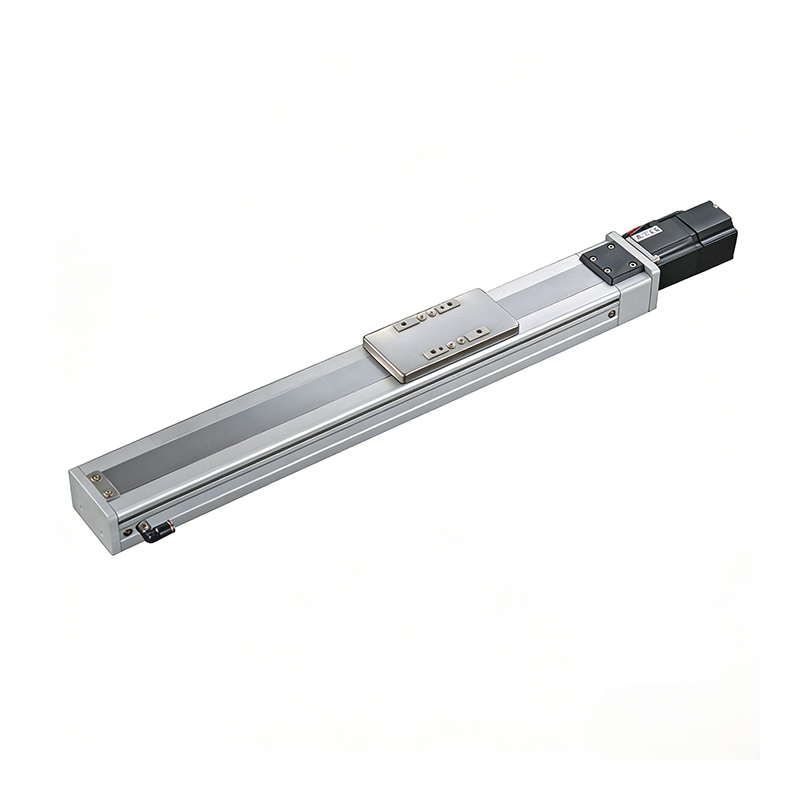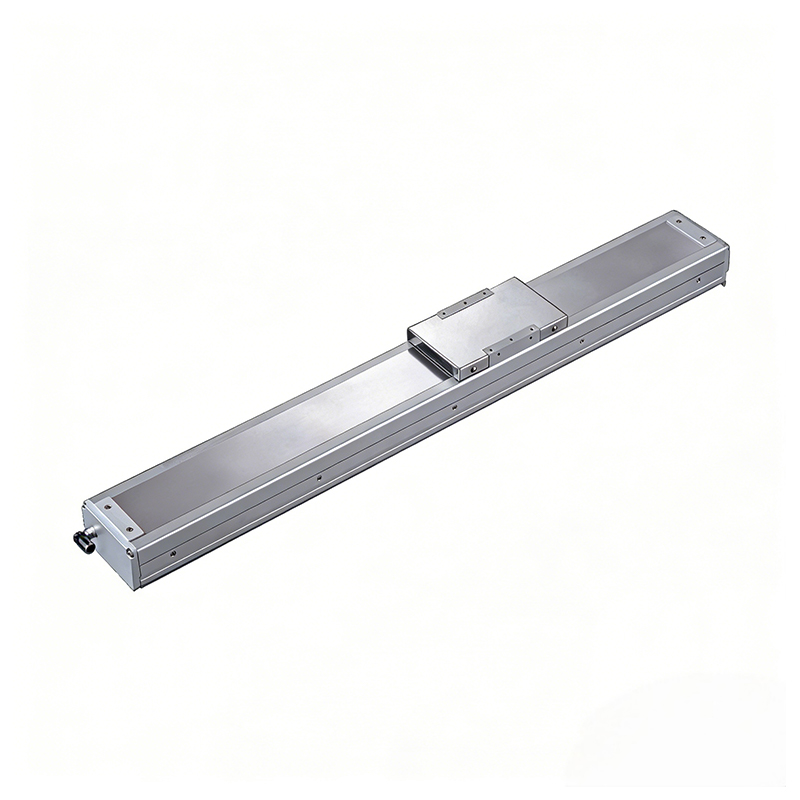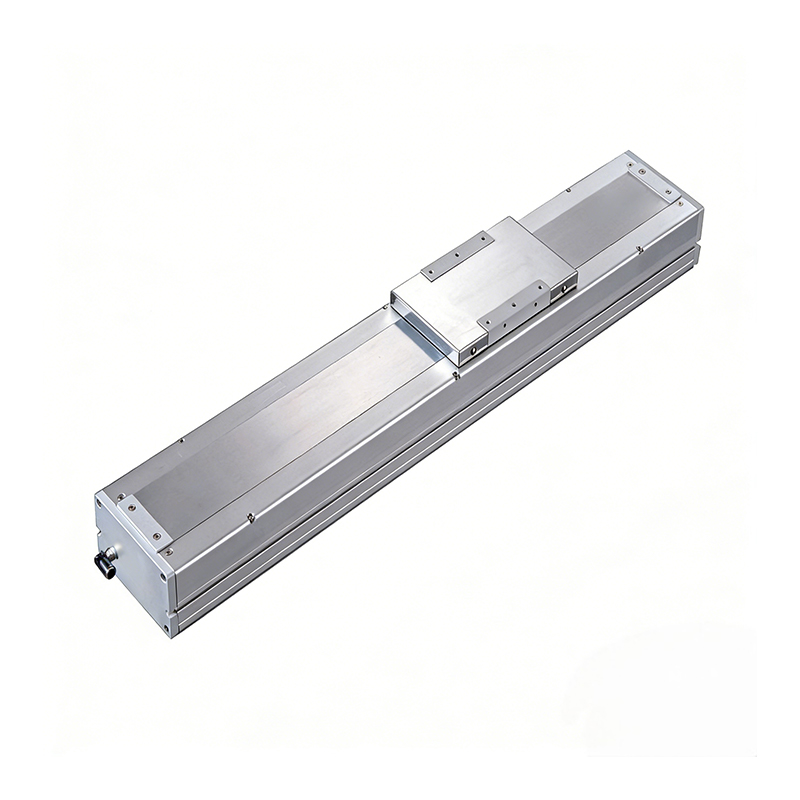
Fully Enclosed Ball Screw Driven Linear Module Custom

Home / Products / Linear Motion Module / Fully Enclosed Ball Screw Driven Linear Module

About Us
Suzhou Tongyousheng Electronic Technology Co., Ltd.

Suzhou Tongyousheng Electronic Technology Co., Ltd. is a leading high-tech enterprise integrating R&D, production and sales, specializing in the design, manufacturing and distribution of premium automation equipment and components—including electric cylinders, linear slide modules, linear motor modules, servo presses, robotic 7th axes, and six-degree-of-freedom platforms.

As China Fully Enclosed Ball Screw Driven Linear Module Manufacturers and Fully Enclosed Ball Screw Driven Linear Module Suppliers, we recognize technological innovation as the cornerstone of sustainable growth. Our R&D team, composed of industry veterans with deep technical expertise and extensive hands-on experience, serves as the engine driving our continuous progress. By pushing technical boundaries, accelerating product iteration, and pioneering industry advancements, we have secured a portfolio of core patents that underscore our leadership in automation and deliver a decisive competitive edge. We further reinforce our capabilities with state-of-the-art R&D tools, professional design software, and high-precision CNC machining centers, ensuring every development effort is backed by world-class resources.

Through years of relentless exploration and execution, Tongyousheng has established itself as an industry benchmark, renowned for its robust R&D, cutting-edge products, and uncompromising quality. We are dedicated to advancing the Industry 4.0 revolution, collaborating with state-owned enterprises, defense technology institutions, and top-tier universities to build a deeply integrated ecosystem of industry, academia, and research—pushing the frontiers of intelligent manufacturing together. At the heart of our mission is a commitment to delivering automation solutions that are intuitive to operate, highly efficient, ultra-reliable, and cost-effective. Every product we create is a reflection of our technical ingenuity and a direct response to our customers' evolving needs.
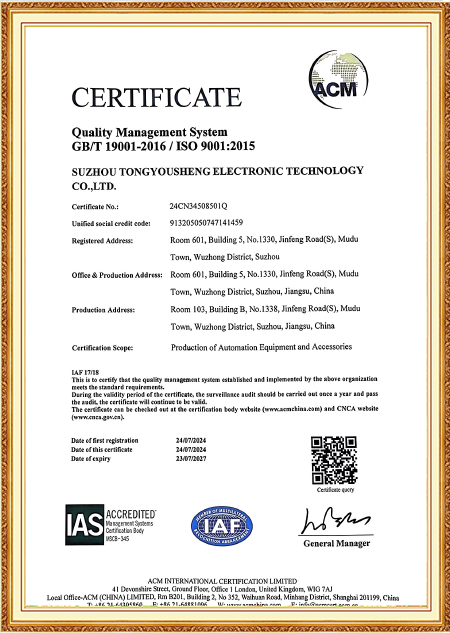
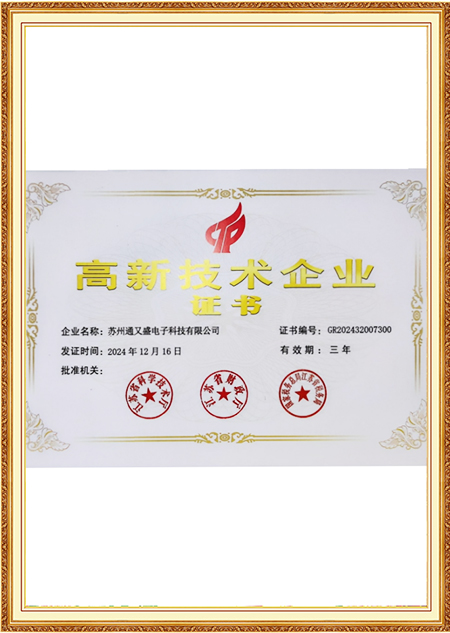
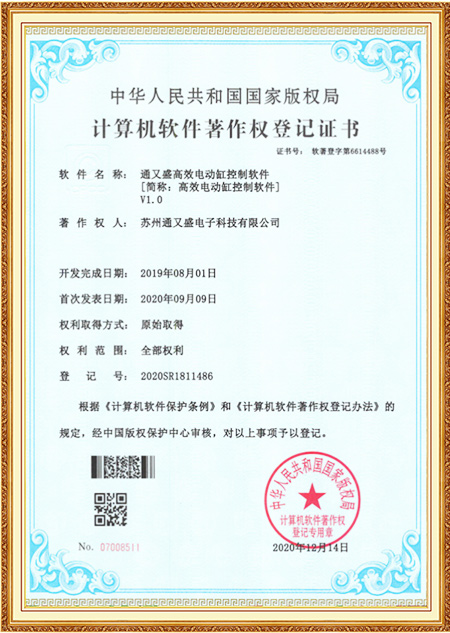
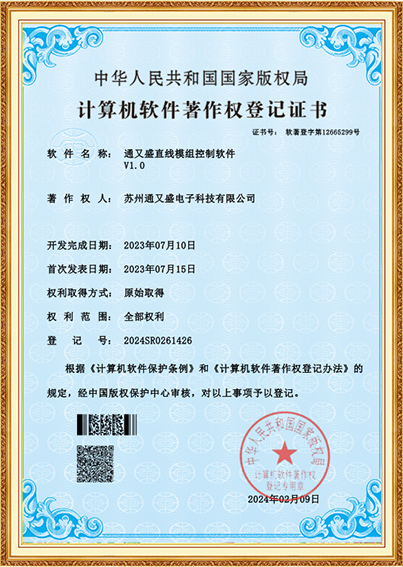
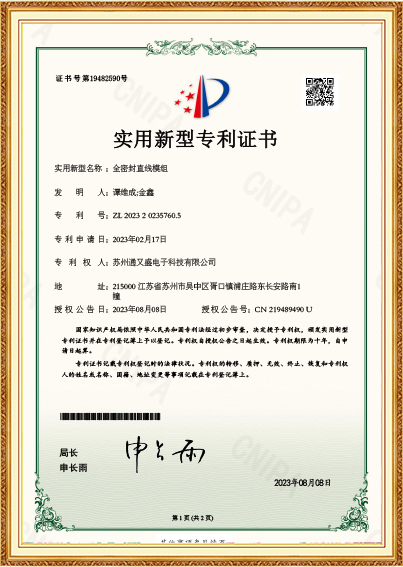
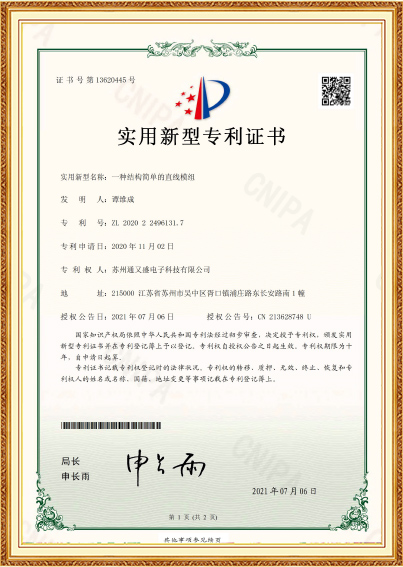
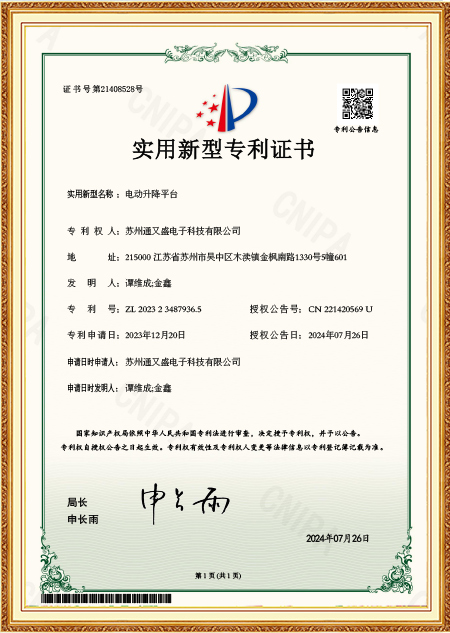
Certificate Of Honor
  • ISO 9001:2015 Certificate
  • High-tech Enterprise Certificate
  • Copyright Certificate
  • Copyright Certificate
  • Software Copyright Certificate
  • Patent Certificate
  • Patent Certificate
  • Patent Certificate
Message Feedback
Blog
Fully Enclosed Ball Screw Driven Linear Module Industry knowledge

Fully Enclosed Ball Screw Driven Linear Module: What the Sealed Housing Actually Trades Away

A CNC panel router shop switched to a fully enclosed ball screw driven linear module on its Z-axis specifically to keep aluminum chips and coolant mist out of the screw assembly, and the change worked as intended on that front — until about four months in, when the axis started showing a slight but measurable slowdown during long, continuous cutting runs that hadn't shown up on the shop's previous open-type module. Nothing was contaminated, and the screw itself measured fine when it was pulled for inspection. The issue turned out to be heat, not dust — the same enclosure keeping chips out was also keeping the motor's and screw's own operating heat from escaping the way it had on the open design.

Why Sealing Something In Also Means Sealing Heat In

An open-type linear module relies partly on ambient air moving freely across the screw and carriage to carry away frictional heat generated during operation. Enclose that same assembly in a sealed housing with bellows or a telescoping cover, and you gain protection against chips, coolant, and dust, but you also remove that convective airflow path. Heat generated by screw friction and motor operation has fewer places to go, and on a duty cycle heavy enough to generate meaningful heat load — like the router shop's long continuous cuts — that heat builds up inside the enclosure faster than it escapes.

Short bursts with idle gaps between cycles Heat dissipates during the pauses, so rated load capacity is rarely affected
Continuous moderate-speed operation Internal temperature climbs gradually, and some derating may be worth checking on sustained runs
Continuous high-speed, high-load operation Heat accumulates faster than passive dissipation removes it, often calling for forced airflow or active cooling

Where That Heat Actually Goes to Work Against the Module

Once internal temperature climbs, two things happen that don't show up as an obvious failure at first. The screw itself expands slightly along its length, which on a long-stroke axis can introduce a small positioning drift similar to the thermal expansion problems seen on wide-temperature-range applications, except here the heat source is internal rather than environmental. Second, and more relevant to the router shop's slowdown, grease viscosity inside the sealed housing rises as it absorbs that trapped heat over a sustained run, adding drag that gradually increases running resistance — exactly the kind of slow, cumulative effect that doesn't trip an alarm but shows up as a slightly longer cycle time by the end of a long shift.

Why Grease Behaves Differently Once It's Sealed In Rather Than Exposed

This is where the second question actually connects to the first rather than standing apart from it. In an open-type module, grease gets some benefit from ambient air movement carrying heat away from the raceway, and any grease degradation products or fine debris have at least some path to migrate away from the working contact zone. In a fully enclosed ball screw driven linear module, grease sits in a more thermally isolated environment — it heats up more and cools down more slowly, and whatever byproducts form from mechanical shearing and thermal aging stay concentrated in the same sealed volume rather than dispersing.

Open-type module Ambient airflow assists cooling and allows some debris dispersion, so a standard replenishment interval per the manufacturer's duty-cycle chart usually applies
Fully-enclosed module under moderate duty Heat is retained longer with minimal debris dispersion, so the interval stays close to standard but is worth monitoring more closely
Fully-enclosed module under high duty Sustained elevated temperature concentrates degradation byproducts, which often shortens the interval relative to an open-type equivalent

Why "Sealed Means Less Maintenance" Is the Wrong Assumption to Start From

It's a common expectation that a fully enclosed ball screw driven linear module needs less frequent grease service than an open design, since the enclosure is keeping contamination out and presumably preserving grease condition longer. That holds true for light-to-moderate duty applications where heat buildup stays modest. But on a high-duty application like continuous panel routing, the sealed environment can work against grease life rather than for it — trapped heat accelerates thermal aging faster than contamination would have degraded an open-type module's grease under the same duty cycle, which runs counter to the enclosure's protective reputation.

What the Router Shop Changed on the Replacement Module

Suzhou Tongyousheng Electronic Technology Co., Ltd. specified a grease formulation with a higher thermal stability rating for the replacement unit, rated to resist viscosity change at the elevated internal temperature the enclosed housing was expected to run at under the shop's actual duty cycle, rather than defaulting to the standard grease used across general-purpose enclosed modules. The replacement housing also added a small ventilation path with a filtered breather at one end — enough to let some heat escape without reopening the assembly to the chips and coolant mist the enclosure was originally installed to keep out.

What a Buyer Running a Similar High-Duty Application Can Ask

A buyer specifying a fully enclosed ball screw driven linear module for a continuous or high-speed application can ask a supplier what internal temperature the housing is expected to reach under the actual target duty cycle, rather than accepting a generic enclosed-module rating based on light intermittent use. A second useful question is whether the grease specified accounts for that sustained internal temperature or follows a standard formulation carried over from lighter-duty catalog listings, since the two ratings are not always the same product under a shared part number.