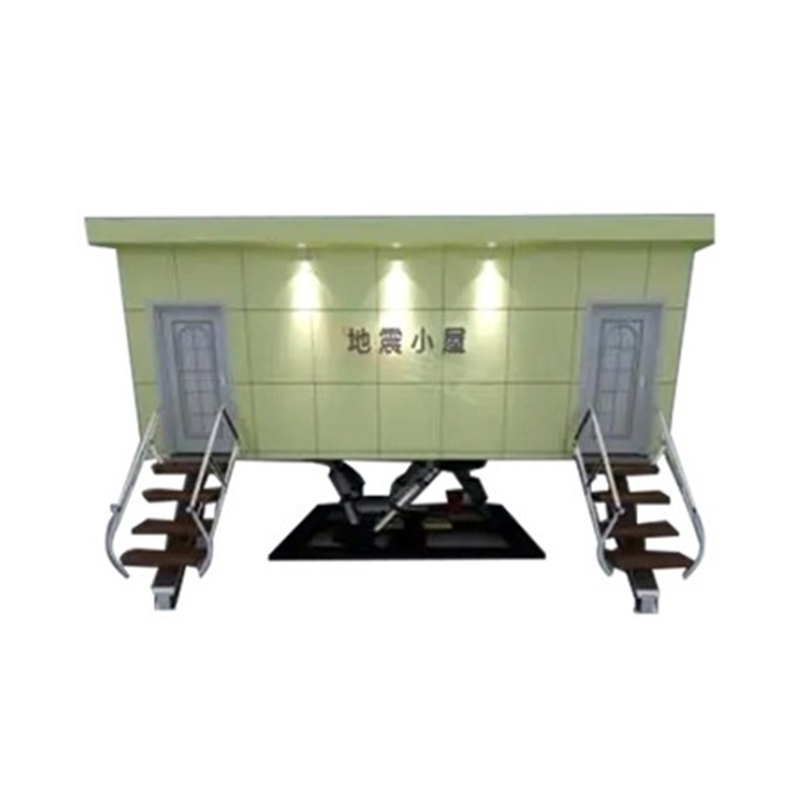
Earthquake Simulation Platform Custom

Home / Products / Motion Simulation Platform / Earthquake Simulation Platform

About Us
Suzhou Tongyousheng Electronic Technology Co., Ltd.

Suzhou Tongyousheng Electronic Technology Co., Ltd. is a leading high-tech enterprise integrating R&D, production and sales, specializing in the design, manufacturing and distribution of premium automation equipment and components—including electric cylinders, linear slide modules, linear motor modules, servo presses, robotic 7th axes, and six-degree-of-freedom platforms.

As China Earthquake Simulation Platform Manufacturers and Earthquake Simulation Platform Suppliers, we recognize technological innovation as the cornerstone of sustainable growth. Our R&D team, composed of industry veterans with deep technical expertise and extensive hands-on experience, serves as the engine driving our continuous progress. By pushing technical boundaries, accelerating product iteration, and pioneering industry advancements, we have secured a portfolio of core patents that underscore our leadership in automation and deliver a decisive competitive edge. We further reinforce our capabilities with state-of-the-art R&D tools, professional design software, and high-precision CNC machining centers, ensuring every development effort is backed by world-class resources.

Through years of relentless exploration and execution, Tongyousheng has established itself as an industry benchmark, renowned for its robust R&D, cutting-edge products, and uncompromising quality. We are dedicated to advancing the Industry 4.0 revolution, collaborating with state-owned enterprises, defense technology institutions, and top-tier universities to build a deeply integrated ecosystem of industry, academia, and research—pushing the frontiers of intelligent manufacturing together. At the heart of our mission is a commitment to delivering automation solutions that are intuitive to operate, highly efficient, ultra-reliable, and cost-effective. Every product we create is a reflection of our technical ingenuity and a direct response to our customers' evolving needs.
Certificate Of Honor
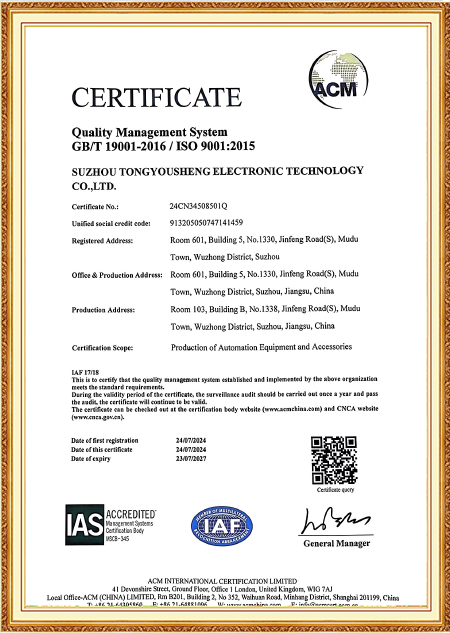
  • ISO 9001:2015 Certificate
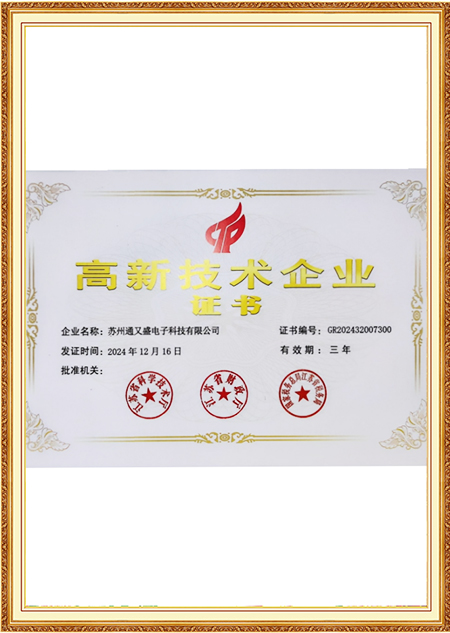
  • High-tech Enterprise Certificate
  • Copyright Certificate
  • Copyright Certificate
  • Software Copyright Certificate
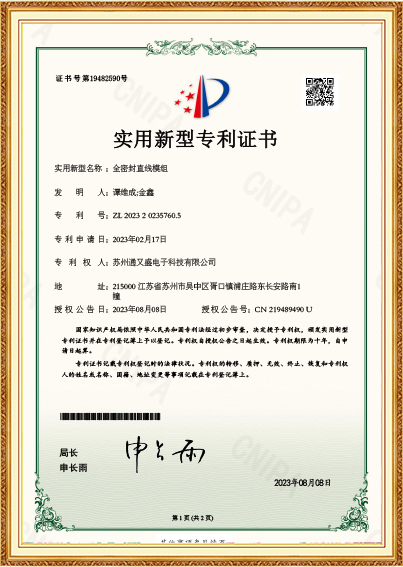
  • Patent Certificate
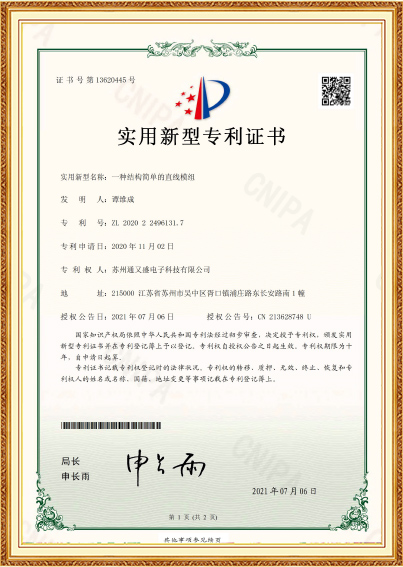
  • Patent Certificate
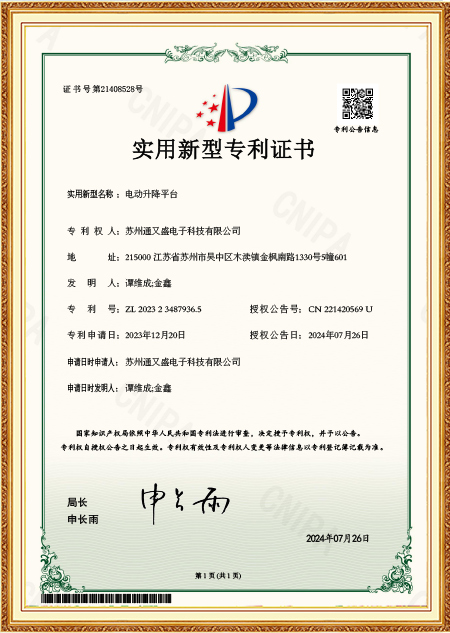
  • Patent Certificate
Message Feedback
Blog
Earthquake Simulation Platform Industry knowledge

Beyond Table Size: Waveform Fidelity and Axis Decoupling on an Earthquake Simulation Platform

A Spec Comparison That Falls Apart Once Real Seismic Data Gets Loaded

Two earthquake simulation platform quotes can list identical table dimensions and identical peak acceleration ratings, yet behave very differently the moment a lab technician loads an actual recorded seismic record — say, a strong-motion accelerogram from a past regional event — rather than a clean sinusoidal test signal. Sine sweep testing tells a buyer whether the platform can hit a target acceleration at a given frequency in isolation; it says very little about whether the platform can track a waveform with rapid, irregular acceleration reversals layered across a broad frequency band, which is what a real earthquake record actually looks like.

What Waveform Reproduction Fidelity Actually Depends On

Tracking error — the difference between the commanded acceleration profile and what the table actually delivers — tends to grow specifically at the frequency extremes and during rapid direction reversals, since these are the moments that stress the servo valve's response bandwidth or the drive motor's torque delivery hardest. A platform's control system needs enough bandwidth headroom above the highest frequency content expected in typical seismic records to avoid phase lag creeping into the output, and iterative waveform correction — where the controller compares the actual table response against the target record over successive test runs and adjusts the drive command accordingly — is one method that separates platforms capable of high-fidelity reproduction from ones that only perform well on simpler test inputs. Suzhou Tongyousheng Electronic Technology Co., Ltd. treats this iterative correction capability as a meaningful differentiator when discussing an earthquake simulation platform build with a customer whose test program depends on faithfully reproducing archived seismic records rather than synthetic approximations.

Where Distortion Actually Creeps Into the Signal

Distortion in the reproduced waveform rarely comes from a single obvious source — it accumulates across several stages, and isolating which stage dominates usually requires comparing the commanded signal against the actual table response at each point in the control chain rather than only checking the final output.

Servo valve or motor bandwidth Insufficient headroom above the target frequency range introduces phase lag at higher frequencies
Table structural resonance A resonant mode within the operating frequency band amplifies certain frequencies unintentionally
Feedback sensor placement A sensor mounted away from the actual point of interest can misrepresent the true table motion at that location

The Second Challenge: Keeping Horizontal and Vertical Motion From Interfering

Many earthquake events involve simultaneous horizontal and vertical ground motion, which means a capable earthquake simulation platform has to reproduce both axes at once without one axis bleeding unwanted motion into the other. Mechanical coupling between axes is the primary culprit here — if the vertical actuator's reaction force transmits through the table structure into the horizontal guide system, or vice versa, the platform ends up reproducing cross-axis contamination that was never part of the target record.

Decoupling Strategies Applied During Manufacturing

One structural approach separates the horizontal and vertical load paths as much as the mechanism allows — mounting vertical actuators through a linkage geometry that transmits vertical force efficiently while presenting minimal resistance to horizontal motion, rather than a rigid connection that couples the two directions together. Another involves careful selection of guide bearing type: a horizontal slide system using linear guides with high lateral stiffness but low resistance along the vertical degree of freedom helps prevent vertical reaction forces from inducing unwanted horizontal displacement. Suzhou Tongyousheng Electronic Technology Co., Ltd. verifies this decoupling during assembly by commanding motion on one axis alone and measuring any resulting displacement on the other axes, rather than assuming decoupling based on the mechanism's design geometry alone, since manufacturing tolerances and bearing preload can introduce coupling that a design drawing would not predict.

Why These Two Concerns Compound Each Other in Practice

Cross-axis coupling and waveform distortion are not independent problems on a multi-axis earthquake simulation platform — if the vertical axis leaks force into the horizontal guide system, that leaked force shows up as unplanned horizontal acceleration content, which then registers as waveform distortion when the horizontal axis output gets compared against its target record. A platform with well-controlled axis decoupling but a control system lacking sufficient bandwidth headroom will still show waveform tracking errors, and a platform with excellent single-axis tracking but poor mechanical decoupling will still introduce contamination once both axes run together. Evaluating a supplier on either factor alone tends to miss how closely the two are linked once a full multi-axis seismic record gets applied.