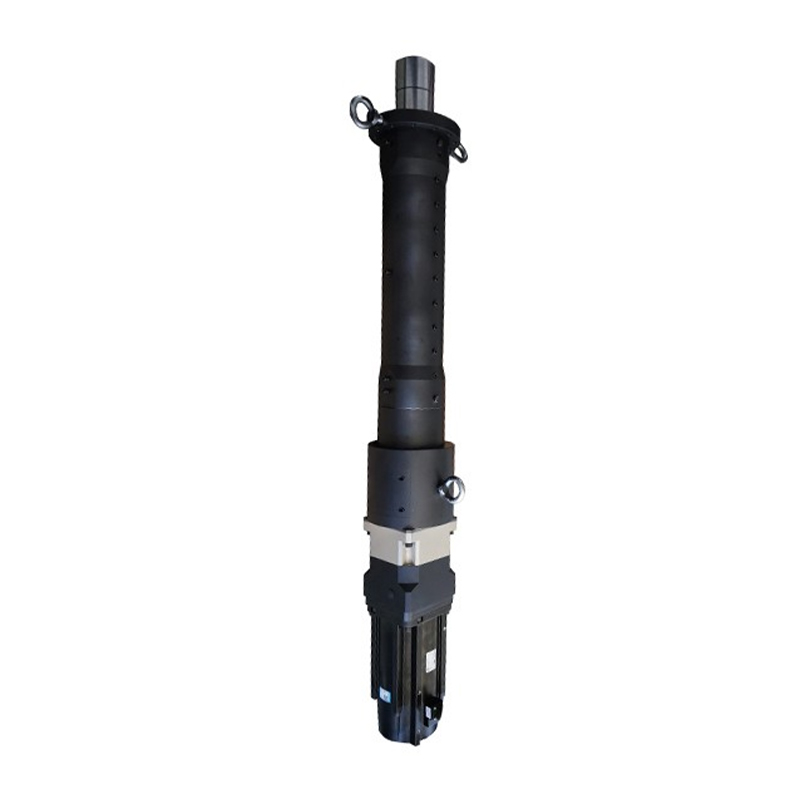
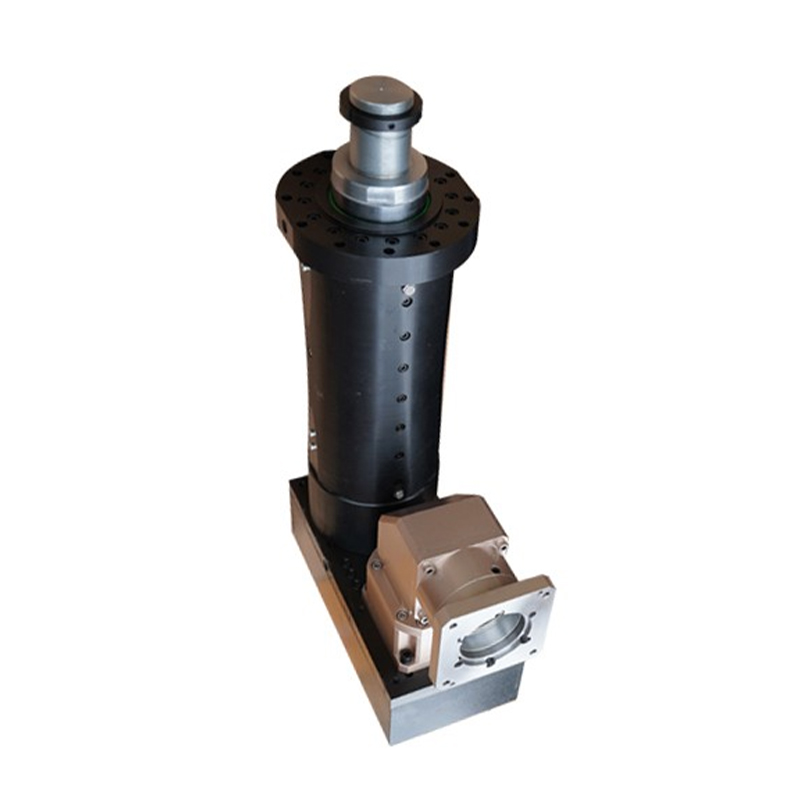
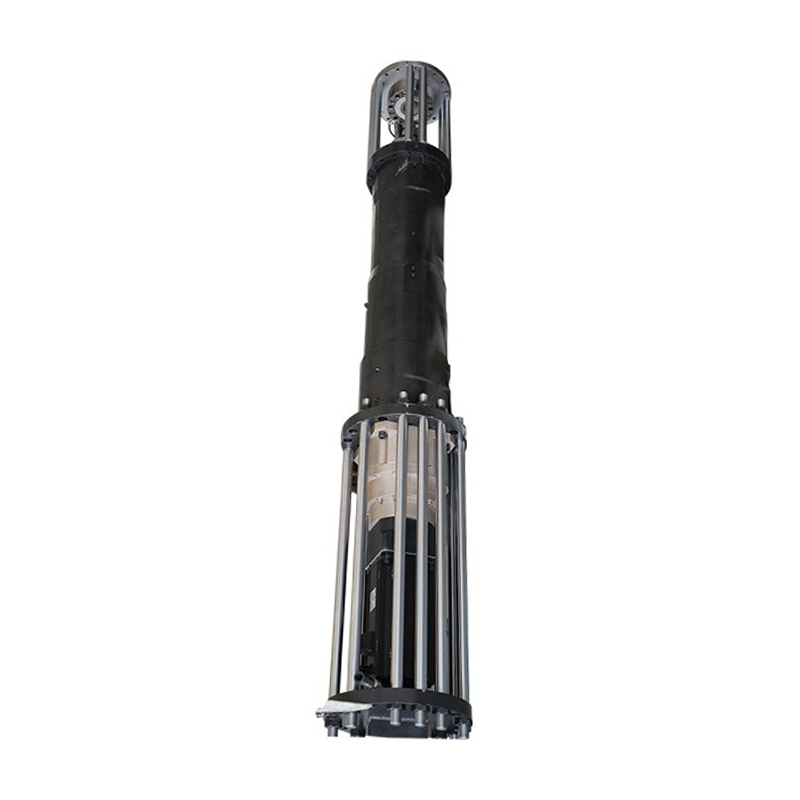
Explosion-proof Electric Cylinder: How Thermal Design, Flameproof Structure, and Manufacturing Accuracy Influence Long-Term Operation
An automated valve control system installed in a chemical processing area operated normally during initial commissioning, but after extended service the maintenance team noticed that actuator response became slower during repeated opening and closing cycles. The explosion-proof electric cylinder hadn't suffered a sudden breakdown, and every external inspection came back clean. It took pulling the unit apart to see what routine checks had missed — a small but measurable shift in bearing preload, and a lubricant that had thickened more than expected given the recorded ambient temperature range for that installation.
Neither finding on its own explained the full slowdown. It was the combination — tightening internal clearance plus a grease running closer to its high-viscosity limit than intended — that had gradually raised running resistance to the point where cycle time noticeably lengthened, even though the motor itself tested fine on the bench.
Why Explosionproof Cylinders Carry a Different Set of Structural Constraints
Compared with a standard electric cylinder in a general industrial setting, an explosion-proof electric cylinder has to satisfy motion performance and hazardous-area containment requirements at the same time, and those two goals sometimes pull in different directions. Internal electrical components and drive mechanisms generate heat during operation, and the enclosure has to prevent that heat — or a spark, in a fault condition — from reaching the surrounding atmosphere. The protection relies on mechanical structure rather than a sealed barrier alone: flameproof joints, enclosure wall thickness, and a defined heat transfer path all work together, which also means the enclosure limits how efficiently that same heat can escape during normal operation — the trade-off that mattered on the valve control unit.
| Thicker wall for containment strength |
Slows heat transfer to the surrounding ambient air |
| Sealed flameproof joints |
Reduces convective cooling compared to an open-frame housing |
| Compact installation footprint |
Leaves less surface area available for passive heat dissipation |
How Thermal Cycling Actually Moved the Bearing Preload
Housing, shaft, and bearing components in the valve control actuator weren't all the same alloy, and each expands and contracts at its own rate as temperature swings through a processing area's daily and seasonal cycle. Individually, none of these expansion differences would cause a problem — but repeated over months of thermal cycling, the mismatch nudged internal clearance in a consistent direction each time, the way a ratchet tightens a fraction more with each turn even if no single turn seems significant. By the time the unit came apart for inspection, that accumulated drift had tightened bearing preload enough to add detectable drag.
Why the Lubricant Compounded Rather Than Compensated
A grease chosen for a wider viscosity margin might have absorbed some of that added mechanical resistance without much consequence. Instead, the grease installed had been selected against the facility's average temperature rather than its actual seasonal swing, which meant it was already running closer to its higher-viscosity end during the colder months — right when the tightening bearing clearance needed the least added resistance, not the most. The two effects reinforced each other instead of one offsetting the other.
| Warm months |
Bearing clearance sits closer to its original fit, and lower grease viscosity keeps drag near normal, so response time stays close to spec |
| Cold months |
Clearance has already tightened from cumulative cycling, and grease viscosity rises at the same time, so the two effects compound into slower cycle response |
Why the Flameproof Joint Still Mattered Even Though It Wasn't the Failure Point
The flameproof joint machined into the housing-to-endcap interface wasn't the source of the slowdown, but its condition still had to be checked as part of the teardown, since the same thermal cycling driving bearing preload could just as easily have nudged that joint's gap dimension. The joint had held within its certified tolerance, which ruled out one variable but didn't explain the mechanical drag — a reminder that flameproof integrity and smooth mechanical operation are separate things that happen to share the same thermal stressor.
What Actually Changed on the Replacement Unit
Suzhou Tongyousheng Electronic Technology Co., Ltd. specified a lubricant rated against the facility's full recorded seasonal temperature range rather than its average, and adjusted the housing-to-shaft material pairing to reduce differential expansion under that same cycling pattern — the two changes addressing the compounding effect described above rather than treating the bearing wear as an isolated component failure. The flameproof joint on the replacement unit was measured against its certified drawing before installation as a standard step, separate from the bearing and lubrication fix, since the two issues had different root causes even though both were driven by the same thermal environment.
Where Machining Consistency Still Comes Into the Conversation
None of this changes the fact that flameproof joint dimensions still depend on tight CNC control — tool wear, fixture repeatability, and thermal drift during machining all affect whether unit one of a batch matches unit two hundred. For the valve control application, this mattered less because the joint had held tolerance, but for a facility ordering a large batch of cylinders for similar hazardous-area duty, asking whether joint dimensions are sample-checked at intervals through a production run, rather than only at the very end, remains a separate and equally relevant question from the thermal design issue described here.
What a Facility With a Similar Thermal Cycling Pattern Can Ask
A plant running actuators through repeated seasonal or process-driven temperature swings can request lubricant viscosity data specific to its actual recorded temperature range rather than a generic industrial average, and can ask whether housing and shaft materials were paired with that facility's specific thermal cycling pattern in mind. These two questions would have surfaced the valve control actuator's compounding problem well before it reached the point of a full teardown.



 English
 Français
 русский
 عربى
عربى Español
 Deutsch