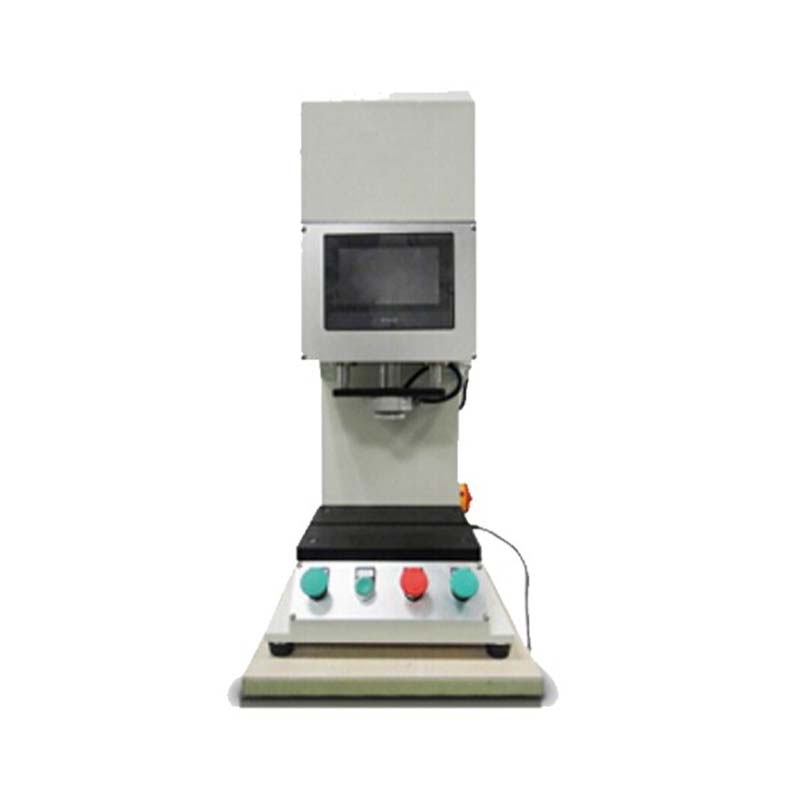
Desktop Servo Press Machine Custom

Home / Products / Servo Press Machine / Desktop Servo Press Machine

About Us
Suzhou Tongyousheng Electronic Technology Co., Ltd.

Suzhou Tongyousheng Electronic Technology Co., Ltd. is a leading high-tech enterprise integrating R&D, production and sales, specializing in the design, manufacturing and distribution of premium automation equipment and components—including electric cylinders, linear slide modules, linear motor modules, servo presses, robotic 7th axes, and six-degree-of-freedom platforms.

As China Desktop Servo Press Machine Manufacturers and Desktop Servo Press Machine Suppliers, we recognize technological innovation as the cornerstone of sustainable growth. Our R&D team, composed of industry veterans with deep technical expertise and extensive hands-on experience, serves as the engine driving our continuous progress. By pushing technical boundaries, accelerating product iteration, and pioneering industry advancements, we have secured a portfolio of core patents that underscore our leadership in automation and deliver a decisive competitive edge. We further reinforce our capabilities with state-of-the-art R&D tools, professional design software, and high-precision CNC machining centers, ensuring every development effort is backed by world-class resources.

Through years of relentless exploration and execution, Tongyousheng has established itself as an industry benchmark, renowned for its robust R&D, cutting-edge products, and uncompromising quality. We are dedicated to advancing the Industry 4.0 revolution, collaborating with state-owned enterprises, defense technology institutions, and top-tier universities to build a deeply integrated ecosystem of industry, academia, and research—pushing the frontiers of intelligent manufacturing together. At the heart of our mission is a commitment to delivering automation solutions that are intuitive to operate, highly efficient, ultra-reliable, and cost-effective. Every product we create is a reflection of our technical ingenuity and a direct response to our customers' evolving needs.
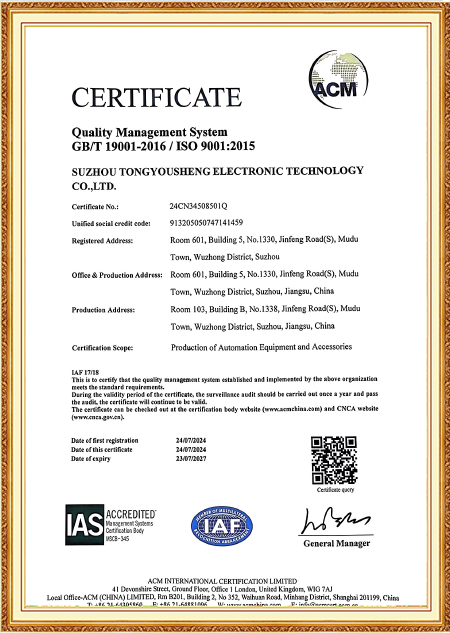
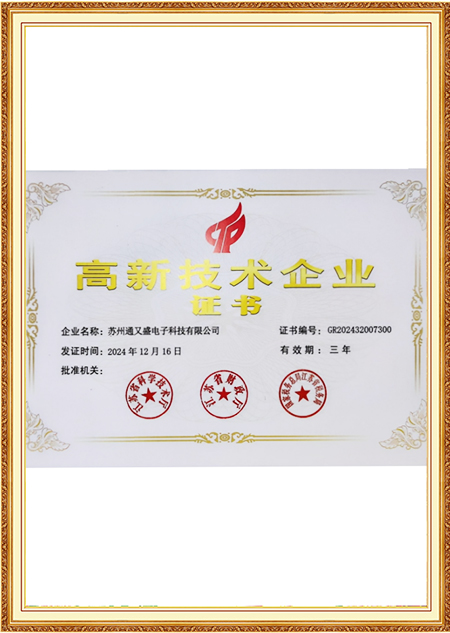
Certificate Of Honor
  • ISO 9001:2015 Certificate
  • High-tech Enterprise Certificate
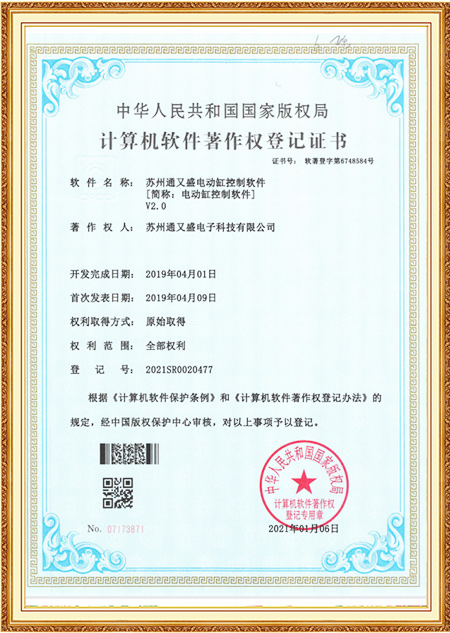
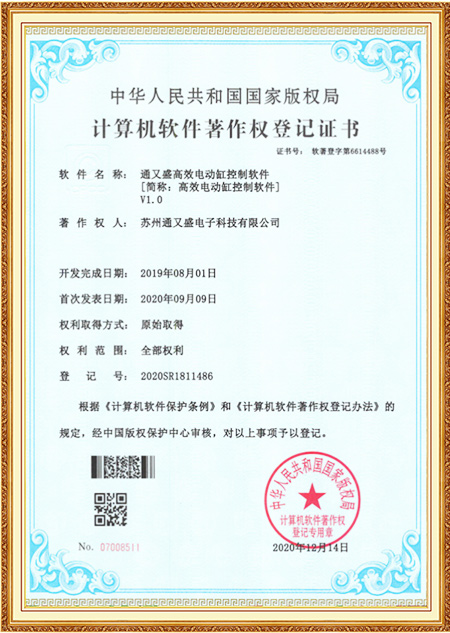
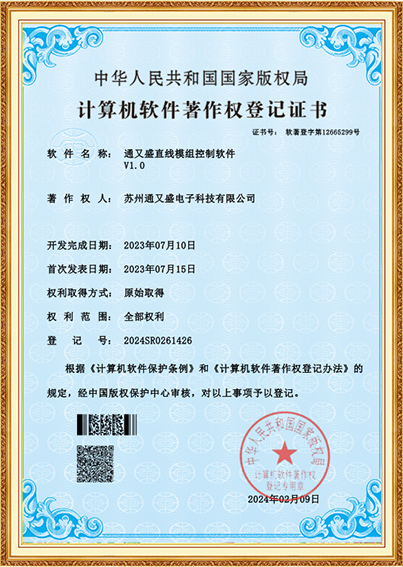
  • Copyright Certificate
  • Copyright Certificate
  • Software Copyright Certificate
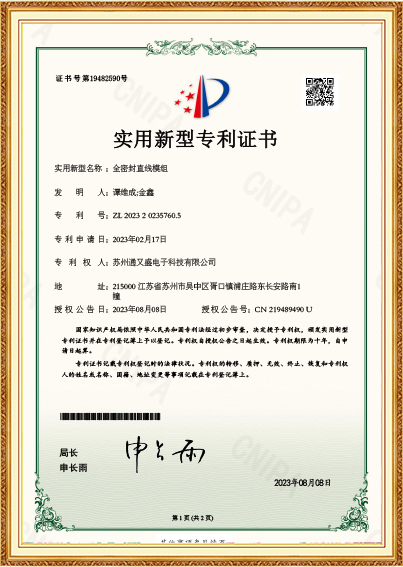
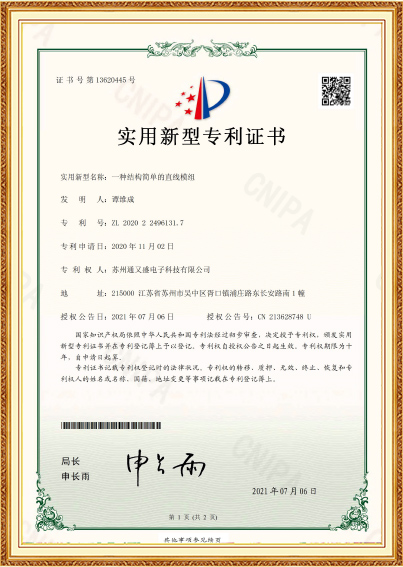
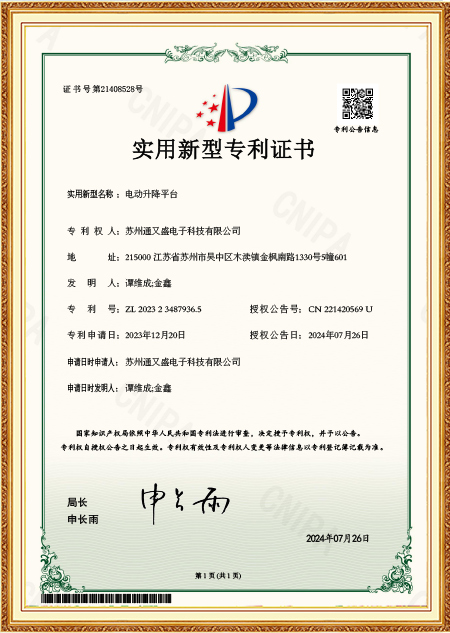
  • Patent Certificate
  • Patent Certificate
  • Patent Certificate
Message Feedback
Blog
Desktop Servo Press Machine Industry knowledge

Squeezing Precision Into a Small Footprint: What Software and Guide Design Really Determine

The Test That Separates a Good Desktop Press From an Adequate One

Put a small connector terminal under a desktop servo press machine and ask it to seat a pin to within a few microns of a target depth, then repeat that operation a few hundred times back to back. Some machines hold that number tightly cycle after cycle; others drift a small amount as the run progresses, even though nothing about the mechanical hardware changed between the first part and the hundredth. That drift, more often than not, traces back to how the control software handles force-position feedback rather than to any single component wearing out mid-run.

Where Algorithm Experience Actually Shows Up

Low-tonnage precision pressing lives in a regime where the signal-to-noise ratio on force feedback is tighter than in heavier industrial pressing — a five-newton force reading matters as much on a desktop unit as a five-hundred-newton reading does on a larger frame. A control algorithm built with this in mind filters sensor noise without introducing lag into the force curve, and it compensates for small thermal drift in the load cell itself, since even a modest temperature shift across a shift can bias a low-force reading enough to matter at this scale. Suzhou Tongyousheng Electronic Technology Co., Ltd. has found that customers running high-mix, low-volume assembly on a desktop servo press machine notice this distinction most clearly when a batch includes parts with tight force windows — a poorly tuned filter either smooths away a genuine defect signature or amplifies noise into a false reject.

What a Resolution Number on a Spec Sheet Doesn't Explain

Two presses can list an identical force resolution figure on their datasheets and still behave differently in practice, because that number typically describes the sensor's raw capability rather than what the closed-loop system delivers once filtering, sampling rate, and position feedback all interact together. A press sampling force at a low rate while trying to hold tight position control can introduce quantization steps into the curve that look like real process variation to an operator watching the monitor, when the variation is actually an artifact of how often the system checks in on itself during the stroke.

Sensor raw resolution What the load cell itself is capable of detecting under ideal conditions
Sampling rate during stroke Determines whether fine force transitions get captured or averaged away
Filter tuning Too aggressive hides real defects, too loose lets electrical noise masquerade as process variation

The Mechanical Half of the Same Problem: Fitting a Precise Guide Into a Small Frame

Compactness works against slide guide precision in a fairly direct way — a larger press can dedicate more structural depth to its linear guide rails and bearing blocks without worrying much about overall footprint, while a desktop unit has to achieve comparable straightness and rigidity within a fraction of that structural volume. This usually means the guide rail spacing on a desktop servo press machine sits closer together than an equivalent industrial unit's, which reduces the moment arm available to resist any off-axis load and makes the slide more sensitive to how squarely a part is loaded into the fixture.

How Manufacturers Compensate Within That Constrained Space

Preloaded linear guide blocks — rather than standard clearance-fit bearings — are one common answer, since preloading removes the small amount of internal play that would otherwise translate directly into positioning uncertainty at this scale. Crosshead guiding, where the ram is supported by a separate guided crosshead rather than relying on the ball screw itself to resist side load, is another approach that keeps bending moment off the screw and confines it to a structure specifically designed to handle it. Suzhou Tongyousheng Electronic Technology Co., Ltd. treats the choice between these guiding architectures as a direct function of how tight the customer's position tolerance needs to be, since a simpler bushing-guided slide can be entirely adequate for a less demanding application and unnecessarily costly for one that does not need this level of precision.

Why These Two Factors Interact More Than They Appear To

A guide system with residual play introduces mechanical noise into the force-position relationship before the control software ever sees clean data to work with, meaning even the best-tuned algorithm cannot fully compensate for a slide that shifts slightly under lateral load. Conversely, a mechanically stiff guide paired with an under-developed control algorithm still leaves resolution on the table, since the hardware capability goes unused if the software cannot extract clean signal from the sensor at the sampling rates a compact machine's cycle time demands. Buyers evaluating a desktop servo press machine for tight-tolerance work tend to get a clearer picture by asking about both guide architecture and control algorithm maturity together, rather than treating the mechanical spec and the control spec as separate line items on a quote.