


 English
 Français
 русский
 عربى
 Español
 Deutsch
Tel
+86 186 2508 0683

The pusher station on a battery module line had drifted about ±0.15 mm after three months in service. Teardown found burnished bands on the screw shaft near both ends of nut travel, and the guide block under the rod had opened up clearance. The electric linear cylinder's rated thrust was 2 kN. The actual load never passed 400 N. Thrust was never the problem: the rod was coupled to the load with roughly 0.4 mm of lateral offset, and that side load had been pressing the ball nut into its grooves for a few hundred thousand cycles.
That pattern repeats across almost every electric ball screw actuator failure worth writing about. The screw is rarely the first part to give up. Side load, misalignment, peak thrust treated as continuous thrust, and a protection rating that does not match the washdown routine cause most early failures. Thrust is the easiest column to fill in a selection table, and it is also the one most often filled wrong.
Before opening a single catalogue, write down five things about the machine: the direction of the load, the maximum lateral force the rod will see, the stroke, the cycle rate, and the environment. Those five answers eliminate more candidate designs than any specification sheet will.
An electric ball screw actuator wins when the motion needs programmability and repeatability at the same time. If an axis has to stop at five different positions, hold each one within ±0.02 mm, and apply a controlled force at two of them, a servo-driven ball screw cylinder does all three without extra hardware. A pneumatic cylinder cannot hold position, and a hydraulic cylinder can hold force but not position.
It loses when the duty is brutal. A 1.2 m stroke at 60 reciprocations per minute asks a 10 mm lead screw to turn somewhere around 14,000 rpm, which is past the critical speed limit before the calculation even finishes. Long stroke plus high cycle rate is belt or linear motor territory. Very high continuous force with long holding periods is hydraulic territory. Low cost, fast cycling, and ±1 mm accuracy is pneumatic territory.
A practical order of questioning looks like this:
Teams that start from step six and work backwards usually end up with a cylinder that is mechanically strong enough and dynamically wrong. The catalogue thrust number is a limit, not a capability.
The sealed aluminium housing makes the product look like one part. Inside, it is eight subsystems stacked in series, and the assembly is only as stiff as the softest link.
Put those eight items side by side and a counterintuitive fact appears: the rated thrust of the cylinder and the usable thrust of the cylinder are different numbers. A screw that can push 5 kN does not automatically hold ±0.02 mm repeatability while a 200 N side load is bending the rod.
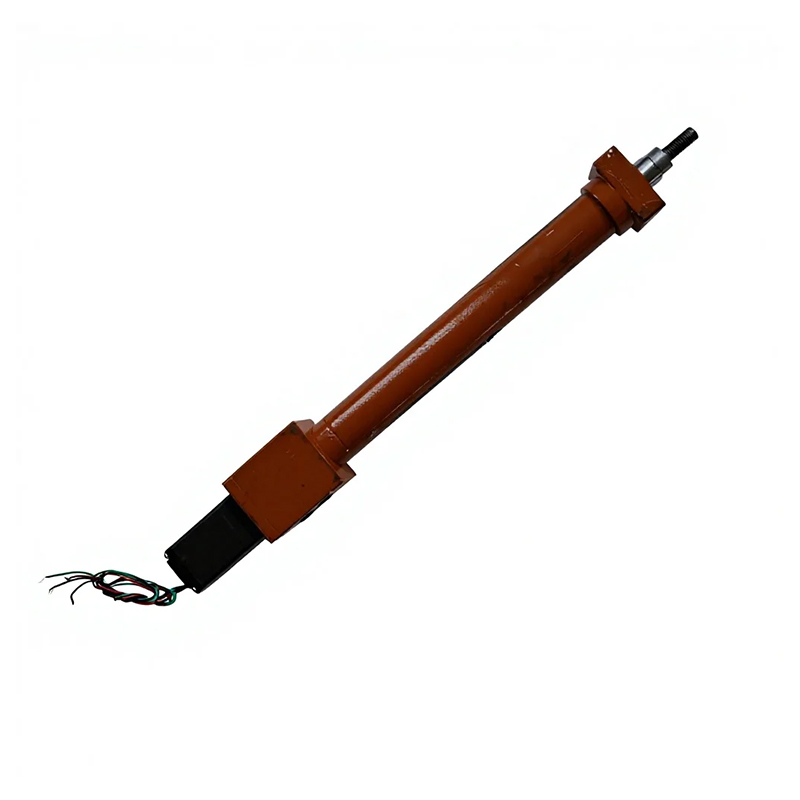 Coaxial Integrated Precision Inline Electric Cylinder TYSC026Compact inline electric cylinder with ±0.02 mm repeatability and IP65 protection, suited to precision assembly and space-limited automation.View Product →
Most linear motion arguments are really arguments between four drivetrains. The table below is a rough map of where each one's strengths end. Treat the ranges as typical industrial figures rather than guarantees, because lead, screw diameter, guide size, and drive tuning all move the numbers.
| Drivetrain | Force density | Practical speed | Repeatability | Backdrivable | Best fit |
|---|---|---|---|---|---|
| Ball screw electric cylinder | High, up to tens of kN | Moderate, roughly 0.3 to 1.5 m/s | ±0.01 to ±0.05 mm | Yes, needs a brake on vertical axes | Pressing, pushing, positioning under load, multi-point sequences |
| Lead screw electric cylinder | Medium | Low, typically under 0.3 m/s | ±0.1 mm or looser | No, self-locking | Holding force, low duty, cost-sensitive fixtures |
| Belt-driven linear module | Low to medium | High, 2 m/s and above | ±0.1 mm | Yes | Long stroke transfer, pick and place, light payloads |
| Linear motor module | Low to medium | Very high, 5 m/s and above | ±0.001 mm achievable | Yes | High acceleration, cleanroom, no-contact motion, semiconductor and inspection |
| Hydraulic cylinder | Very high | Low to moderate | ±0.1 mm with good control | No | Very high force, continuous holding, harsh environments |
Two rows in that table cause most of the disappointment. The first is ball screw versus belt: people buy a ball screw cylinder for a 2 m stroke at high cycle rate, then wonder why the screw whips and the nut gets noisy. The second is ball screw versus linear motor: people buy a linear motor for a process that needs steady pushing force at low speed, then discover the motor has to dissipate a large continuous current just to hold position.
Every actuator has a continuous thrust rating and a short-duration peak. Continuous is limited by motor heating and screw life. Peak is limited by the screw's static capacity and by how much the rod can take without buckling. A press application that touches 8 kN for 50 ms once every 4 seconds is not the same as one that holds 8 kN for 3 seconds. Ask for the duty profile behind the number, then apply a service factor of 1.5 to 2 on continuous thrust and check the peak separately.
Stroke drives three problems at once. The screw gets longer, so its critical speed drops. The rod extends further, so side-load deflection grows roughly with the cube of the extension. And a longer screw has more inertia to accelerate and more wind-up under load. Above roughly 800 mm, ask specifically about critical speed at the required traverse rate, and check whether the supplier recommends a larger screw diameter or a rotating-nut configuration.
Traverse speed sets the screw rpm through the lead. Acceleration sets the extra force the motor has to produce on top of the load. A 40 kg carriage accelerating at 10 m/s² needs 400 N just for acceleration, before gravity and friction. On a vertical axis, add the full weight of the moving mass and the tooling, and account for the deceleration case when the load is pushing the same direction as motion.
Repeatability is what most positioning work actually depends on, and it is usually quoted at ±0.01 to ±0.05 mm for a well-built ball screw cylinder. Absolute accuracy also includes screw lead error, thermal growth, and encoder resolution, and it is always worse than repeatability. Backlash appears as a small dead band whenever direction reverses; a preloaded nut and a properly preloaded bearing pair keep it tight, while a low-cost single-nut design will open up over time.
A ball screw is roughly 90 percent efficient, so most of the waste heat lands in the motor and the bearing block, not in the nut. That means the duty cycle question is really a motor question. A servo rated for continuous 3 A that runs at 6 A for 60 percent of the cycle will overheat regardless of what the screw can take. Ask for the thermal model, not just the peak torque.
Ball screw life is estimated from basic dynamic load rating against actual load, raised to the third power, in millions of revolutions. A screw rated at 15 kN dynamic capacity carrying 4 kN of continuous thrust accumulates roughly 52 million revolutions of L10 life. Halve the load and the life multiplies by eight. Double it and life drops to about 6.5 million revolutions. That is the calculation to run before signing off on a high-cycle application, and it is the one most often skipped.
Three mechanical layouts cover almost everything. They trade length, stiffness, and transmission efficiency against each other, and the choice is usually decided by the space around the machine rather than by preference.
The motor sits on the same axis as the screw, coupled directly. It is the stiffest and most efficient arrangement because there is no belt compliance and no pulley wear. The price is total length: the motor adds to the closed length of the unit, which matters on a compact machine. Inline is the default choice for pressing, precision positioning, and any axis where the rod must resist side load through a rigid guide.
For applications where the rod is short, the guide is stiff, and repeatability has to hold over a long production run, a coaxial inline design with an integrated precision screw is the straightforward answer.
Coaxial Integrated Precision Inline Electric Cylinder TYSC026Compact inline electric cylinder with ±0.02 mm repeatability and IP65 protection, suited to precision assembly and space-limited automation.View Product →
A timing belt turns the drive back alongside the screw, so the motor sits parallel to the cylinder body. The total length shrinks substantially, which is why foldback units appear in tight machine frames and in multi-axis gantries. The trade is real: the belt is a compliance element, so repeatability and stiffness are slightly lower than inline, and belt tension has to be checked on a maintenance schedule. Under high acceleration the belt can also introduce a small dynamic lag that shows up as following error.
Two to four nested stages extend in sequence, delivering a large stroke from a short closed length. Stroke-to-closed-length ratios of three or four to one are achievable. The cost is stiffness: each additional stage adds a sliding interface, and rod deflection at full extension grows quickly. Telescopic units are the right answer for lifting, hatch actuation, and long-reach positioning at moderate load, and the wrong answer for high side load or tight repeatability at full extension.
Environment variants are a separate axis of choice. Waterproof, explosion-proof, and wide-temperature versions sit on top of the same mechanical layouts, and they change seals, materials, motor certification, and lubrication rather than the fundamental geometry.
Both use ball screws. The difference is where the load is carried. On an electric cylinder, the load attaches to a rod that is guided inside the housing, so the rod takes whatever side load the machine imposes and passes it into the internal guide. On a linear module, the load bolts directly to a carriage riding on a linear guide rail, so side load goes into a large external bearing structure designed for it.
That one difference drives most of the selection logic. If the load is pure push-pull along the axis and the machine provides its own external guidance, a cylinder is compact and clean. If the load has any lateral component, or if the tooling is heavy and offset, a module usually survives longer because its guide is bigger and its moment capacity is higher. A rough rule: cylinders for pressing, lifting, and inline actuation; modules for gantry axes, pick and place, and anything with an overhung tool.
On precision assembly work, a small ball screw module with a tight lead tolerance often beats a cylinder on repeatability simply because the carriage sits on a full rail rather than a short internal guide.
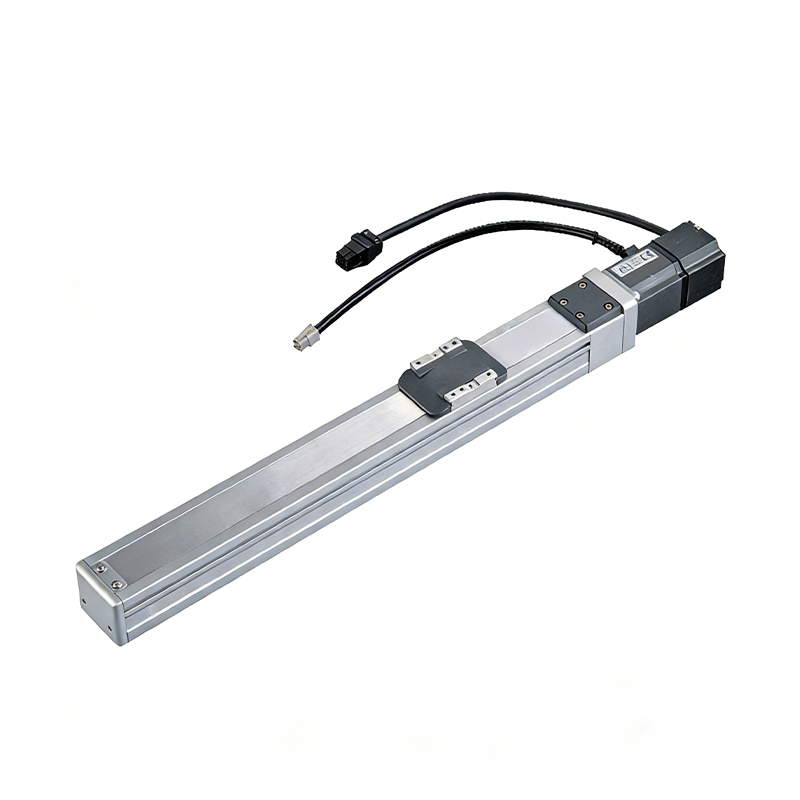 0.01 mm Precision Light-Load Ball Screw Linear ModuleCompact ball-screw module for light-load precision assembly, with ±0.01 mm repeatability and selectable leads, speeds, and strokes.View Product →
Protection rating is the specification most often agreed on in the meeting and most often wrong on the floor. IP65 means protected against dust ingress and water jets from any direction. It does not mean protected against immersion, and it does not mean protected against a high-pressure washdown aimed directly at the rod seal from 200 mm away. IP68 covers defined continuous immersion, but the depth and duration still have to be stated.
The practical question is not the rating but the exposure. Coolant mist from a machining centre, cutting chips, food washdown with alkaline detergent, solvent splash in a coating line, and condensation inside a cold store are five completely different problems, and a single IP number does not distinguish them. Ask what the seal material is, whether the rod wiper is a single lip or a double lip, whether there is a bellows option, and whether the housing breathes.
In wet or washdown duty, a splash-rated cylinder with a proper rod wiper and a stainless rod handles most of the problem. Where the unit gets sprayed from close range during cleaning, or where it is periodically submerged, the specification moves up a level.
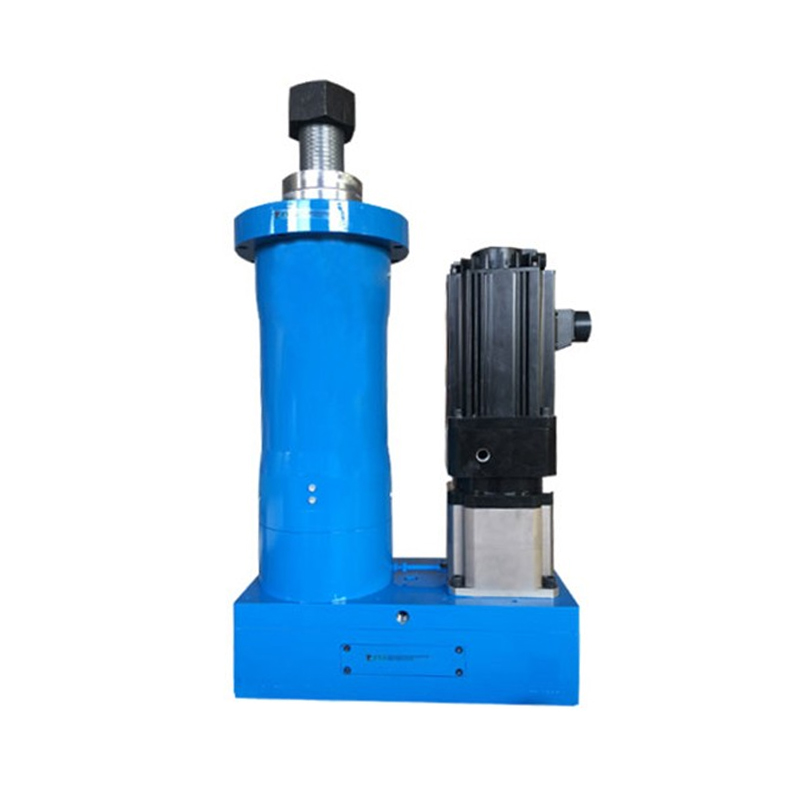 IP65 Splash-Proof Waterproof Electric Cylinder TYSC220For wet or splash-exposed areas, this IP65 cylinder combines dust and water-jet protection with a 200 kN rated load and aluminum body.View Product →
Explosion protection is a separate certification exercise, not a coating. If the actuator goes into a classified zone, the motor, the cable entries, and the housing joints all have to be certified together, and the temperature class has to be checked against the worst-case surface temperature under stall conditions. Retrofitting a standard unit with a sealed motor is not an equivalent solution.
Wide temperature range is usually a lubrication problem before it is a materials problem. Standard lithium grease stiffens below roughly −20 °C, which raises breakaway torque and can stall a small motor on a cold start. At the hot end, grease bleeds and oxidises faster, and seal elastomers harden. A wide-temperature unit typically changes grease, seal compound, and sometimes the clearance between nut and screw.
An actuator that arrives with a certificate and fails in eight weeks is almost always an installation problem. Four issues account for the majority.
There is also a less obvious one: resonance. A long rod at full extension has a natural frequency, and if the motion profile excites it, the axis will ring at the end of each move. The symptom looks like a tuning problem, but the fix is often a stiffer guide, a shorter extension, or a profiled acceleration rather than a controller change.
Most of the cost of a bad actuator choice lands months after the purchase order, in downtime and rework. These are the items worth putting in writing before the order.
None of these are exotic. They are simply the questions that get skipped when the conversation stays on price and thrust.
Electronics assembly is the most common application. Small ball screw axes position connectors, dispense adhesive, and press components onto boards, where the requirement is a short stroke, a light load, and a repeatability that a pneumatic slide cannot hold over a shift. The same pattern appears in semiconductor manufacturing, where wafer handling and inspection stages need smooth low-speed motion, low particle generation, and a stable position once the move ends.
Medical equipment uses the same drivetrain for different reasons: quiet operation, a clean profile, and controllable force. A ball screw actuator can push a syringe plunger at a defined rate and stop within a fraction of a millimetre, which is difficult with a pneumatic circuit and messy with hydraulics.
Automotive and general mechanical automation use larger units for press-fit, clamping, and lift stations. Here the requirements shift toward high continuous force, resistance to coolant and swarf, and long service life between rebuilds. Chemical and process plants add the environment layer: corrosion-resistant surfaces, sealed housings, and where required, certified explosion protection.
Across all these, the shared value is the same. A ball screw actuator replaces a pneumatic cylinder plus a separate positioner plus a separate force control loop with one programmable axis, and it reports its own position while doing it.
Where the machine design is genuinely unusual — an inverted vertical press, a dual-rod synchronized lift, a cleanroom stage — the useful starting point is the supplier's engineering and validation process rather than the catalogue page. Sites that publish that material openly make the first conversation much shorter.
Engineering and validation resourcesThe first hour of running tells you most of what you need to know. Run the axis unloaded at low speed through the full stroke and listen: a rhythmic click suggests a damaged ball return, a continuous hiss suggests a dry or over-preloaded nut, and a low-frequency knock usually means loose mounting or a coupling insert that is too soft. Then run at production speed and log motor current through the cycle. A current trace that climbs steadily over the first week is an alignment problem, not a tuning problem.
After that, maintenance comes down to a short list:
None of this is complicated, and all of it is cheaper than a mid-shift failure.
A ball screw actuator typically costs two to five times a comparable pneumatic cylinder. That comparison is misleading on its own, because the pneumatic installation also needs a valve, a filter-regulator, an air line, a position sensor if feedback is required, and often a separate hydraulic or mechanical damper to control the end-of-stroke impact. Once those items are counted, the gap narrows considerably.
The bigger difference is in the running cost. Compressed air is an expensive form of energy, and a cylinder that runs a full shift consumes far more of it than an equivalent electric axis consumes in electricity. Add programmable positioning, which removes mechanical stops and changeover time, and the case often closes within a couple of years on a high-cycle machine.
The honest counterargument is that electric actuators are less forgiving. A misaligned pneumatic cylinder will still work, just less well and for less time. A misaligned ball screw actuator will wear its nut and lose repeatability, and the failure shows up in part quality rather than as a leak or a stall. That is the real reason installation discipline matters more here than in a pneumatic system.
The useful summary is short. Choose an electric ball screw actuator when the axis needs programmable position, controlled force, and repeatability at the same time, and when the stroke and cycle rate stay inside the screw's mechanical limits. Size it on continuous thrust with a service factor, then check peak thrust and screw life separately. Decide the housing layout from the space on the machine, not from the catalogue's appearance. And spend the effort on the rod-to-load connection, because that is where the failures actually start.
Everything else — protection rating, brake, controller, lubrication interval — follows from those decisions. Get the load path right and the actuator will quietly do its job for years. Get it wrong and the specification sheet will look perfect right up until the first drift appears.
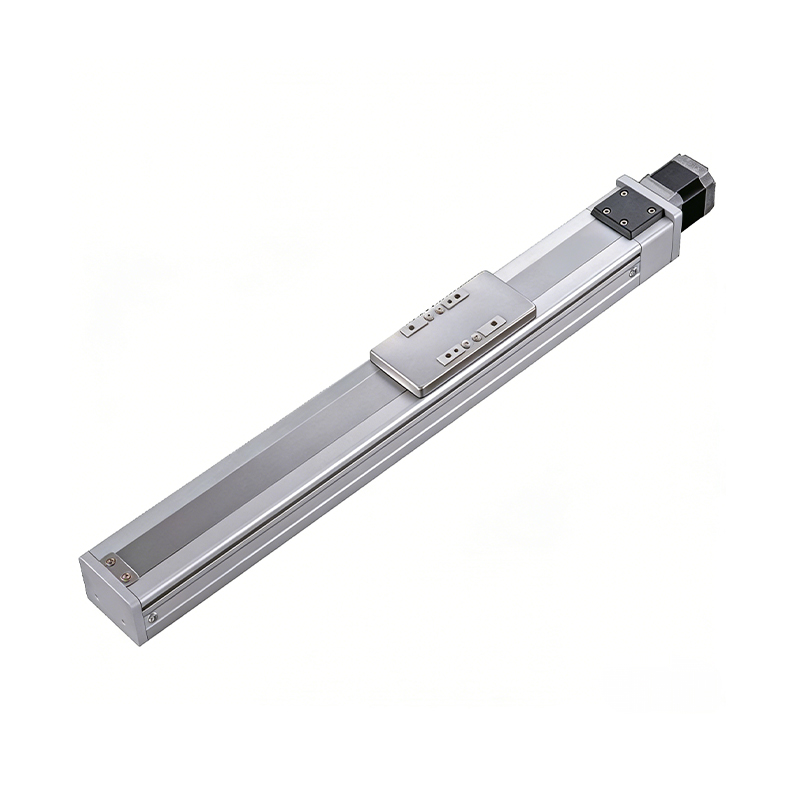 0.01mm High Precision Ball Screw Driven Rail-Embedded Linear Module
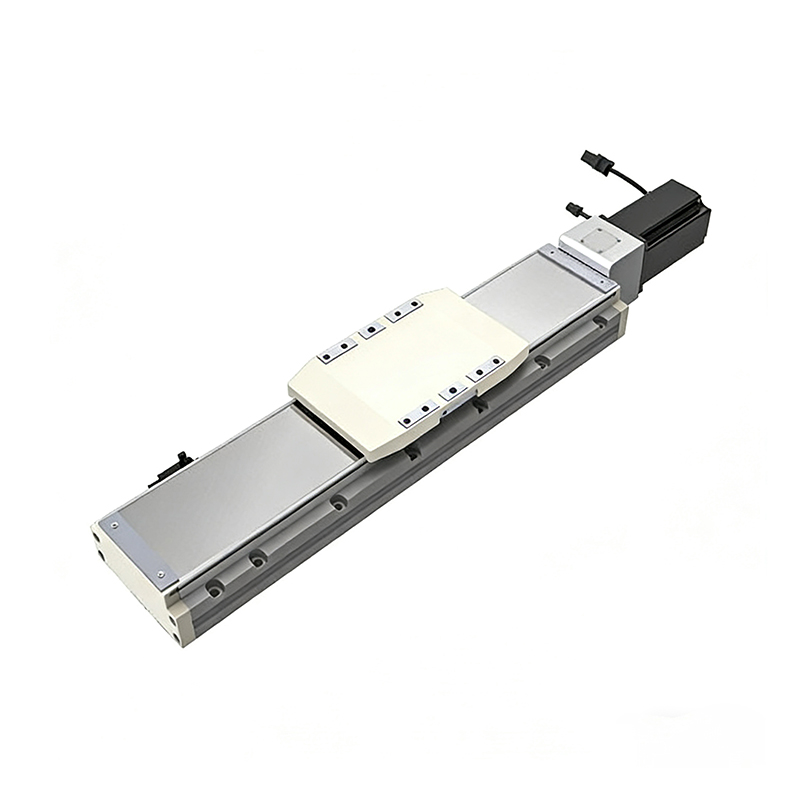 Heavy Load Ball Screw Driven Rail-Embedded Linear Module
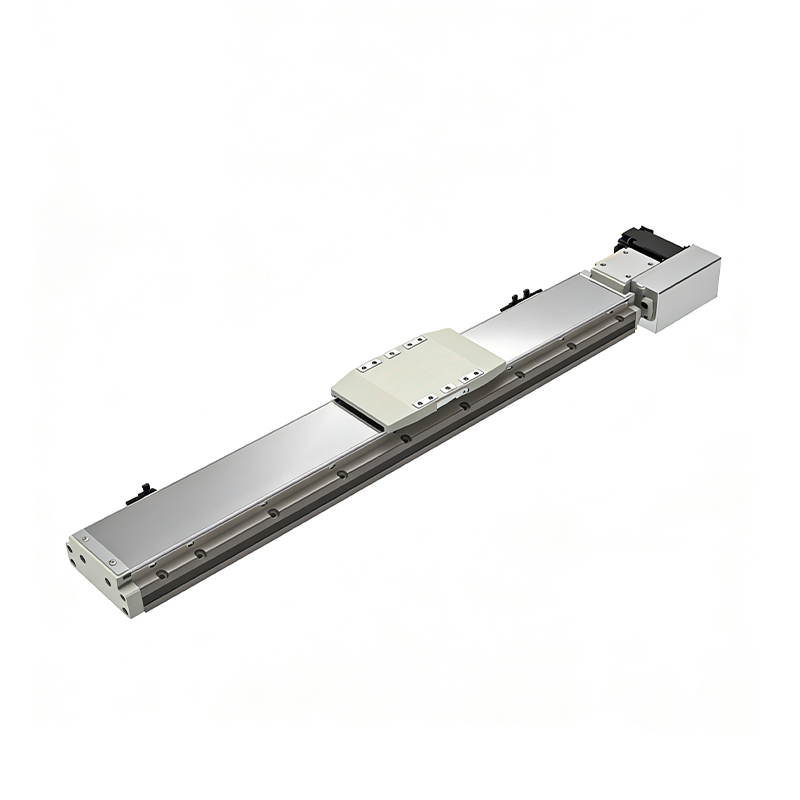 110KG Load Long Stroke Rail-Embedded Linear Module
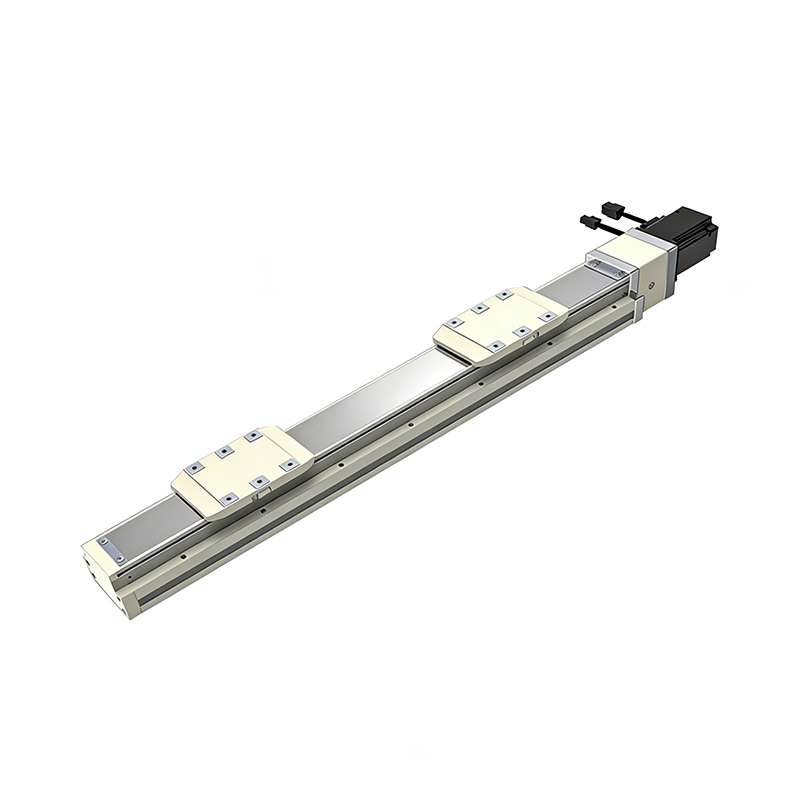 Dual-Slider High Precision Rail-Embedded Linear Module
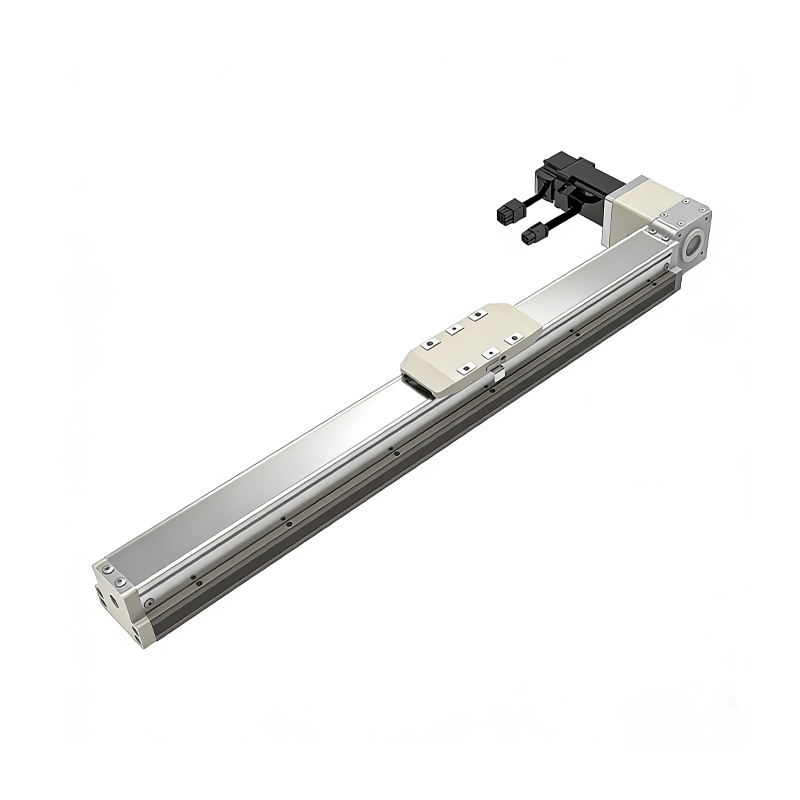 Belt Driven Dust-Proof Rail-Embedded Linear Module
0.01mm High Precision Light Load Ball Screw Linear Module
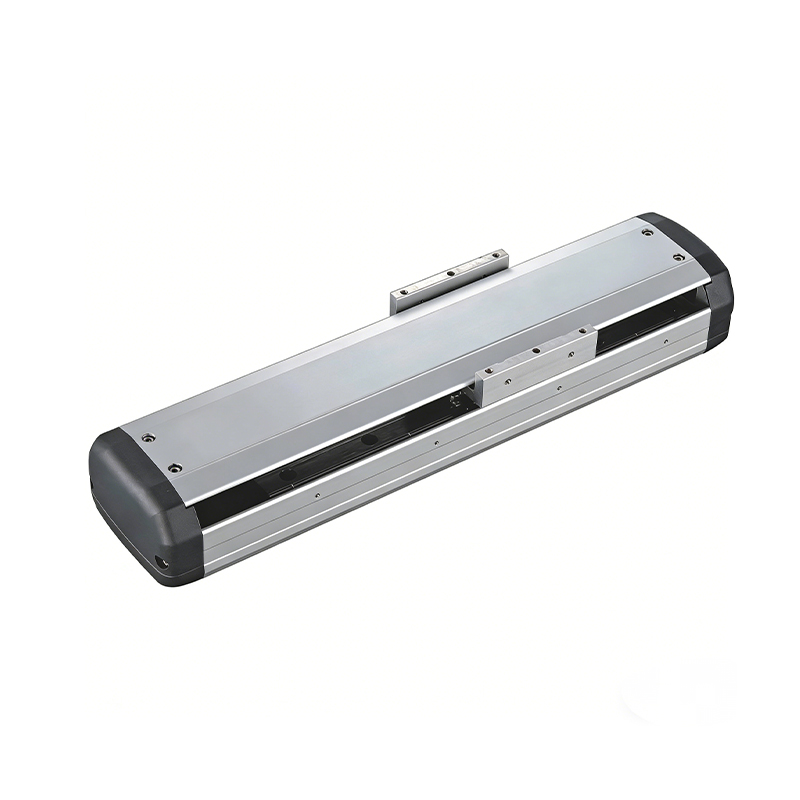 Ball Screw Linear Module with Built-in Sensor
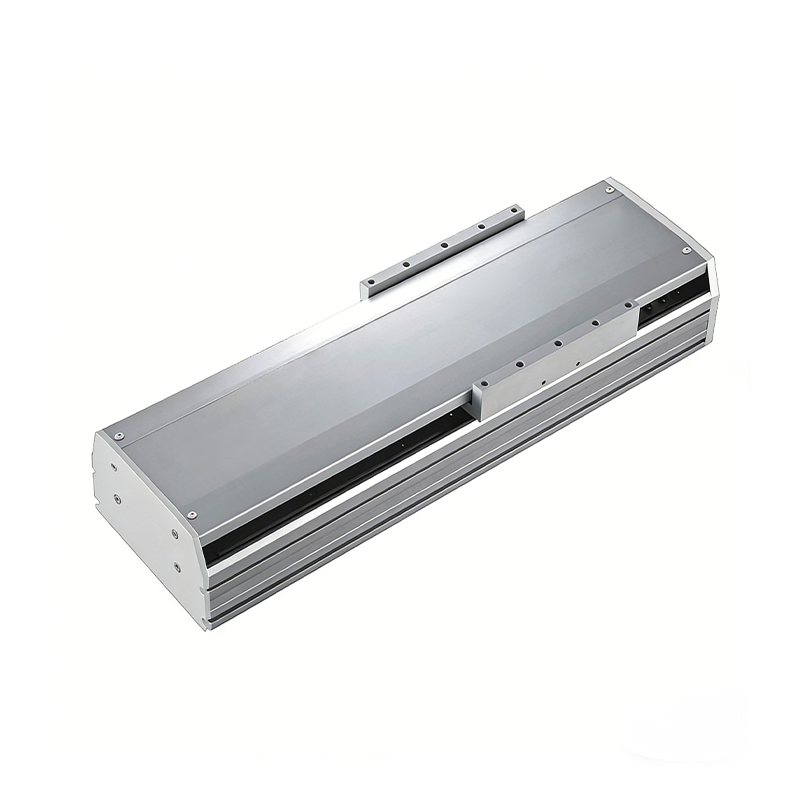 2000mm Long Stroke Ball Screw Linear Module
This 2000mm Long Stroke Ball Screw Linear Module is customized for large-range linear movement automation tasks, support...
READ MOREThis 2000mm Long Stroke Ball Screw Linear Module is customized for large-range linear movement automation tasks, support...
READ MOREThis 2000mm Long Stroke Ball Screw Linear Module is customized for large-range linear movement automation tasks, support...
READ MOREThis 2000mm Long Stroke Ball Screw Linear Module is customized for large-range linear movement automation tasks, support...
READ MORE
If you are interested in our products, please leave us a message. We look forward to providing you with
professional services!
Innovation and transcendence make factory intelligent manufacturing efficient and convenient!
+86 186 2508 0683
19962977901
sales@sz-tys.com
Building 5, Suzhou Mudu International Science and Technology Innovation Park, Jinfeng South Road, Suzhou City, Jiangsu Province, China
