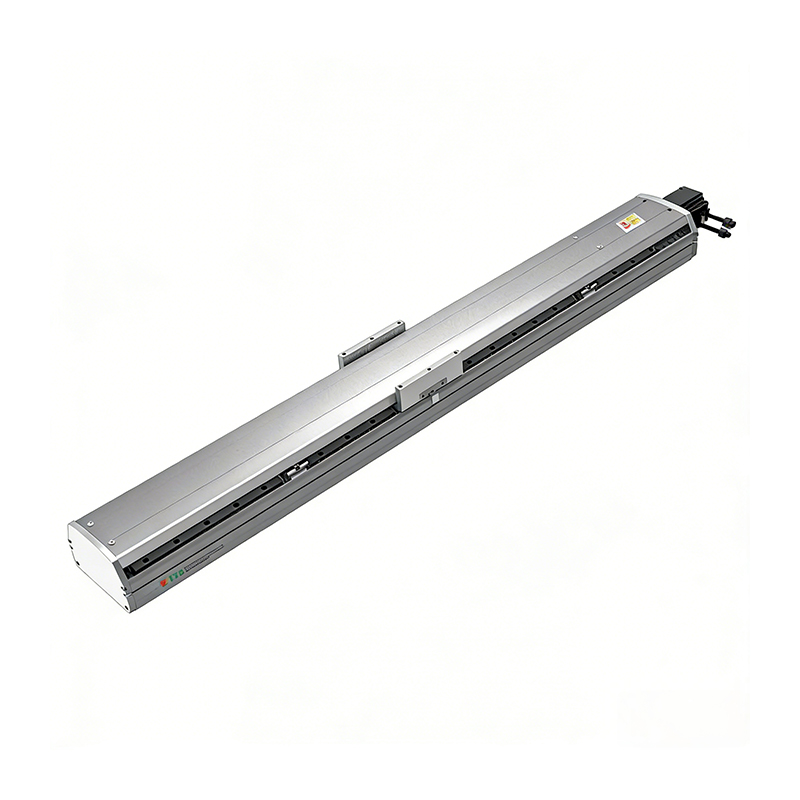
Ball Screw Linear Module: The Preload Question That Only Shows Up When the Load Reverses
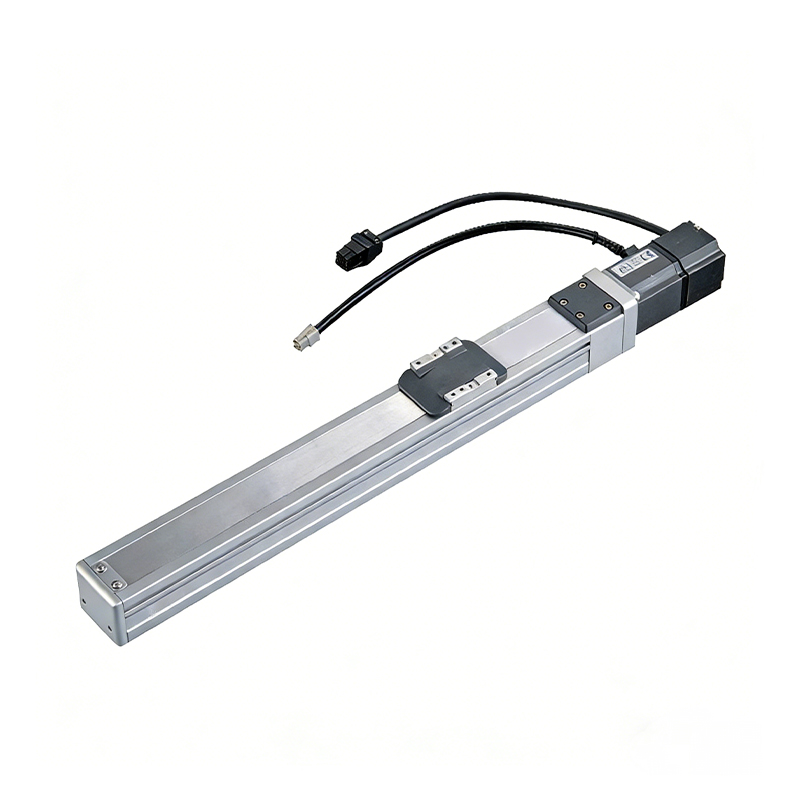
A pick-and-place station running a light payload back and forth across a short stroke started showing a strange symptom during a routine accuracy audit — the module hit its target position accurately when approaching from one direction, but landed a few microns short every time it approached from the opposite direction. Nothing was broken, and the servo tuning hadn't changed. The cause turned out to be preload class: the ball screw linear module had been specified with a standard clearance-class preload, which meant a small amount of backlash existed in the nut-to-screw contact, and that backlash only became visible the instant the load direction flipped.
Why Reversal Is the Moment That Actually Tests Preload
During continuous travel in one direction, a screw assembly's preload class barely matters — the balls stay loaded against the same side of the raceway the entire time, and any internal clearance simply doesn't come into play. The moment the load direction reverses, though, the balls have to cross over and re-seat against the opposite raceway face before the nut can transmit force in the new direction. If there's clearance in that contact, the screw rotates slightly before the nut actually starts moving — a dead zone that shows up exactly as the pick-and-place station experienced it, as a small but repeatable undershoot specific to one approach direction.
| Clearance class, no preload |
Balls leave a measurable dead zone at direction change, but running friction stays lowest across the stroke |
| Light preload |
Dead zone shrinks to a small residual play, with friction only slightly above the clearance-class level |
| Medium preload |
Dead zone becomes minimal or undetectable, though friction rises enough to generate more heat under continuous cycling |
| Heavy preload |
Dead zone is effectively eliminated, at the cost of the highest friction and a shortened service life under high duty cycle |
Why the Instinct to Default to Heavy Preload Doesn't Always Work
It's tempting to default to the tightest preload class available whenever positioning accuracy matters, but heavy preload isn't free — it raises running friction across the entire stroke, not just at the reversal point, which means more heat generation during continuous cycling and a shorter service life for both the screw raceway and the recirculating ball train. A module cycling at high frequency with heavy preload can actually degrade faster than one running lighter preload with an intentionally slower duty cycle, since the constant elevated contact stress accelerates fatigue on the raceway surface regardless of direction changes.
Matching Preload to the Actual Motion Profile
The right preload class depends less on a general accuracy target and more on how often the application reverses direction and how sensitive the process is to that specific dead-zone error. A conveyor-style transfer axis that only reverses occasionally, with generous position tolerance, tolerates clearance-class preload without issue. A pick-and-place or dispensing axis reversing dozens of times a minute, where the final approach position has to land within a few microns regardless of direction, generally needs at least light-to-medium preload to keep the reversal dead zone from becoming a repeatable source of error.
What This Means Beyond the Preload Spec Sheet
Selecting the right preload class only solves half the problem if the manufacturer supplying the ball screw linear module can't hold that preload consistently across a production batch — a nut assembled with slightly more or less preload than specified behaves differently even under an identical nominal preload class rating. This is where a buyer's evaluation needs to look past the spec sheet and into how a supplier actually verifies and controls preload during assembly, not just what preload class they offer on paper.
Where Manufacturing Capability Actually Gets Tested
Assembling a nut to a specific preload level requires controlling ball diameter selection precisely, since preload in a double-nut or oversized-ball design comes from a very small dimensional difference between the balls and the raceway groove. A supplier sorting balls into fine diameter increments and matching them to measured raceway dimensions produces a more consistent preload from unit to unit than one relying on a single standard ball size across all raceway tolerance variation. This detail rarely appears on a datasheet, but it directly affects whether the reversal behavior seen on one unit matches the reversal behavior on the next fifty units from the same order.
| Single standard ball diameter used for all units |
Preload varies with the natural dimensional tolerance of each raceway |
| Ball diameter sorted and matched to measured raceway |
Preload stays tighter and more repeatable from unit to unit |
How This Gets Verified Before a Batch Ships
Suzhou Tongyousheng Electronic Technology Co., Ltd. measures raceway groove dimensions on each nut assembly and selects matched ball sets from graded stock rather than applying one standard ball size across a full production run, which keeps reversal-point backlash within a tighter, more predictable band across an order rather than letting it vary unit to unit based on where each raceway happened to land within its own tolerance range. For an application like the pick-and-place station, this kind of batch-level consistency check matters more than the nominal preload class printed on the spec sheet, since two modules rated at the same preload class can still show different reversal behavior if the underlying ball-to-raceway matching wasn't controlled the same way during assembly.
What a Buyer Can Ask Beyond the Datasheet Preload Rating
A buyer sourcing a ball screw linear module for a direction-reversing application can ask a supplier not just what preload class is offered, but how ball diameter is selected relative to measured raceway dimensions during assembly. It's also worth asking whether reversal backlash is measured on sample units drawn from an actual production batch, rather than assumed purely from the nominal preload class rating printed on the datasheet.



 English
 Français
 русский
 عربى
عربى Español
 Deutsch