Telescopic Electric Cylinder: How Multi-Stage Structure and Manufacturing Accuracy Influence Compact Motion Systems
A compact automation device used for material positioning began showing inconsistent end-position accuracy after several months of operation. The actuator installed in the system had sufficient thrust and stroke according to the original specification, but the extended section developed a small amount of lateral movement when reaching the end of travel. The variation wasn't caused by the motor output or control parameters. The investigation traced back to the multi-stage structure of the telescopic electric cylinder itself, where the relationship between stage overlap length, guide clearance, and machining consistency turned out to have a direct influence on how stable the extended position actually was.
Why Extending Stroke Isn't Just a Matter of Adding More Tube Sections
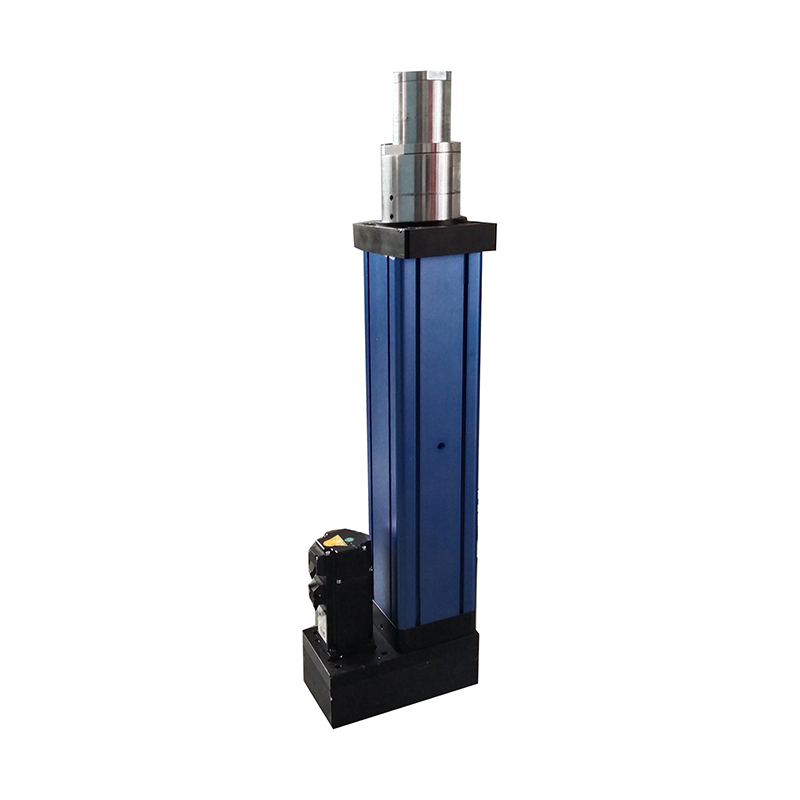
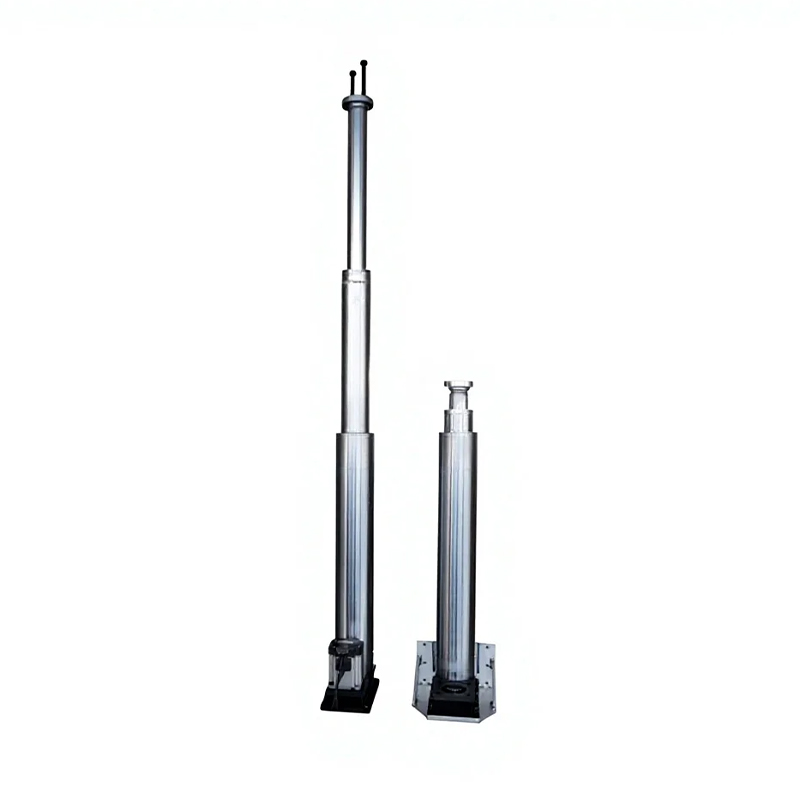
Unlike a conventional electric cylinder with a single moving rod, a telescopic electric cylinder nests multiple stages inside each other to reach a longer stroke within a shorter installation footprint — useful wherever mounting depth or equipment height is limited, but it also introduces a design variable that a single-rod cylinder never has to deal with: each stage needs enough overlap with the one before it to stay properly guided during extension, particularly once an external mechanism starts applying side load or a bending moment rather than pure axial force.
If that overlap runs short, the extended stage starts behaving like a longer cantilever than the drawing assumed. Even with axial thrust sitting comfortably within rated capacity, side forces from tooling, fixtures, or a shifting payload introduce bending stress on the guide surfaces that a purely axial load case never would. On the positioning device, this showed up gradually — first as a barely perceptible vibration at full extension, later as the measurable lateral drift that eventually triggered the investigation.
Where Tolerance Accumulation Actually Builds Up Across Stages
Each nested stage depends on the one before it for guidance, which means a small deviation at one section doesn't stay contained — it carries through to every stage further along the extension path. A tube that measures within spec on its own can still produce uneven clearance once paired with an adjoining stage sitting at the opposite end of its own tolerance range, and this kind of stacking becomes more noticeable the longer the telescopic structure runs, simply because there are more interfaces for the error to accumulate across.
| Stage overlap length |
A short overlap turns the extended stage into an effective cantilever, making it more sensitive to side loading the further it extends |
| Guide clearance between nested sections |
Too tight and friction rises unevenly across stages; too loose and lateral play shows up right at full extension |
| Bore straightness over section length |
Tool deflection during boring increases with depth, so longer sections need a finishing pass to correct what a single boring operation leaves behind |
Why Bore Finishing Matters More on Longer Telescopic Sections
Inner bore cylindricity, surface roughness, and straightness all influence how evenly a moving stage contacts its guide surface across thousands of extension cycles. On longer sections, a standard boring pass alone tends to leave small variation along the bore length, since tool deflection increases as cutting depth increases — a detail that matters far more on a telescopic electric cylinder's inner stages than on a short, single-rod cylinder bore. Honing after boring corrects these local dimensional differences and produces a more consistent surface for guided movement, though the surface treatment still has to be matched to the actual operating environment — a cylinder cycling continuously in an automation station needs a different finish specification than one used for occasional positioning, and treating this as a fixed spec rather than something tied to duty cycle is where some designs fall short.
What Determines Whether Design Intent Actually Becomes a Consistent Product
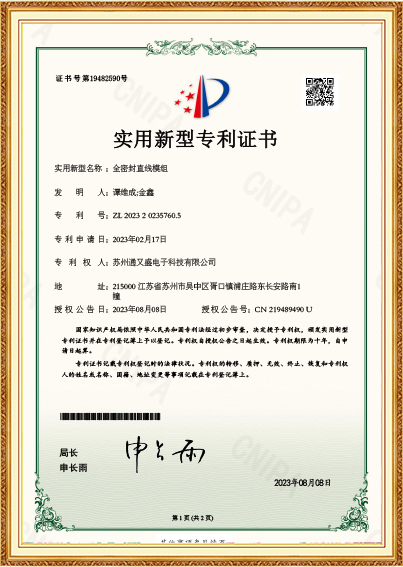
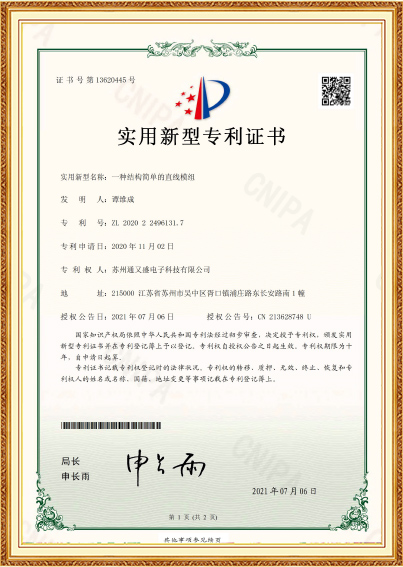
None of the design reasoning above holds up if manufacturing can't reproduce it reliably across a production run. CNC machining accuracy on each telescopic stage, fixture repeatability during assembly, and how clearance gets adjusted at final build all determine whether unit one of an order behaves the same way as unit fifty once installed. Suzhou Tongyousheng Electronic Technology Co., Ltd. runs stage machining, assembly alignment, and full-stroke motion verification as a connected sequence on telescopic electric cylinder builds rather than treating each stage as an independent component to be checked only against its own drawing tolerance, since a stage that passes individual inspection can still behave differently once paired with an adjoining section at the far end of its own tolerance band.
| Individual stage measurement |
Confirms each tube meets its own machining tolerance, but doesn't reveal how it behaves once nested with the adjoining stage |
| Assembled clearance verification |
Checks the actual fit between nested sections, which is where tolerance stacking between stages first becomes visible |
| Full-stroke motion testing |
Runs the assembled cylinder through its complete extension and retraction cycle to surface friction changes or binding that a static check would miss |
What a Buyer Comparing Telescopic Cylinder Suppliers Can Actually Ask
Beyond stroke, thrust, and installation dimensions, a buyer evaluating a telescopic electric cylinder supplier gets more useful information by asking why a particular stage overlap was chosen, how side loading was accounted for in that calculation, and whether assembled clearance is verified stage by stage or only checked at the finished unit level. For applications like robotic positioning, compact lifting mechanisms, or automated transfer devices where the cylinder works alongside other moving structures, a supplier that reviews the full application — mounting orientation, expected side load, operating frequency — before production begins tends to catch the kind of overlap or clearance mismatch that only shows up months into service, rather than leaving it to surface as an intermittent positioning drift on the customer's own line.



 English
 Français
 русский
 عربى
عربى Español
 Deutsch