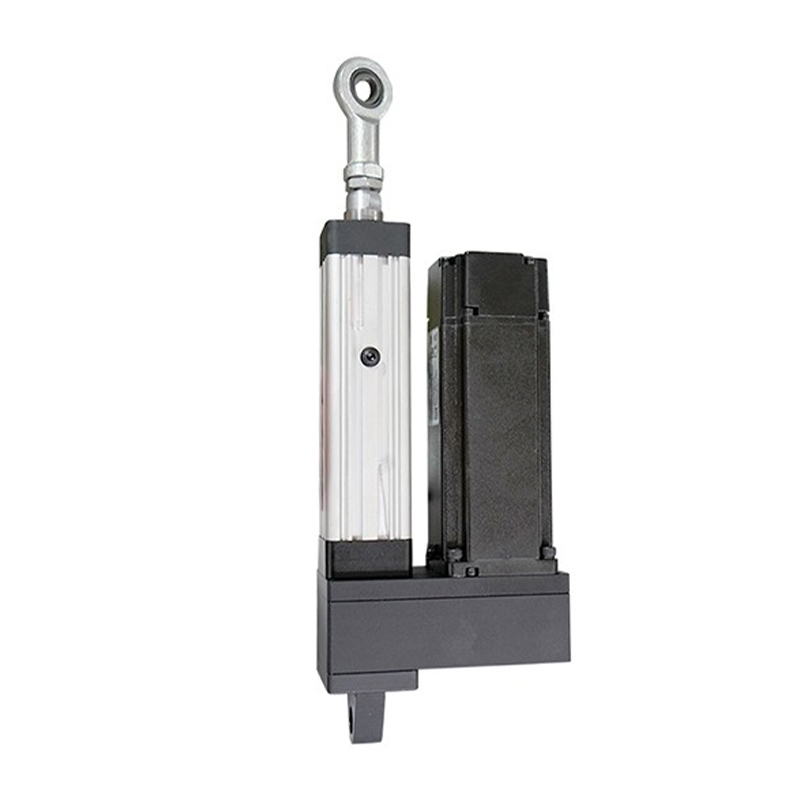
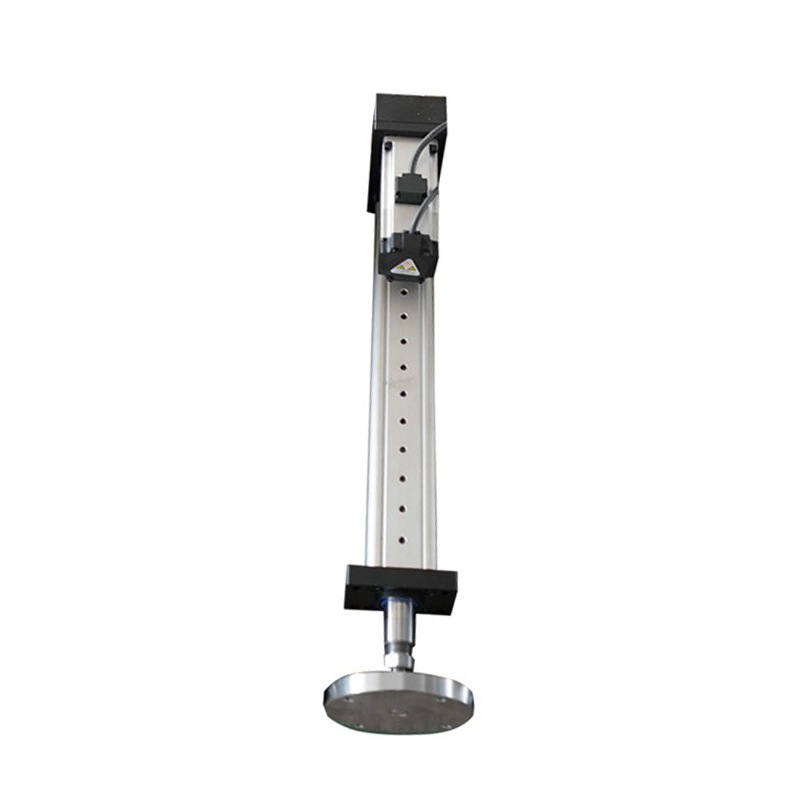
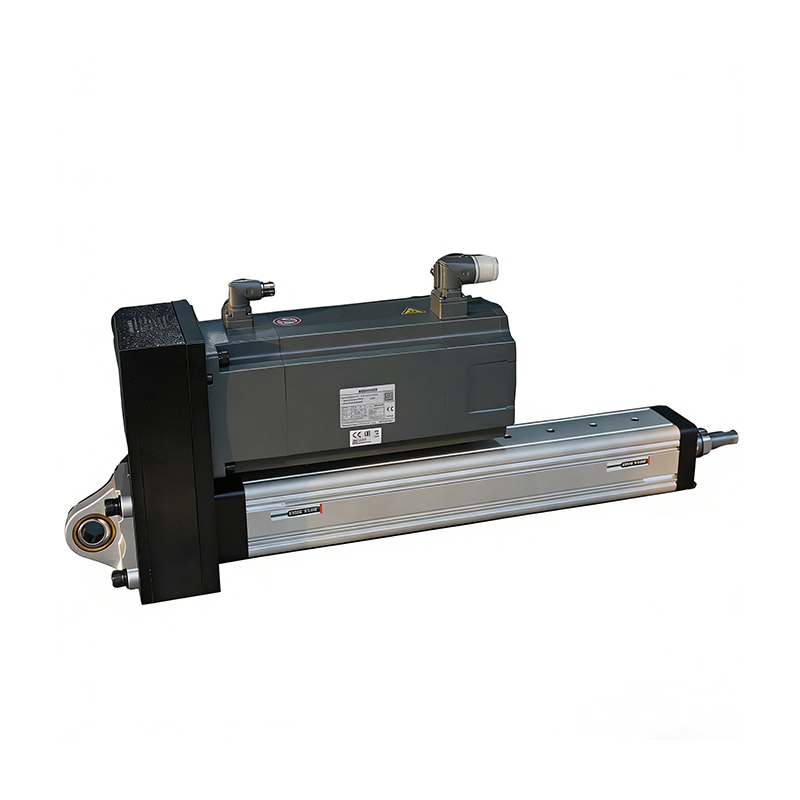
Foldback Electric Cylinder: How Motor Matching, Manufacturing Control, and Custom Design Influence Motion Performance
A packaging automation line upgrade encountered an unexpected issue after a foldback electric cylinder was installed on a high-speed folding station. During initial commissioning, the actuator reached the required position and passed basic movement checks, but after continuous production cycles, small positioning deviations appeared near the end of the folding stroke. The deviation was only a fraction of a millimeter, yet it occasionally caused the folding arm to contact the material at the wrong timing point and interrupt the process. The actuator itself was operating within its rated load range. Further analysis showed that the servo motor selection had been based mainly on average operating torque, while the actual application generated a short acceleration spike when the folding mechanism encountered material resistance at the end of travel.
Motor Selection Requires Evaluation of the Complete Load Profile
When selecting a motor for a foldback electric cylinder, rated torque is only one part of the evaluation. Industrial motion systems often experience changing loads during a single cycle, especially in applications involving pressing, folding, clamping, or rapid positioning. A mechanism may move with low resistance during the initial stroke and suddenly require additional force when contacting the workpiece or reaching the final position.
The torque-to-inertia ratio of the motor becomes important under these conditions because it affects how quickly the system responds to sudden load changes. A motor with sufficient torque but excessive rotor inertia may react slower during acceleration and deceleration stages, which can create overshoot, vibration, or longer settling time. For foldback electric cylinder applications with frequent direction changes, motor characteristics need to match the actual movement profile instead of being selected only according to maximum thrust requirements.
| Application Condition |
Main Mechanical Challenge |
Motor Selection Focus |
| Low-speed folding with stable resistance |
Maintaining thrust output and positioning stability |
Rated torque and operating efficiency |
| High-speed folding with sudden contact load |
Managing rapid force changes during stroke completion |
Torque-to-inertia ratio and dynamic response |
| Variable material conditions |
Different resistance levels between production batches |
Torque margin and servo parameter adjustment capability |
Mechanical Resonance Should Be Considered During Servo Integration
A foldback electric cylinder does not operate as an isolated component. The motor, coupling, screw mechanism, mounting structure, and external load form a combined mechanical system with its own natural frequencies. When servo response settings interact with these frequencies, vibration may appear only under specific speeds or acceleration profiles, making the issue difficult to identify during basic commissioning.
Motion testing under the actual working cycle provides more practical information than checking motor specifications alone. The evaluation normally includes acceleration behavior, stopping response, vibration characteristics, and position recovery after load changes. These factors become more important in compact automation equipment where the foldback structure is selected to reduce installation space while maintaining required movement capability.
Custom Design Capability Starts From Application Conditions
A customized foldback electric cylinder project requires more than changing a mounting plate or adjusting stroke length from an existing model. The mechanical design needs to consider the actual motion path, installation space, load direction, cycle frequency, and connection method between the actuator and the customer's mechanism.
A practical design review begins with the operating conditions of the equipment rather than the actuator model itself. Folding angle, pivot position, external moment load, acceleration requirement, and available installation area all influence internal transmission selection and motor configuration. This process helps prevent situations where a standard actuator is modified externally while the internal structure remains unsuitable for the actual working condition.
| Design Review Item |
Engineering Question |
Verification Method |
| Load path analysis |
Does the actuator configuration match the actual force direction? |
Review mechanical drawings and force calculations |
| Motor matching |
Can the servo system handle acceleration and resistance changes? |
Check motion profile and dynamic response data |
| Installation structure |
Can the mounting design maintain alignment during operation? |
Evaluate assembly tolerance and fixture strength |
Manufacturing Accuracy Influences Customized Cylinder Performance
The performance of a foldback electric cylinder is also affected by manufacturing details after the design stage. Housing machining accuracy, motor mounting alignment, screw support positioning, and assembly adjustment influence how smoothly the actuator operates during repeated cycles.
For example, a small deviation between the motor axis and transmission input shaft can increase coupling stress and create additional vibration during high-speed operation. Inaccurate housing machining may also affect guide alignment and increase friction during extension and retraction. These conditions may remain unnoticed during short testing but can influence repeatability when the actuator operates continuously in an automated production environment.
The combination of mechanical design software, CNC machining resources, and automation equipment development experience allows manufacturers to adjust actuator structures according to different installation conditions and motion requirements. These capabilities are closely connected with the production consistency of customized foldback electric cylinder solutions.
Production Verification Requires More Than Individual Component Inspection
Component-level inspection is necessary, but the final actuator performance depends on how all parts work together after assembly. Screw accuracy, bearing installation, preload adjustment, housing alignment, and transmission matching need to be evaluated as a complete system.
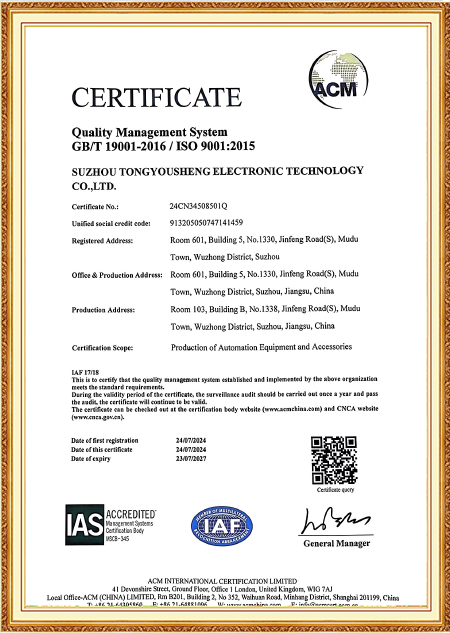
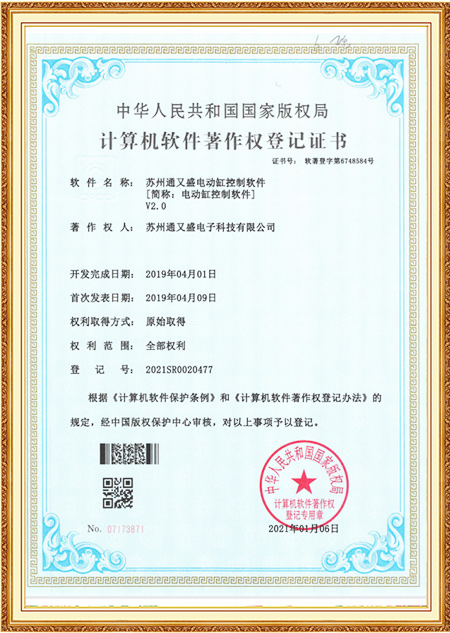
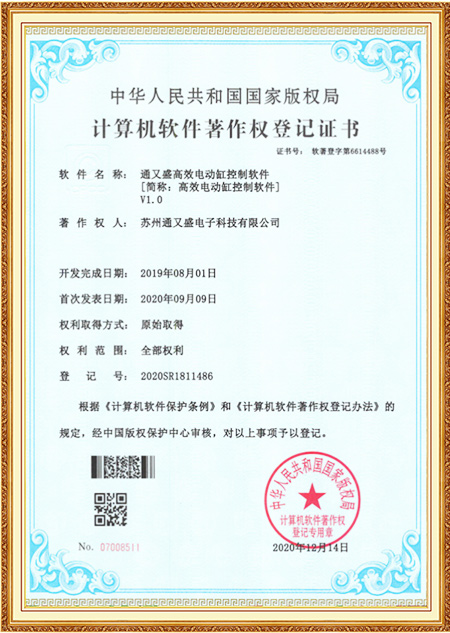
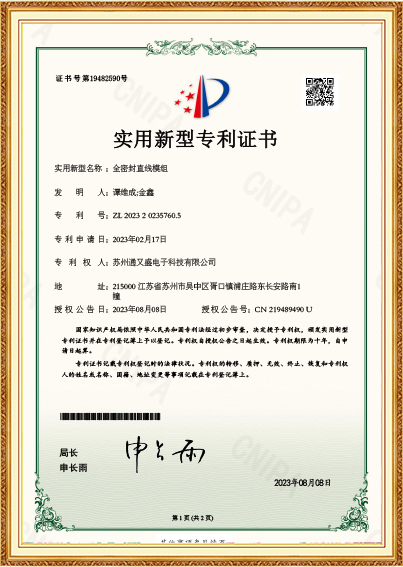
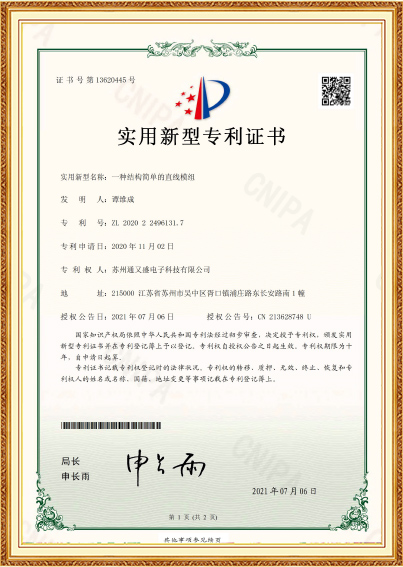
For customized foldback electric cylinder projects, Suzhou Tongyousheng Electronic Technology Co., Ltd. integrates mechanical design review with precision machining capability and assembly verification. The process covers structural requirements, transmission selection, production feasibility, and motion testing during project development.
| Manufacturing Stage |
Potential Influence on Performance |
Inspection Focus |
| Precision machining of housing and mounting parts |
Affects alignment between transmission and structural components |
Dimensional accuracy and assembly tolerance |
| Transmission installation and adjustment |
Influences friction, backlash, and running smoothness |
Screw preload and movement resistance |
| Final motion verification |
Shows actuator response under operating conditions |
Position repeatability and cycle testing |
Reviewing a Manufacturer's Custom Development Process
When evaluating a foldback electric cylinder supplier, customers can review whether the manufacturer provides application-based design records instead of only standard product specifications. Useful information may include mechanical calculation documents, motor selection records, prototype test results, and production inspection procedures.
A manufacturer with automation equipment development experience needs to connect design decisions with manufacturing capability. Changes in installation requirements, load conditions, or motion cycles can then be considered during product development, while machining methods, assembly procedures, and verification steps remain aligned with the final application.
Project Information Used During Configuration Review
During supplier communication, foldback electric cylinder projects usually involve mechanical drawings, load conditions, required motion profiles, motor configuration, machining requirements, and validation methods. These materials are exchanged together with prototype records, inspection documents, and production requirements to support the final configuration review of the actuator.



 English
 Français
 русский
 عربى
عربى Español
 Deutsch