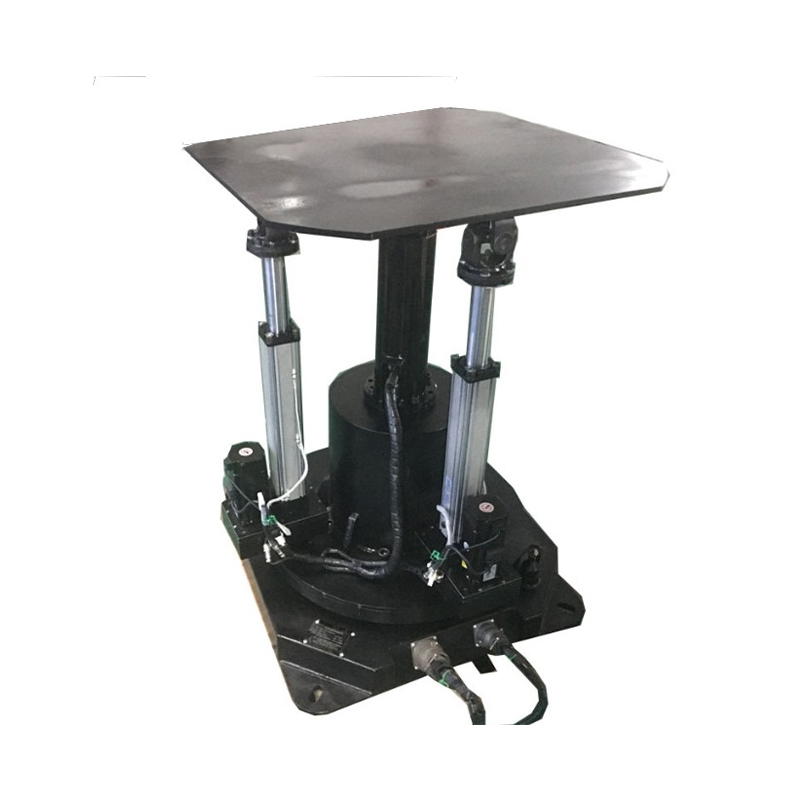
Two-Degree-of-Freedom Platform Custom

Home / Products / Multi-Degree of Freedom Platform / Two-Degree-of-Freedom Platform

About Us
Suzhou Tongyousheng Electronic Technology Co., Ltd.

Suzhou Tongyousheng Electronic Technology Co., Ltd. is a leading high-tech enterprise integrating R&D, production and sales, specializing in the design, manufacturing and distribution of premium automation equipment and components—including electric cylinders, linear slide modules, linear motor modules, servo presses, robotic 7th axes, and six-degree-of-freedom platforms.

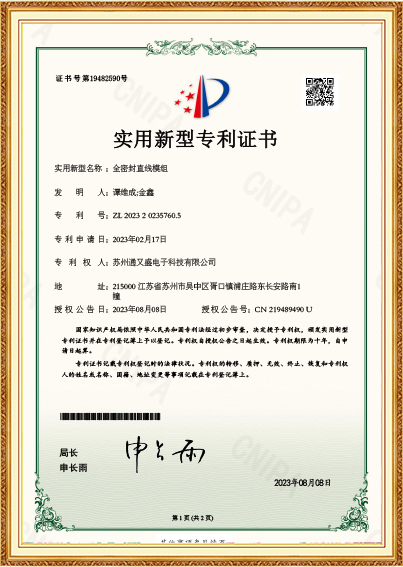
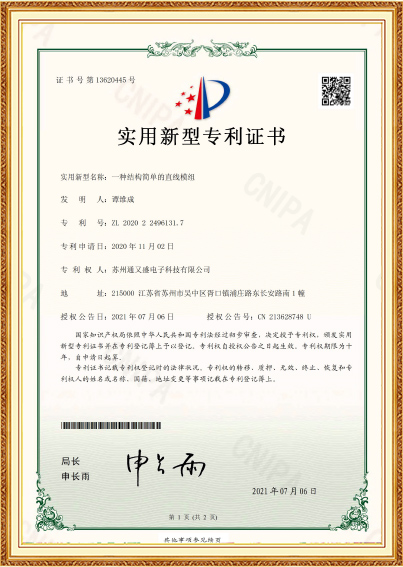
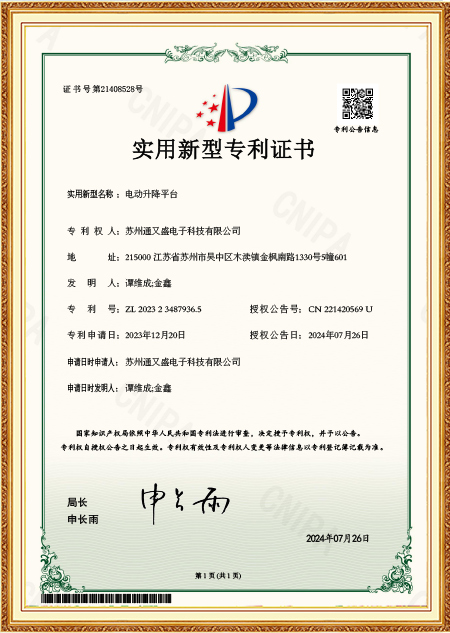
As China Two-Degree-of-Freedom Platform Manufacturers and Two-Degree-of-Freedom Platform Suppliers, we recognize technological innovation as the cornerstone of sustainable growth. Our R&D team, composed of industry veterans with deep technical expertise and extensive hands-on experience, serves as the engine driving our continuous progress. By pushing technical boundaries, accelerating product iteration, and pioneering industry advancements, we have secured a portfolio of core patents that underscore our leadership in automation and deliver a decisive competitive edge. We further reinforce our capabilities with state-of-the-art R&D tools, professional design software, and high-precision CNC machining centers, ensuring every development effort is backed by world-class resources.

Through years of relentless exploration and execution, Tongyousheng has established itself as an industry benchmark, renowned for its robust R&D, cutting-edge products, and uncompromising quality. We are dedicated to advancing the Industry 4.0 revolution, collaborating with state-owned enterprises, defense technology institutions, and top-tier universities to build a deeply integrated ecosystem of industry, academia, and research—pushing the frontiers of intelligent manufacturing together. At the heart of our mission is a commitment to delivering automation solutions that are intuitive to operate, highly efficient, ultra-reliable, and cost-effective. Every product we create is a reflection of our technical ingenuity and a direct response to our customers' evolving needs.
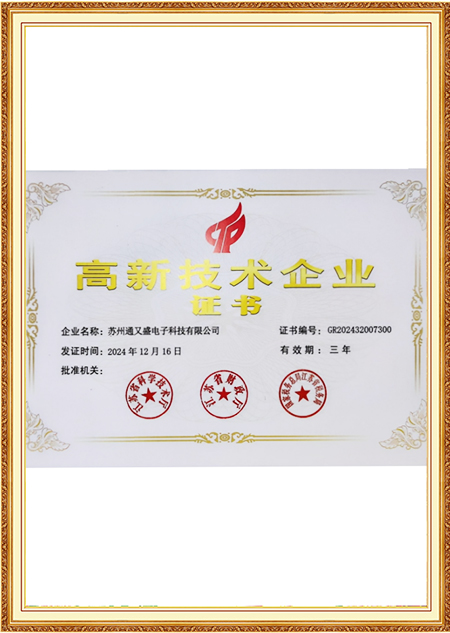
Certificate Of Honor
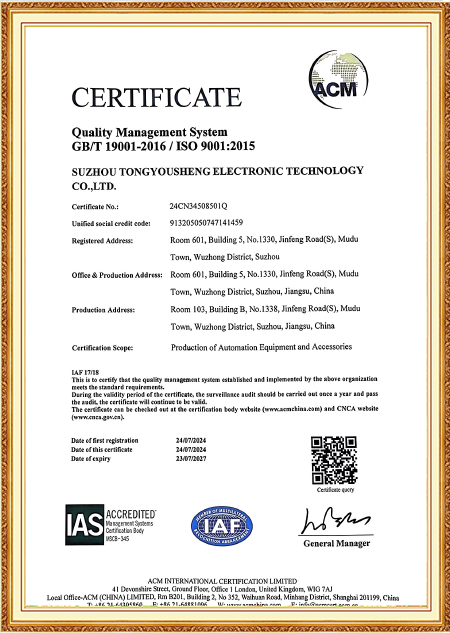
  • ISO 9001:2015 Certificate
  • High-tech Enterprise Certificate
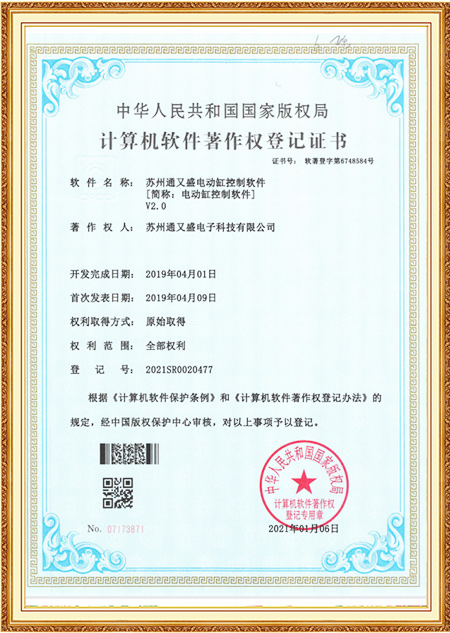
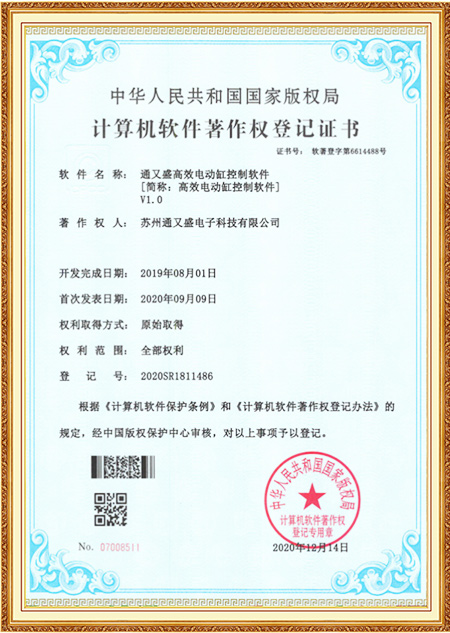
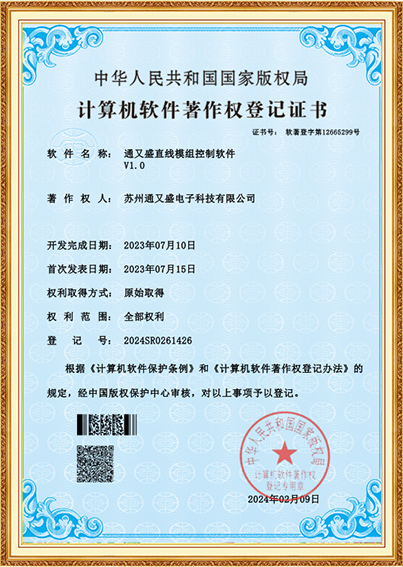
  • Copyright Certificate
  • Copyright Certificate
  • Software Copyright Certificate
  • Patent Certificate
  • Patent Certificate
  • Patent Certificate
Message Feedback
Blog
Two-Degree-of-Freedom Platform Industry knowledge

Why Axis Squareness Matters More Than It Looks on a Two-Degree-of-Freedom Platform Drawing

A Small Angular Offset That Shows Up Later, Not on Day One

A two-degree-of-freedom platform passes its incoming acceptance test with no obvious problem — angular range checks out, both axes move freely, load capacity meets spec. Then three months into a vision-alignment application, the tooling mounted on the platform starts drifting a fraction of a degree off its expected orientation whenever it pans through a wide angle. The root cause, more often than not, traces back to how squarely the pitch axis was set relative to the yaw axis during assembly, not to any single component failing outright. Suzhou Tongyousheng Electronic Technology Co., Ltd. treats this kind of delayed symptom as a reminder that angular geometry between the two rotational axes deserves attention well before final calibration begins.

What Perpendicularity Actually Means on the Bench

On a two-axis gimbal-style platform, the yaw axis carries the pitch axis, and any deviation from a true 90-degree relationship between them introduces a cross-coupling error that grows as either axis rotates away from its neutral position. This is not something a static dial indicator check alone will catch reliably, since the error only becomes visible once both axes are actuated together across their full travel. A common shop-floor method involves mounting a precision square or an autocollimator target on the inner axis housing and sweeping the outer axis through its range while logging angular deviation at several fixed points, rather than checking a single reference position and assuming the rest of the travel follows the same line.

Concentricity Between the Two Rotational Centers

Concentricity error — where the physical rotation center of one axis does not align with the intended geometric center relative to the other axis — behaves differently from a perpendicularity fault. Instead of a growing angular offset, it tends to produce a small translational shift in the payload's apparent position each time the platform pans or tilts, which can be mistaken for backlash if the assembly technician is not specifically checking for this distinction. Bearing seat machining tolerance on the cross-shaft or trunnion block is usually the first place to look, followed by shimming at the mounting interface if the seat itself measures within spec but the housing alignment does not.

Perpendicularity between axes Verified dynamically across full sweep, not just at a single static point, since cross-coupling error compounds with angle
Concentricity of rotation centers Shimming at the mounting interface often corrects this without requiring the bearing seat itself to be re-machined
Cross-shaft bearing preload Too loose introduces play that mimics a concentricity fault; too tight accelerates fatigue on the rolling elements
Gear mesh backlash on the drive train Backlash measured at zero load can still open up under an offset payload's inertial torque during reversal

Where Reciprocating Motion Starts to Wear the Platform Down

A two-degree-of-freedom platform used in a test-and-calibration rig or an inspection station rarely holds a fixed angle — it sweeps back and forth continuously, which is a very different loading pattern from a platform that moves once and then dwells. Reciprocating oscillation subjects the bearings and gear teeth to repeated reversal loading, and it is this reversal, more than the raw magnitude of the load, that drives fatigue crack initiation at the contact surfaces over time. Ball bearings under oscillating rather than rotating load can also suffer from a specific wear pattern called false brinelling, where repeated small-amplitude motion at the same contact points wears micro-indentations into the raceway even though the bearing never completes a full revolution.

How Gear Transmission Components Respond to This Duty Cycle

Where the platform's axes are driven through a worm gear or a harmonic drive rather than direct-drive torque motors, sustained reciprocating motion introduces a different fatigue mechanism at the tooth flank, since the load direction reverses on every cycle rather than remaining unidirectional. Harmonic drives, in particular, experience flexspline fatigue that accumulates according to the number of reversal cycles rather than total running hours, meaning a platform performing rapid small-angle oscillations can rack up meaningful fatigue exposure faster than one making slower, wider sweeps. Suzhou Tongyousheng Electronic Technology Co., Ltd. factors this reversal-cycle count into how a platform's drive train gets sized for applications where the duty cycle involves near-constant back-and-forth motion rather than occasional repositioning.

Reading Assembly Records Alongside Duty Cycle Data

A platform specified for continuous oscillation benefits from assembly documentation that goes beyond a single-point perpendicularity check, paired with a drive train rated against reversal cycles rather than just peak torque. Buyers comparing two platform quotes for this kind of duty cycle tend to get more useful information from asking how axis squareness was verified across full travel and how the gear or bearing set was rated for reversal fatigue, since these two factors interact directly once the platform is running continuous back-and-forth motion in the field.