


 English
 Français
 русский
 عربى
عربى Español
 Deutsch
Tel
+86 186 2508 0683

A packaging line jams when a pneumatic cylinder slams a pusher too hard and too fast. The fix is not a bigger air compressor. It is a servo-driven electric cylinder that moves the pusher to an exact position, applies a controlled force, and reports back when the part is seated. That shift from binary air pressure to programmable motion is why electric cylinders have become common in automated assembly, testing, and handling equipment.
An electric cylinder works by turning the rotary motion of a servo motor into linear thrust through a screw, belt, or rack-and-pinion drive. A controller commands the motor, an encoder measures the actual position, and a closed-loop algorithm adjusts the output thousands of times per second. The result is a linear actuator with programmable stroke, speed, force, and acceleration. For a broader look at available models, see the electric cylinder product line.
The most common electric cylinder design uses a servo motor coupled to a ball screw or planetary roller screw. When the motor shaft rotates, the screw turns. A nut threaded onto the screw converts that rotation into linear movement. The nut is attached to a push rod or carriage, so the load moves along the screw axis. One full motor revolution produces a fixed linear distance called the lead. A screw with a 10 mm lead moves the nut 10 mm per revolution. If the motor spins at 3,000 rpm, the theoretical linear speed is 30,000 mm/min, or 0.5 m/s.
That simple relationship hides the engineering that makes electric cylinders useful. The motor is not a constant-speed device. A servo motor can accelerate, decelerate, hold position, and reverse direction on command. The screw is not just a thread. It is a precision-ground component with a defined lead error, backlash, and axial stiffness. The nut is not a simple block. It contains recirculating balls or rollers that reduce friction and wear. Together, these parts form a system whose output can be predicted and repeated.
An electric cylinder is more than a motor and a screw. Several subsystems determine how well it performs in a real machine.
The motor provides torque. In most industrial electric cylinders, it is a brushless servo motor with permanent magnets. The motor’s torque is multiplied by the screw’s mechanical advantage. A 400 W motor driving a 5 mm lead ball screw can produce thousands of newtons of thrust, depending on efficiency and speed. Feedback comes from an encoder mounted on the motor shaft or, in higher-end designs, from a linear encoder on the push rod. The encoder tells the controller where the load actually is, not where it should be. That distinction is the basis of closed-loop control.
The screw and nut set the cylinder’s thrust, speed, accuracy, and life. Ball screws use recirculating steel balls between the screw and nut. They offer high efficiency, typically 90 percent or more, and low friction. Planetary roller screws use threaded rollers instead of balls. They handle higher thrust and shock loads in a smaller envelope. Lead screws, also called trapezoidal screws, use sliding contact. They are inexpensive, self-locking, and quiet, but they wear faster and have lower efficiency. The choice depends on the application: a light-duty inspection axis may use a lead screw, while a heavy press may require a roller screw.
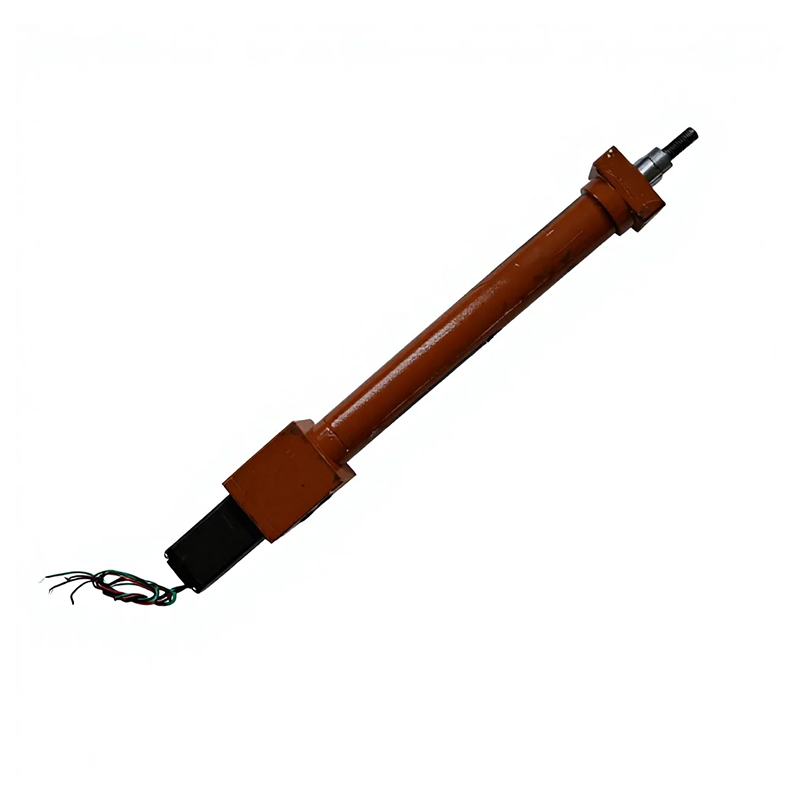 Coaxial Integrated Precision Inline Electric Cylinder SeriesCoaxial integrated inline electric cylinder with ±0.01 mm positioning accuracy and space-saving structure for precision assembly, lab testing, and compact automation.View Product →
The push rod must be guided so it does not rotate or bend. Linear bearings, guide rails, or a splined shaft keep the rod aligned. The housing protects the screw from dust, chips, and moisture. Seals and wipers extend life in dirty environments. For food, medical, or semiconductor applications, the housing may be stainless steel or anodized aluminum with cleanroom-compatible lubricant.
An electric cylinder can operate in several control modes, often switching between them within one cycle. In position mode, the controller moves the rod to a target coordinate. The encoder closes the loop. This is common in pick-and-place, dispensing, and indexing. In speed mode, the controller maintains a set velocity regardless of load changes. This suits conveying or winding. In force mode, the controller regulates motor torque to apply a specific force. Force mode is used in press-fit, clamping, and testing. Some controllers offer hybrid modes, such as position-to-force, where the cylinder moves quickly to a position and then transitions to force control for the final press.
Closed-loop control repeats a simple sequence: read the encoder, compare actual position to commanded position, calculate an error, and adjust motor current. The adjustment happens at the servo drive’s update rate, often 1 to 10 kHz. That speed is why an electric cylinder can hold a position within a few micrometers and still respond to a sudden load change without overshooting. Tuning the control loop—proportional, integral, and derivative gains—matches the cylinder to the load’s inertia and stiffness.
Electric cylinders compete with pneumatic and hydraulic actuators. Each has a place.
| Feature | Electric cylinder | Pneumatic cylinder | Hydraulic cylinder |
|---|---|---|---|
| Position control | Any point, closed-loop | Usually two ends, limited mid-position | Analog or servo, complex |
| Force control | Programmable via torque | Pressure-based, less precise | High force, pressure-based |
| Speed | Programmable, high | Fast but hard to profile | Moderate to high |
| Efficiency | High, energy on demand | Low, compressor losses | Low, pump losses |
| Cleanliness | No fluid, low noise | Air exhaust, moisture | Oil leaks possible |
| Maintenance | Periodic lubrication | Seal replacement | Fluid and seal service |
Pneumatic cylinders are inexpensive and robust, but they cannot easily stop at an arbitrary position or apply a controlled force. Hydraulic cylinders deliver enormous force, but they require pumps, valves, and fluid handling. Electric cylinders offer the middle ground: programmable motion, high efficiency, and clean operation. They are often the best choice when the process needs multiple positions, force profiling, or data feedback.
When specifying an electric cylinder, several parameters determine whether it will work in the machine.
These parameters interact. A high-thrust, high-speed cylinder needs a larger motor and a stronger screw. A long-stroke cylinder may need a larger screw diameter to avoid whipping at high speed. A cleanroom cylinder may need a sealed housing and vacuum-compatible lubrication. The selection process is a balancing act between performance, size, cost, and life.
Electric cylinders appear wherever a machine needs controlled linear motion. In 3C electronics, they press connectors, dispense adhesive, and test buttons with force feedback. In semiconductor manufacturing, they position wafers and actuate grippers in clean environments. In medical equipment, they drive patient tables, syringe pumps, and rehabilitation devices with smooth, quiet motion. In chemical and outdoor environments, waterproof and explosion-proof electric cylinders handle washdown and hazardous areas. In automotive manufacturing, they press bearings, seat seals, and run endurance tests on components.
Beyond discrete actuators, electric cylinders form the building blocks of multi-axis systems. A Cartesian robot combines two or three electric cylinders or linear modules to move a tool in X, Y, and Z. A six-degree-of-freedom platform uses six actuators to create roll, pitch, yaw, and translation for flight simulators or vehicle testing. The same working principle scales from a compact 50 mm stroke unit to a heavy-duty cylinder with several tonnes of thrust.
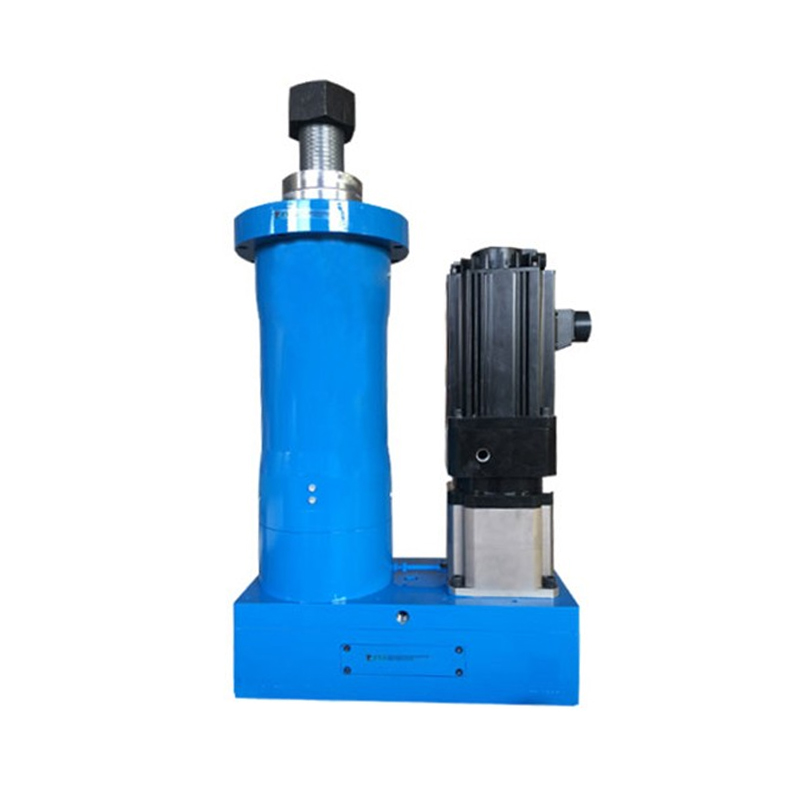 IP65 Splash-Proof Waterproof Electric Cylinder for Harsh EnvironmentsWaterproof electric cylinder with IP65 protection and dust-proof cover for outdoor construction, mining, and cleaning equipment in wet, dusty conditions.View Product →
Integrating an electric cylinder into a machine involves more than bolting it in place. The mounting must resist the reaction torque of the motor and the side loads on the rod. Misalignment between the cylinder and the load causes premature bearing wear and seal failure. The controller must match the motor’s feedback type, voltage, and communication protocol. Many drives support EtherCAT, CANopen, or Modbus, allowing the cylinder to exchange position and force data with a PLC or robot controller.
Cables and connectors need strain relief and routing that avoids flex fatigue. The cylinder’s rod should be protected from weld spatter, cutting chips, and abrasive dust. In high-cycle applications, lubrication intervals and seal replacement schedules should be planned. For vertical loads, a brake or self-locking screw prevents the rod from dropping when power is removed. For high-precision work, a linear encoder or a thermal compensation model can correct for screw expansion as the cylinder warms up.
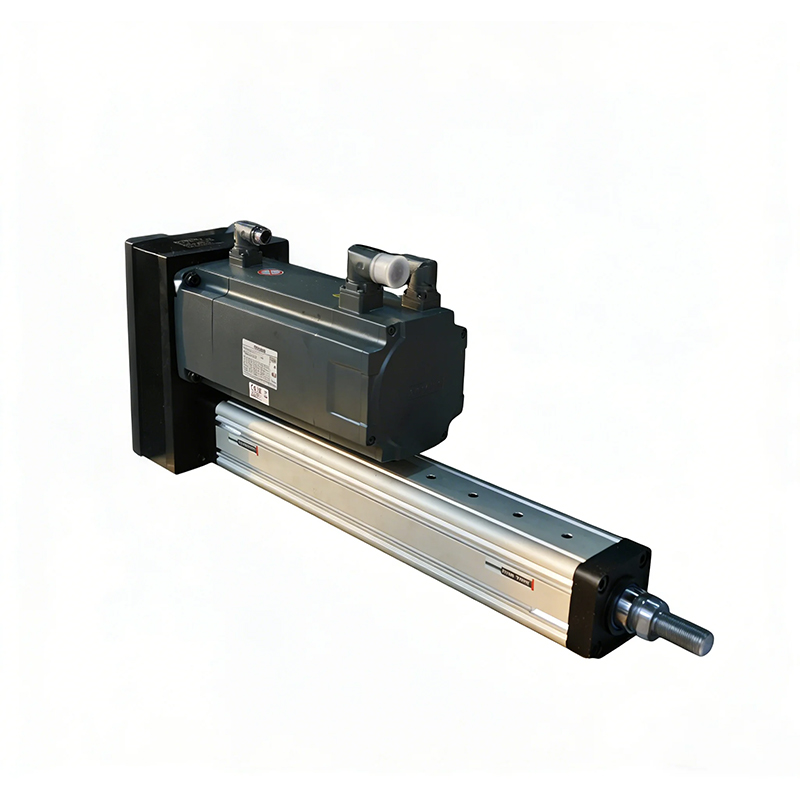 Ball Screw Foldback Electric Cylinder for Precision AutomationFoldback electric cylinder with ball screw transmission for high efficiency, low friction, and stable precise position control in automation and robotics.View Product →
An electric cylinder works by combining a servo motor, a mechanical conversion screw, and a feedback loop. The motor rotates, the screw translates, the encoder verifies, and the controller corrects. That closed-loop chain delivers programmable position, speed, and force in a single package. It is not always the cheapest option, but it is often the most capable when a process needs more than two endpoints or a controlled push. For engineers comparing actuators, the key question is not whether an electric cylinder can move a load. It is whether the application needs the precision, flexibility, and data that only a servo-driven linear actuator can provide.
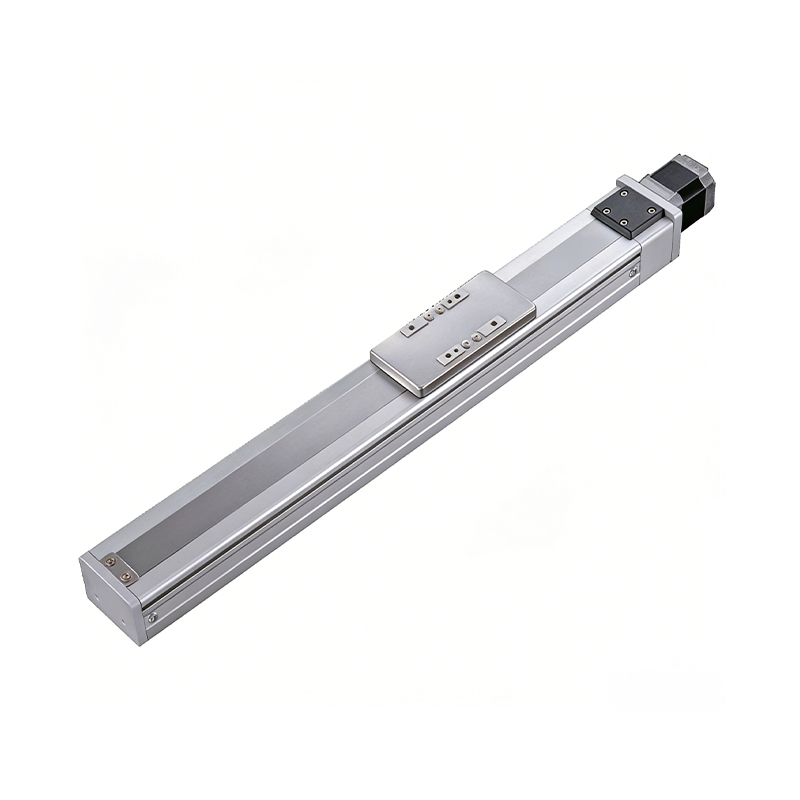 0.01mm High Precision Ball Screw Driven Rail-Embedded Linear Module
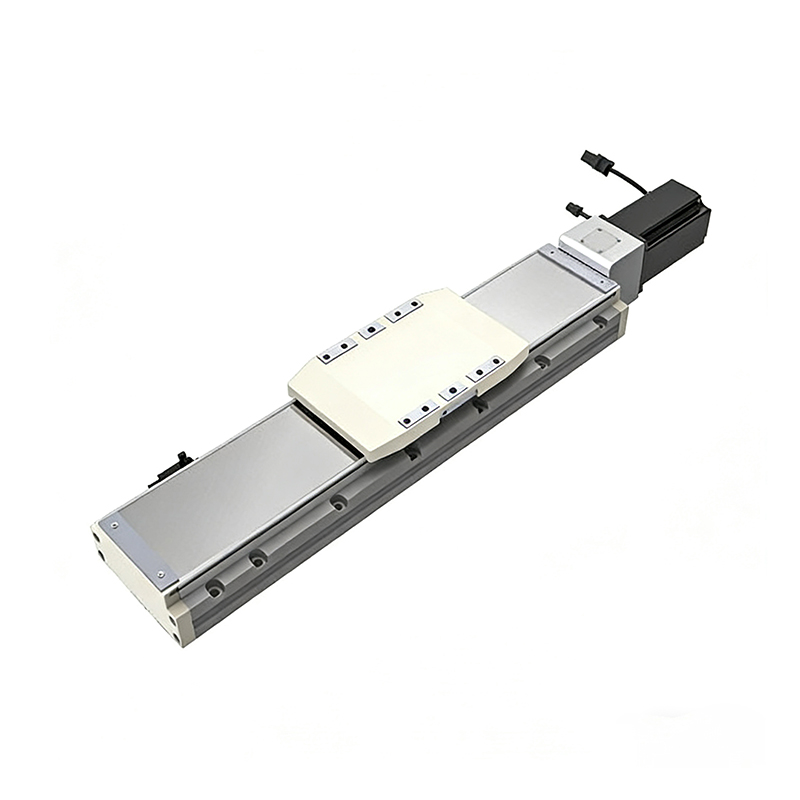 Heavy Load Ball Screw Driven Rail-Embedded Linear Module
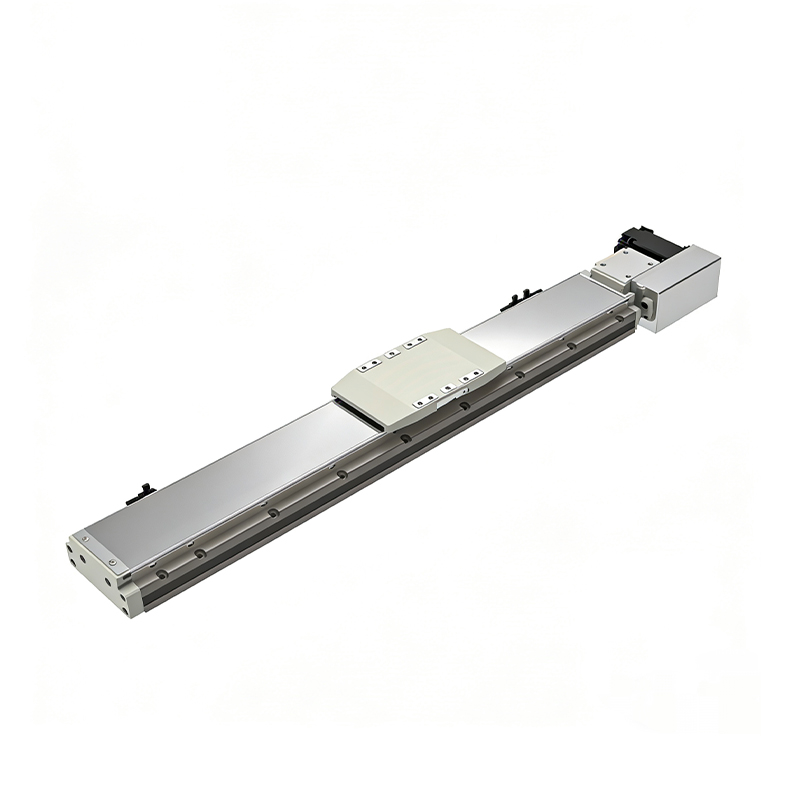 110KG Load Long Stroke Rail-Embedded Linear Module
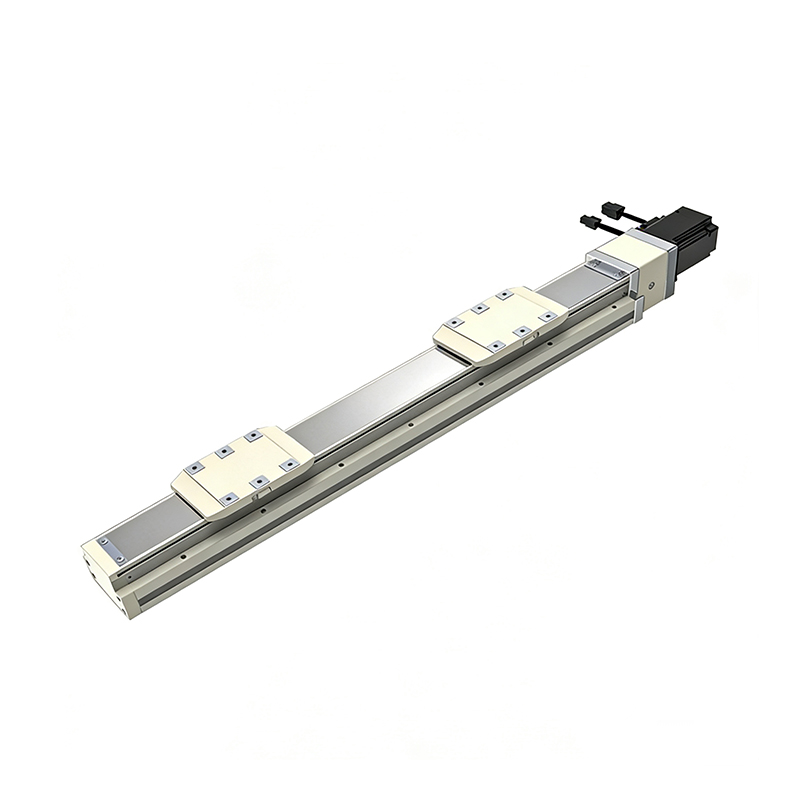 Dual-Slider High Precision Rail-Embedded Linear Module
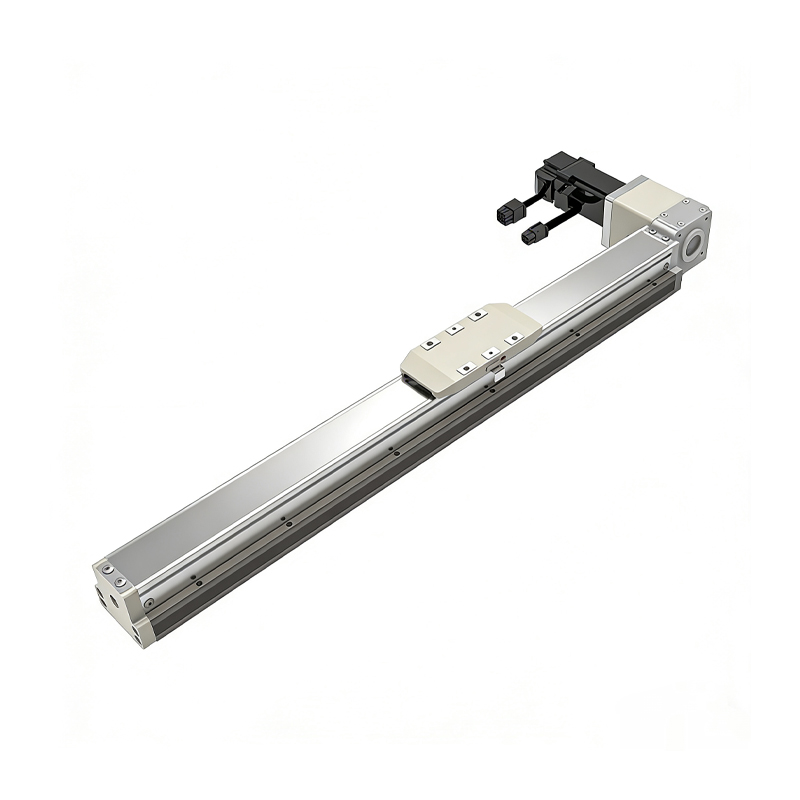 Belt Driven Dust-Proof Rail-Embedded Linear Module
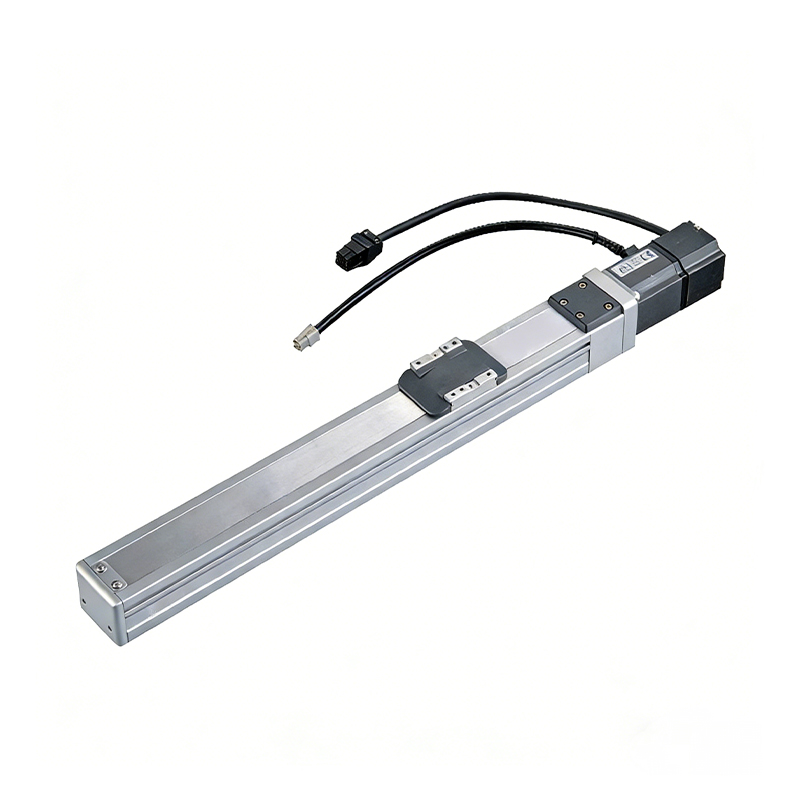 0.01mm High Precision Light Load Ball Screw Linear Module
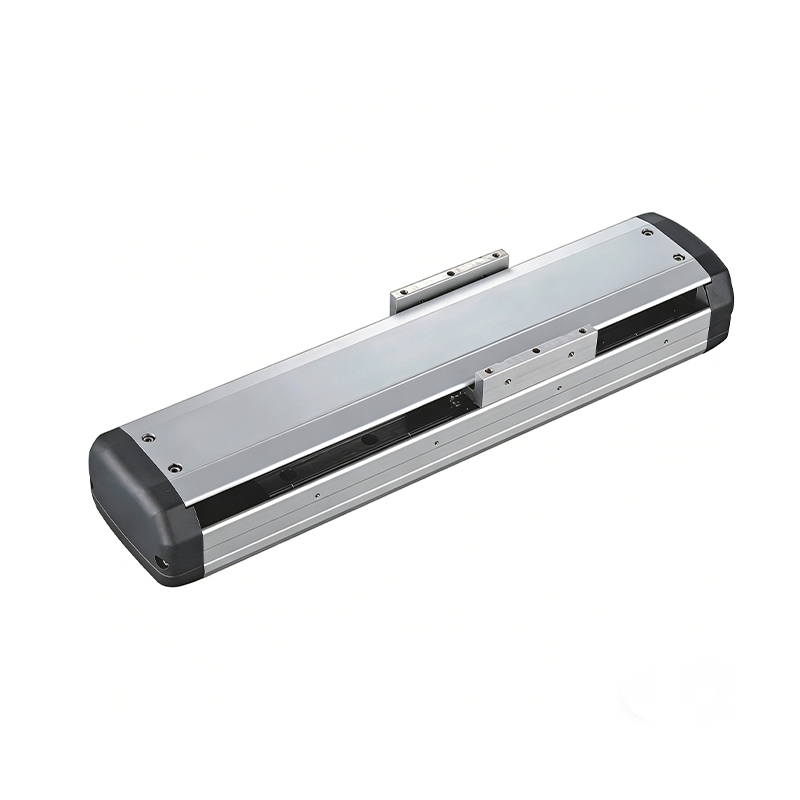 Ball Screw Linear Module with Built-in Sensor
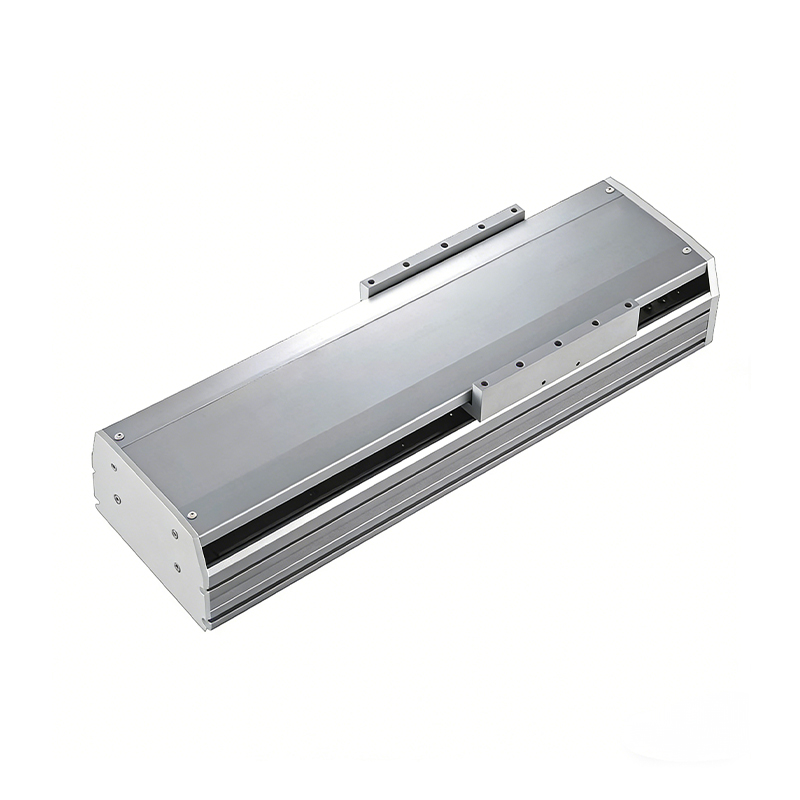 2000mm Long Stroke Ball Screw Linear Module
This 2000mm Long Stroke Ball Screw Linear Module is customized for large-range linear movement automation tasks, support...
READ MOREThis 2000mm Long Stroke Ball Screw Linear Module is customized for large-range linear movement automation tasks, support...
READ MOREThis 2000mm Long Stroke Ball Screw Linear Module is customized for large-range linear movement automation tasks, support...
READ MOREThis 2000mm Long Stroke Ball Screw Linear Module is customized for large-range linear movement automation tasks, support...
READ MORE
If you are interested in our products, please leave us a message. We look forward to providing you with
professional services!
Innovation and transcendence make factory intelligent manufacturing efficient and convenient!
+86 186 2508 0683
19962977901
sales@sz-tys.com
Building 5, Suzhou Mudu International Science and Technology Innovation Park, Jinfeng South Road, Suzhou City, Jiangsu Province, China
