


 English
 Français
 русский
 عربى
 Español
 Deutsch
Tel
+86 186 2508 0683

A machine builder calls on a Tuesday afternoon with a problem. His packaging line is running 90 cycles per minute, the pneumatic cylinders on the sealing station are drifting out of position by about 1.5 mm after a few hours of running, and the reject rate is climbing. He wants to know whether he should switch to hydraulics or go electric, and he wants an answer before the next production meeting. The answer starts with a number: three. There are three types of linear actuators that do this kind of work, and they are pneumatic cylinders, hydraulic cylinders and electric cylinders. Each one converts energy into straight-line motion, and each one does it through a completely different physical mechanism. That mechanism decides everything downstream, including how much force you get, how accurately you can stop, how fast you can cycle, how much maintenance you will pay for, and what happens when the machine is installed in a cleanroom, a freezer or an explosive atmosphere.
If you search for the three types of cylinders, you will find two different answers, and both of them are correct. The confusion is not about facts, it is about category. The word cylinder describes a shape, and several different engineering disciplines have adopted that shape for different purposes. So the answer depends on which property you are sorting by.
This is the classification that matters most in industrial automation, and it is the one this article spends most of its time on. A cylinder can be driven by compressed air, by pressurised hydraulic oil, or by an electric motor through a mechanical transmission. Those are the three types of cylinders in the sense that a design engineer usually means it.
The second classification looks at how the piston is driven inside the barrel, and it produces another set of three: single-acting, double-acting and telescopic cylinders. A single-acting cylinder is powered in one direction and returns by spring force or by gravity. A double-acting cylinder is powered in both directions. A telescopic cylinder uses nested stages to produce a very long stroke from a short retracted length. This grouping applies to pneumatic and hydraulic cylinders most commonly, and electric actuators have their own version of it, which is covered later.
There is a third and much less useful answer that shows up in search results: the mathematical cylinder, which is defined by geometry rather than function and is divided into right circular, oblique, elliptic and hollow forms. That classification belongs in a geometry textbook. If you are buying motion hardware, ignore it.
For the rest of this article, the three types are pneumatic, hydraulic and electric, with the single-acting, double-acting and telescopic distinction treated as a second layer that sits on top of all three.
A pneumatic cylinder takes air at roughly 6 bar, admits it to one side of a piston, and lets the pressure difference push the rod out. Air is compressible, and that single physical fact explains almost every strength and weakness of the technology.
Because air compresses, a pneumatic cylinder does not have a rigid position. If the load increases suddenly, the rod moves. This is why pneumatic actuators are described as force devices rather than position devices. A standard cylinder with a magnetic reed switch and a 5/2 solenoid valve will hold position to about 1 mm at best, and often worse after the seals have taken a few million cycles. Adding a proportional valve and closed-loop feedback improves that to roughly 0.5 mm, but at that point the cost advantage over a small electric actuator has largely disappeared.
What air does give you is speed and ruggedness. A well-sized pneumatic cylinder can reach 1 m/s in a short stroke, and it can cycle tens of millions of times with nothing more than occasional lubrication and seal replacement. The components are cheap, the valves are cheap, and maintenance technicians already know how to work on them.
Most pneumatic cylinders in production machinery are double-acting, because they need to be driven home reliably and quickly. Single-acting versions are used where a spring return is acceptable, for example in clamping fixtures and simple ejection mechanisms, and they save the cost of one valve port and one hose run. Telescopic pneumatic cylinders exist but are comparatively rare, because air pressure is too low to justify nesting stages unless the application needs a long reach from a compact envelope.
The purchase price is low and the running cost is not. Compressed air is one of the most expensive forms of energy in a factory, because a typical compressor converts only a small fraction of its electrical input into usable pneumatic energy, and the rest is lost as heat, leaks and pressure drop. A 1 mm leak in a fitting can waste more air over a year than the cylinder itself cost. Pneumatic systems are also noisy, and they need dryers, filters and regulators that add their own maintenance burden. None of this makes pneumatics a bad choice, but it does mean that a fair comparison has to look past the invoice.
A hydraulic cylinder replaces air with oil, and oil is essentially incompressible. That changes the maths dramatically. Where a 63 mm pneumatic bore at 6 bar produces roughly 1.9 kN of thrust, the same bore at 160 bar produces around 50 kN. Hydraulics are how you move things that weigh tonnes.
Hydraulic cylinders are most commonly divided into single-acting and double-acting types, and the choice drives the whole circuit design.
A single-acting cylinder has one pressurised chamber. Oil pushes the piston out, and the return comes from a load, a spring or gravity. They are simple, compact and inexpensive, and they are the standard choice for jacks, lift platforms and many press applications where the retract stroke does no useful work. Their limitation is that the return speed and force are not controlled, which makes them unsuitable for a machine that has to follow a precise motion profile in both directions. In a double-acting circuit the retract side also has to be able to hold a load, so a pilot-operated check valve is usually required to prevent creep when the pump is off.
A double-acting cylinder has oil on both sides of the piston, so both the extend and retract strokes are powered and controlled. This is the configuration used in almost all hydraulic machinery that needs repeatable, bi-directional motion: excavators, injection moulding machines, hydraulic presses and heavy automation. It costs more, because it needs two ports, a directional valve that can handle the flow, and a circuit that manages the difference in volume between the two chambers. That volume difference is not trivia. Because the rod occupies space on one side, the retract speed is higher than the extend speed for the same flow, and the retract force is lower by the ratio of the annular area to the full bore area. Ignoring this is one of the most common sizing errors in hydraulic design.
Beyond the working mode, hydraulic cylinders are usually sorted by how the barrel is built. This affects pressure rating, serviceability and price.
A hydraulic cylinder is only as good as its connection to the machine. Clevis ends allow rotation in one plane, spherical rod eyes accommodate misalignment in any direction, flange mounts fix the cylinder rigidly to a frame, and threaded rod ends allow a nut or custom fitting to be attached. Choosing a rigid mount where the machine actually flexes transfers bending loads into the rod and the rod seal, which is a reliable way to generate premature leakage. If the structure moves, the cylinder end must be allowed to move with it.
Hydraulics deliver enormous force in a small package, and they hold position well when a load is applied. They also leak, they need a power unit, they are sensitive to oil temperature and contamination, and a hose failure can dump hot oil at pressure. Filtration to ISO 4406 cleanliness codes, regular oil analysis and a properly sized reservoir are not optional extras; they are the price of entry. In food, pharmaceutical and semiconductor environments, the risk of leakage alone often rules hydraulics out before the performance comparison even begins.
An electric cylinder replaces the fluid with a mechanical transmission. A servo motor turns a screw, the screw drives a nut, and the nut is attached to a rod that moves in and out of the barrel. Everything that was done with pressure is done with position, and that is the source of both the precision and the programming flexibility of the technology.
Because the motor is controlled by a drive with encoder feedback, an electric cylinder knows where it is at all times. Repeatability of 0.01 mm is routine on a ball screw unit, and even a modest actuator will hold better than 0.05 mm. Speed and force are independently programmable, so a single unit can approach quickly, press slowly and retract rapidly without any change to the hardware. Acceleration and deceleration profiles are set in software, which removes the mechanical shock that shortens the life of fluid power components.
The efficiency comparison is stark. A ball screw transmission converts motor torque to thrust at around 90 percent efficiency. A trapezoidal screw does the same job at 30 to 50 percent, but can self-lock when the motor is de-energised, which is useful for vertical holding applications where a ball screw would back-drive under load. Choosing between screw types is really a choice between efficiency and safe holding.
An inline cylinder is the default for precision press-fit and dispensing work, where stiffness translates directly into process quality. A foldback unit is the practical answer when the machine frame has already been built and there is no room behind the mounting plate. A telescopic unit solves a reach problem that no fixed-length actuator can solve at all.
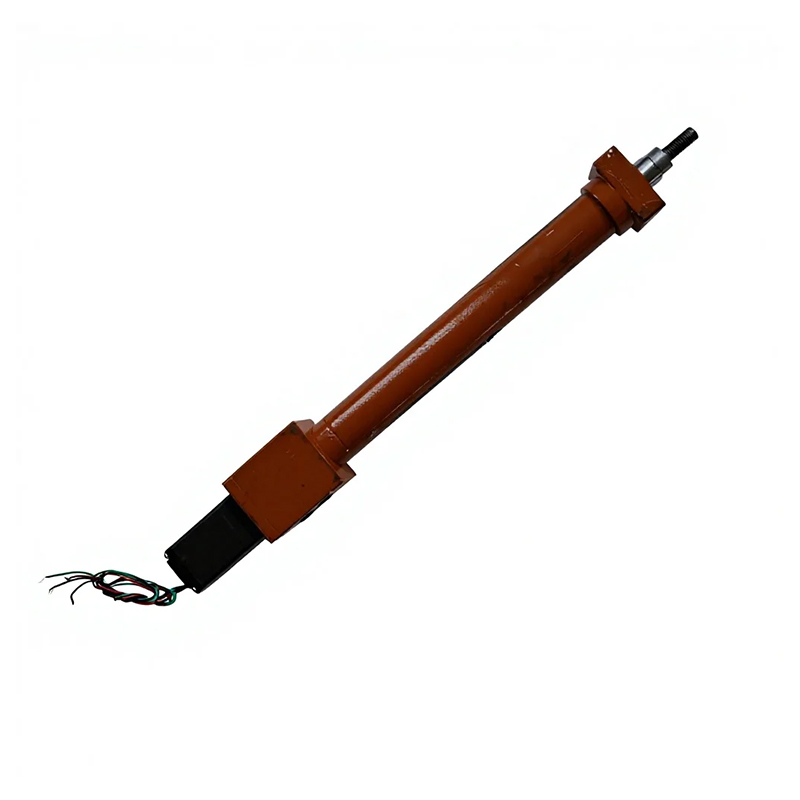 Coaxial Integrated Precision Inline Electric CylinderAn inline electric cylinder for precision press-fit and dispensing setups, with coaxial integrated motor-cylinder design, ±0.01 mm positioning accuracy, IP65 sealing, and compact integration.View Product →
 Four-Stage Long-Stroke Telescopic Electric CylinderA telescopic electric cylinder for long-reach applications, with four-stage retraction, up to 3500 mm stroke, multi-section anti-jitter design, and ±0.04 mm accuracy.View Product →
Electric actuators were once considered unsuitable for harsh environments, and that objection has largely been answered by sealing and material changes rather than by any change in the fundamental design.
Waterproof electric cylinders are built with sealed barrels, sealed cable entries and stainless or coated hardware. At IP65 they tolerate washdown and splashing, which covers most food and beverage packaging equipment. At IP68 they tolerate temporary immersion, which is what you need on a machine that gets hosed down at the end of every shift or operates in a wet process area.
Explosion-proof electric cylinders address a different problem entirely. In an atmosphere containing solvent vapour, fine dust or hydrogen, a spark from an ordinary motor is a hazard. Explosion-proof units use flameproof enclosures and certified cable glands, and they are specified against the relevant hazardous-area classification rather than against a generic claim of safety. The certification is part of the product, not an accessory.
Wide temperature electric cylinders deal with the fact that grease thickens in the cold and thins in the heat. A standard unit might be rated from 0 to 40 degrees Celsius, which is fine in a climate-controlled plant and useless in a cold store at minus 30 or beside a furnace at 80 degrees. Variants that use low-temperature alloys, high-temperature seals and adaptive lubricants keep the same positioning performance across those extremes, which is often the difference between a working installation and a jammed one.
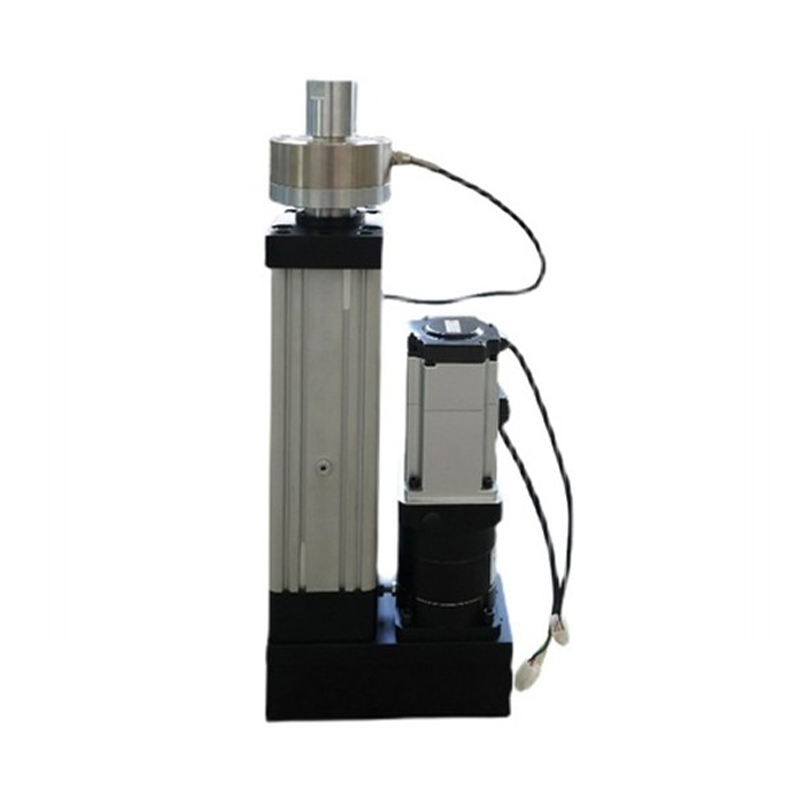 IP68 Submersible Waterproof Electric CylinderA submersible electric cylinder for underwater equipment, with IP68 protection, 316L stainless steel body, anti-corrosion coating, and customization for long-term underwater operation.View Product →
An electric cylinder needs a drive, a controller and a motion program, and the people who specify it need to understand torque, duty cycle and thermal limits. The upfront cost per axis is the highest of the three technologies. The payoff comes from accuracy, repeatability, programmability and the absence of a compressor or power unit behind it. On a machine with four or five axes, the total system comparison is often closer than the actuator price list suggests.
The table below summarises the practical differences. Treat the numbers as typical ranges for standard industrial products rather than as absolute limits, because every one of them can be stretched by a specialist supplier at a cost.
| Property | Pneumatic | Hydraulic | Electric |
|---|---|---|---|
| Typical working pressure or rating | 4 to 8 bar | 70 to 350 bar | Motor torque limited, no fluid pressure |
| Force density | Low | Very high | Moderate to high |
| Position repeatability | About 1 mm with switches, 0.5 mm with servo valves | 0.1 to 0.5 mm with servo control | 0.01 to 0.05 mm |
| Typical speed | Up to 1 m/s | 0.05 to 0.5 m/s | 0.5 to 1 m/s and above |
| Motion profile flexibility | Low without proportional control | Moderate | Very high, fully programmable |
| Energy efficiency | Low due to compression losses | Moderate, subject to throttling losses | High |
| Leakage risk | Air, generally tolerated | Oil, a contamination and safety concern | None |
| Maintenance profile | Seals, valves, air treatment | Oil, filters, seals, hoses | Grease interval, belt or screw wear |
| Relative upfront cost per axis | Low | Medium for the cylinder, high for the power unit | High |
| Best fit | Simple, fast, repetitive movement | Very high force in a compact envelope | Precise, programmable, clean motion |
The working-principle classification cuts across all three power sources, and it is worth understanding because it often decides the circuit or the wiring rather than the technology.
| Type | How it moves | How it returns | Typical use |
|---|---|---|---|
| Single acting | Powered in one direction by air or oil | Spring, gravity or load | Clamping, jacks, ejection |
| Double acting | Powered in both directions | Powered retract | Most production machinery |
| Telescopic | Nested stages extend in sequence | Powered or gravity | Long reach from a short body |
A single-acting cylinder is the simplest possible actuator. One port, one seal set, one direction of powered motion. In pneumatic form it usually has an internal spring that returns the rod when the air is exhausted, and the spring force has to be subtracted from the available thrust, which is a detail that catches people out when they size the cylinder from a catalogue force figure. In hydraulic form the return is often the weight of the load itself, which means the cylinder cannot retract a load it was not designed to lift.
A double-acting cylinder powers both strokes, which gives predictable timing in both directions. This is why it dominates production equipment. It costs more because it needs a second port, a four-way valve and, in hydraulic circuits, a means of managing the unequal volumes on each side of the piston. In return you get control over the retract stroke, which matters whenever the return path passes through tooling, fixtures or a safety envelope.
A telescopic cylinder stacks multiple stages so the closed length can be a fraction of the extended length. In hydraulics this is standard practice on tipper and lifting equipment. In electric actuators the same idea is implemented with nested screws or nested tubes, and it is used where a machine has to reach into a confined space, lift a platform from a low-profile base, or extend a manipulator arm well beyond its housing. Telescopic designs trade some stiffness and side-load capacity for reach, so they need careful guiding if the load is not purely axial.
Most selection arguments happen because two engineers are optimising different variables. The way out is to rank the requirements before looking at any catalogue. Work through the following questions in order, because the answers narrow the field quickly.
Calculate the force at the worst moment, not the average. A press-fit operation might need 2 kN to seat a bearing and 12 kN for the last half millimetre if the fit is tight. A pneumatic cylinder sized on the average figure will stall. Add a safety factor of 1.5 to 2 on the calculated force, and remember that in a double-acting cylinder the retract force is lower than the extend force.
If a tolerance of 1 mm is acceptable and the load is consistent, pneumatics will do the job at the lowest cost. If you need 0.2 mm and the load varies, hydraulics with servo control or an electric actuator are the realistic options. If you need 0.05 mm or better, electric is the only sensible answer. Be honest about the tolerance, because specifying precision you do not need is the most common way to overspend on an actuator.
Cycle time and duty cycle together determine whether an electric actuator will overheat. A servo cylinder that is asked to run continuously at high force will derate, and the datasheet duty cycle is not a suggestion. Pneumatics handle continuous cycling well, as long as the air supply is dry and the valves are rated for the frequency. Hydraulics handle high force at continuous duty, but the oil temperature has to be managed with a cooler once the duty cycle climbs.
Washdown, dust, solvent vapour, salt spray, cold stores and furnace-adjacent positions all eliminate options. A standard pneumatic cylinder in a food plant will corrode and its lubricant will wash out. A hydraulic cylinder in a semiconductor cleanroom is a contamination source. An electric cylinder with an IP65 rating handles the washdown case, and a certified explosion-proof or wide-temperature variant handles the others. Match the enclosure rating to the actual exposure rather than to a general impression of the plant.
This is where fluid power often loses. A pneumatic cylinder needs a compressor, a dryer, a filter-regulator, a valve manifold and a hose run. A hydraulic cylinder needs a power unit, a reservoir, filtration, cooling and a certified hose installation. An electric cylinder needs a drive and a controller, and in most modern machines a network connection that already exists. When you compare complete systems rather than individual components, the gap between the technologies narrows considerably, and in some installations it reverses.
Standardising has real value. Spare parts, technician training and maintenance procedures all improve when a plant runs one dominant technology. Introducing electric actuators into a plant that has run on air for thirty years creates a training problem, and introducing hydraulics into an electronics assembly area creates a contamination and housekeeping problem. The best technical answer is not always the best plant answer.
In practice, most automated machines end up mixing technologies. Pneumatics handle the clamping, ejecting and simple transfer motions. Electric actuators handle the positioning, pressing and measuring operations. Hydraulics appear only where the force requirement is genuinely beyond what the other two can deliver economically. That mix is not a compromise, it is the result of applying each technology where it performs best, and it is worth studying how different manufacturing sectors arrive at their own version of it. Automotive assembly, for example, leans heavily on electric servo axes for fastening and press-fit work while retaining pneumatics for part handling. Precision electronics and semiconductor lines push electric further still, because cleanliness and repeatability leave no room for oil or for air-line moisture.
The same failures show up again and again, across all three types. Most of them are avoidable with ten minutes of arithmetic.
A pneumatic cylinder rated for 10 bar will spend its life at whatever the plant header actually delivers, which might be 5.5 bar at the far end of a long run during peak demand. Size on measured supply pressure, not on the maximum rating stamped on the barrel.
All three types are designed primarily for axial force. A rod that is pushed sideways wears its bearing and its seal, and the failure is progressive rather than sudden. If the load cannot be kept coaxial, add a guide rail or a linear module and let the cylinder supply force only. This is one of the main reasons precision linear modules and electric cylinders are often specified together as a complete motion axis rather than as separate parts.
Repeatability is how closely the actuator returns to the same position. Accuracy is how close that position is to the commanded one. A pneumatic cylinder with mechanical stops can be very repeatable and still land in the wrong place if the stop has shifted. Ask suppliers which figure they are quoting, and insist on the definition.
Hydraulic oil viscosity changes with temperature, which changes response time and, in poorly compensated systems, changes stopping position over the course of a shift. Electric actuators are less sensitive but not immune, because screw expansion and grease behaviour both move with temperature. In a long-running process, check the first-hour and eighth-hour behaviour rather than only the cold start.
Every extra millimetre of stroke increases the unsupported length of the rod or screw, which reduces stiffness and buckling resistance. Specify the stroke the process needs plus a realistic margin, not the largest number that fits the mounting envelope.
The fastest way to shortlist is to start from the application rather than from the component. A few common cases show how the decision usually falls.
Diverting, clamping, ejecting and gate actuation are classic pneumatic duties. The accuracy requirement is loose, the cycle rate is high, and the cost per axis matters because there may be thirty of them on one machine. Electric actuators would improve the motion quality but multiply the control hardware cost.
Seating a bearing, staking a terminal or pressing a connector into a housing requires controlled force and controlled position simultaneously. This is electric cylinder territory, and it is also where the programmable force-distance profile earns its keep, because the same actuator can detect a mis-seated part by watching the force curve rather than relying on a separate sensor.
When the force requirement runs into the tens or hundreds of kilonewtons, hydraulics remain the most compact answer. The circuit cost and the housekeeping burden are real, but they are usually smaller than the alternative of building a very large electric actuator with a power draw that the plant electrical infrastructure may not support.
Electronics assembly, medical device manufacturing and semiconductor fabrication all favour electric actuation because it produces no oil mist and no exhaust air, and because the motion can be validated and logged through the controller. Cold stores favour wide-temperature electric units and specially prepared pneumatics, but hydraulic systems struggle because oil viscosity rises sharply as temperature falls. Hazardous areas are the one place where the answer depends entirely on certification rather than on performance, because a non-compliant actuator cannot be installed at all, however good its numbers are.
Multi-axis motion platforms, vibration tables and driver-in-the-loop simulators sit outside the ordinary cylinder discussion, because they combine several actuators into a coordinated spatial motion. These systems typically use electric actuators with high-bandwidth control, since the synchronisation between axes is what determines whether the platform produces the intended motion or an unintended one. The same building blocks, arranged differently, also appear in seismic training platforms and in dynamic test benches for vehicle development. The engineering discipline is the same as single-axis selection, applied six times over with a shared control loop.
A cylinder is one of the few machine components where the choice of technology determines the rest of the design. Pick pneumatics and you inherit a compressor, an air treatment system and a maintenance culture built around seals and valves. Pick hydraulics and you inherit a power unit, a filtration regime and a leak-management discipline. Pick electric and you inherit a drive, a controller and a motion program that has to be commissioned and documented.
All three deliver linear motion reliably when they are matched to the load, the environment and the accuracy requirement. The mistakes happen when a technology is chosen by habit rather than by arithmetic. Spend the time on force, tolerance, cycle time, environment and total installed cost, rank the answers, and the decision usually makes itself. Then check the numbers one more time against the real supply pressure, the real load peaks and the real temperature range, because those three variables are where most installations quietly go wrong.
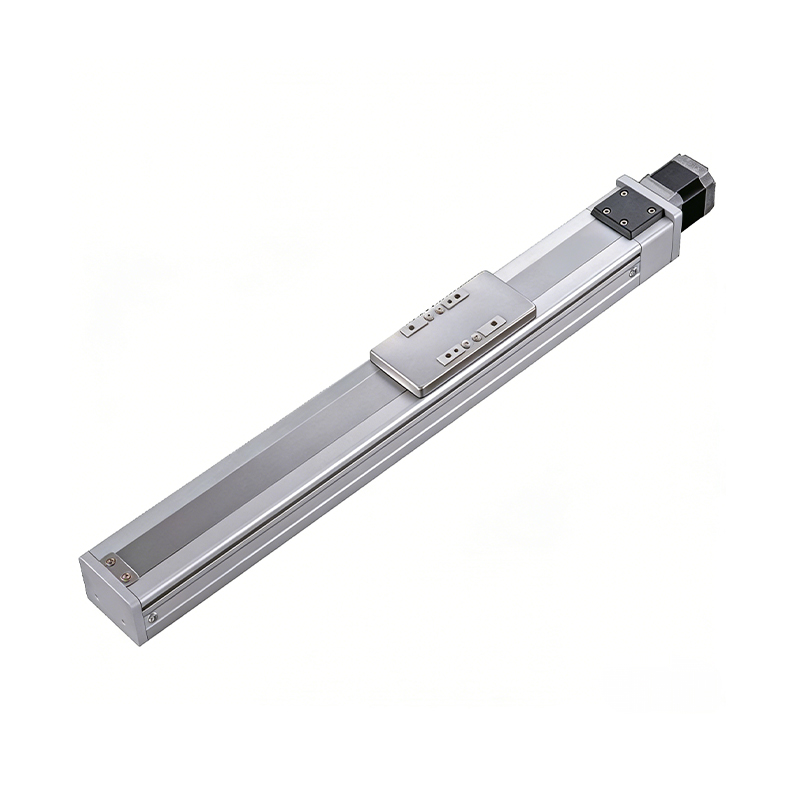 0.01mm High Precision Ball Screw Driven Rail-Embedded Linear Module
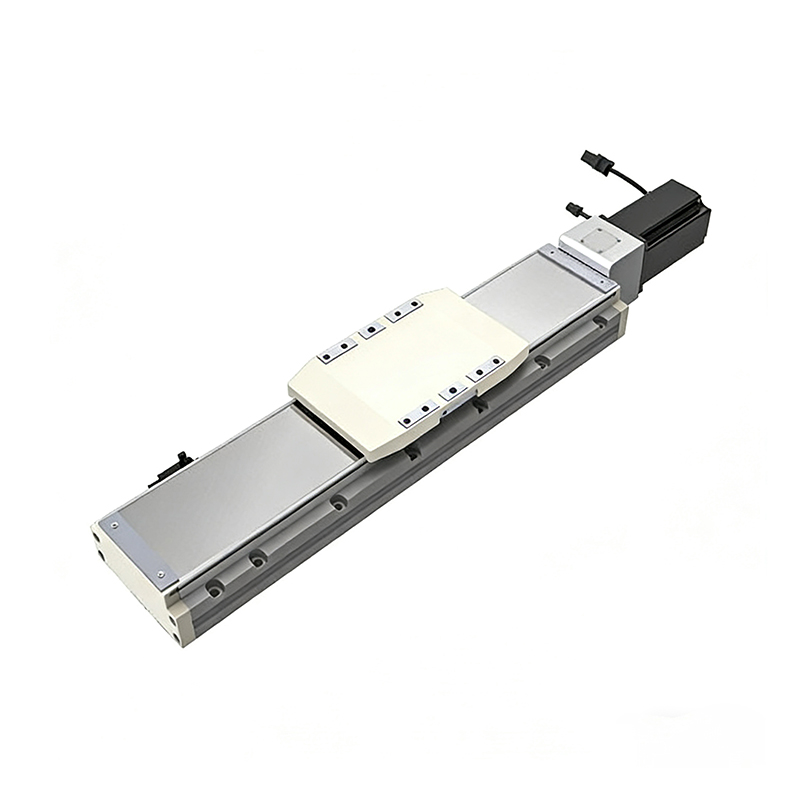 Heavy Load Ball Screw Driven Rail-Embedded Linear Module
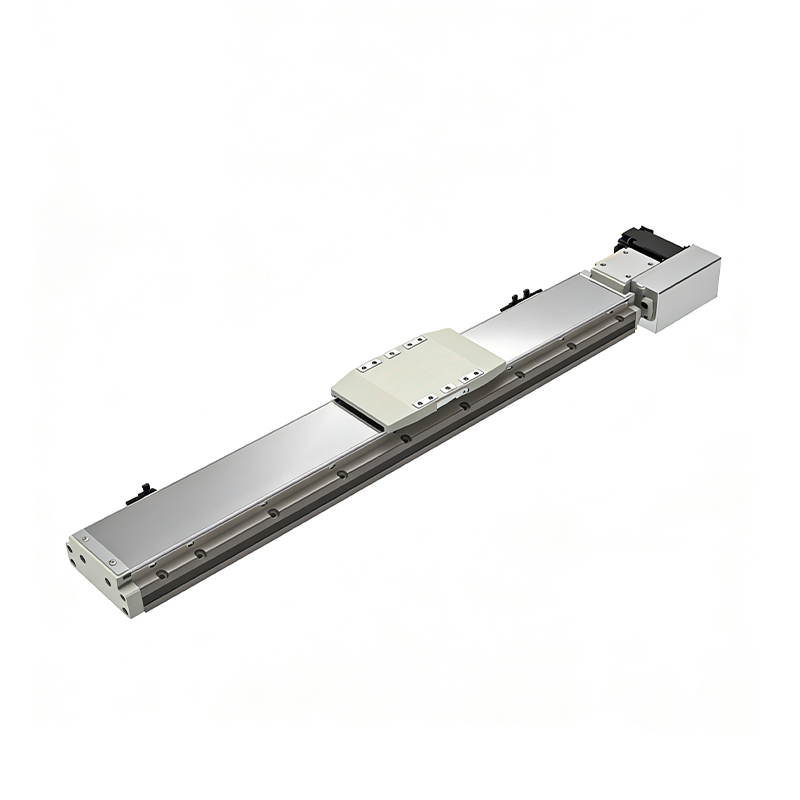 110KG Load Long Stroke Rail-Embedded Linear Module
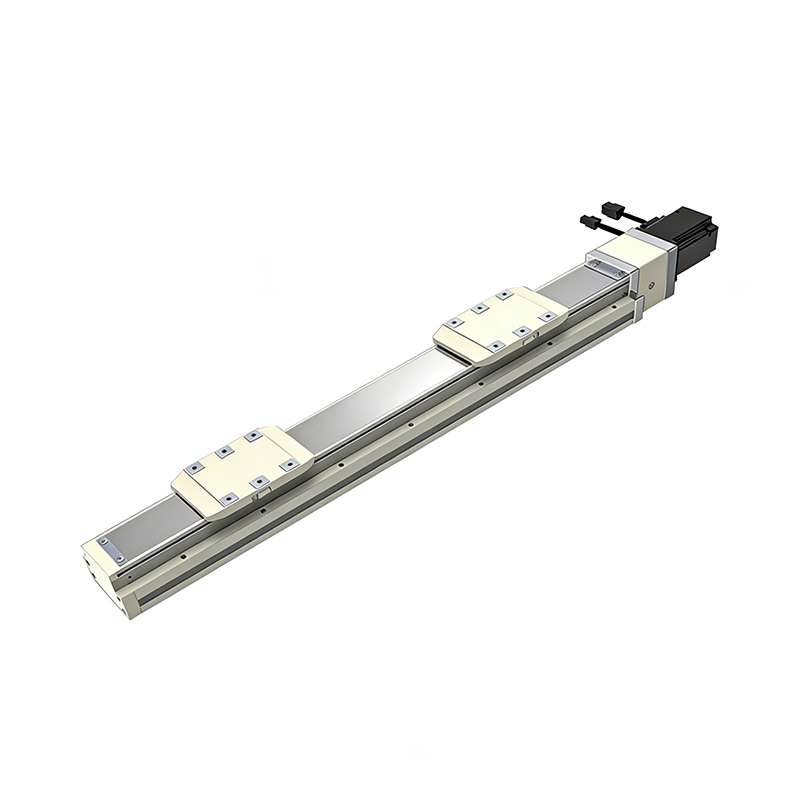 Dual-Slider High Precision Rail-Embedded Linear Module
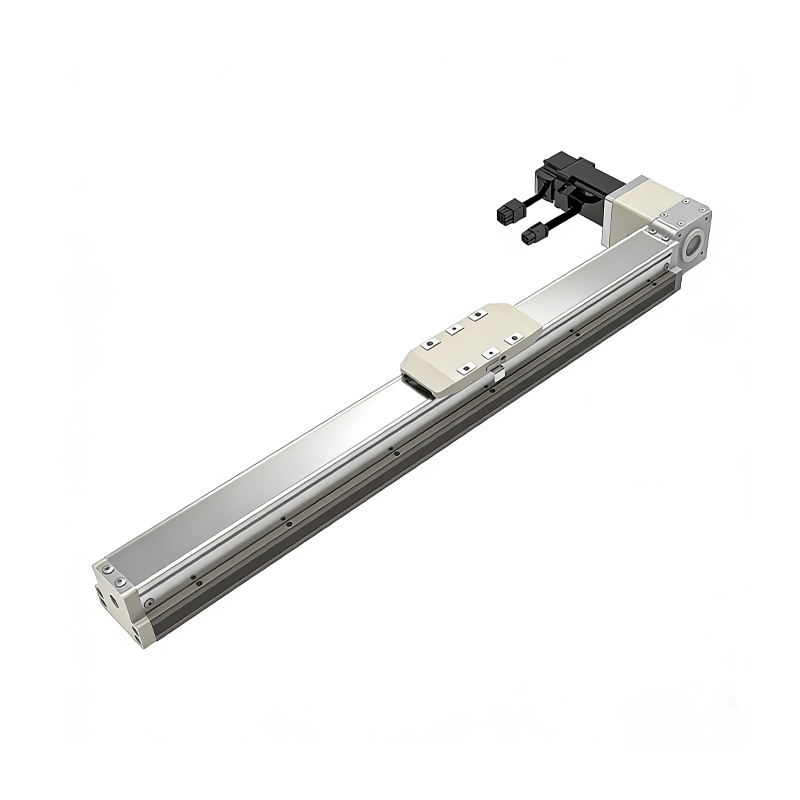 Belt Driven Dust-Proof Rail-Embedded Linear Module
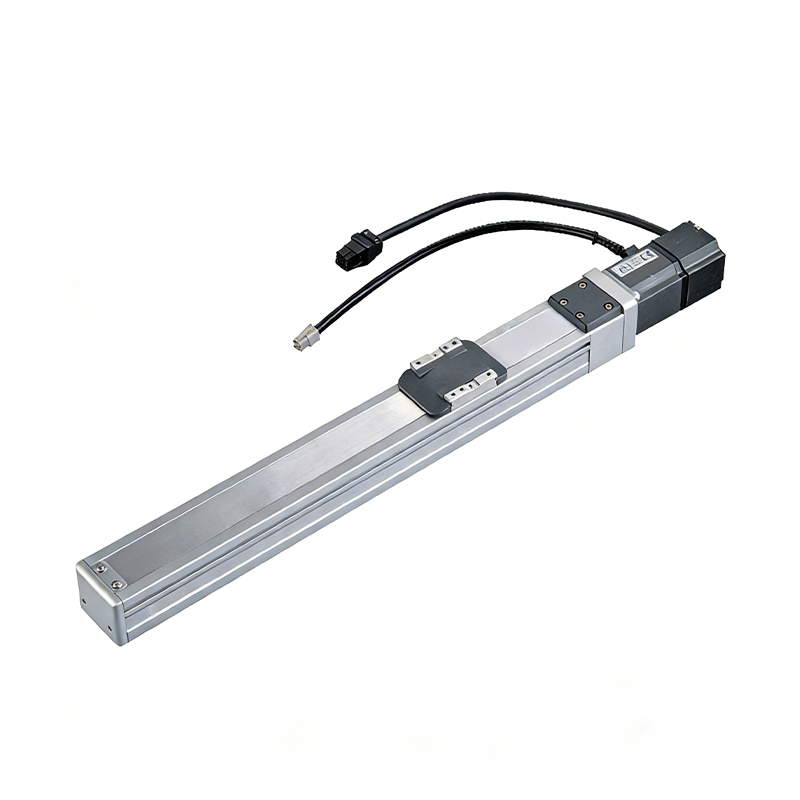 0.01mm High Precision Light Load Ball Screw Linear Module
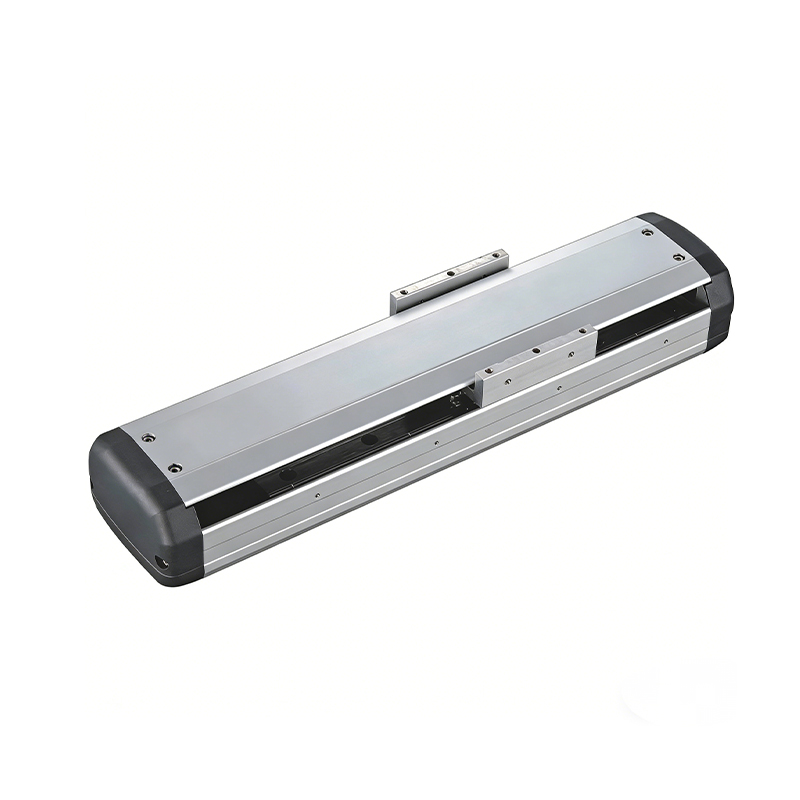 Ball Screw Linear Module with Built-in Sensor
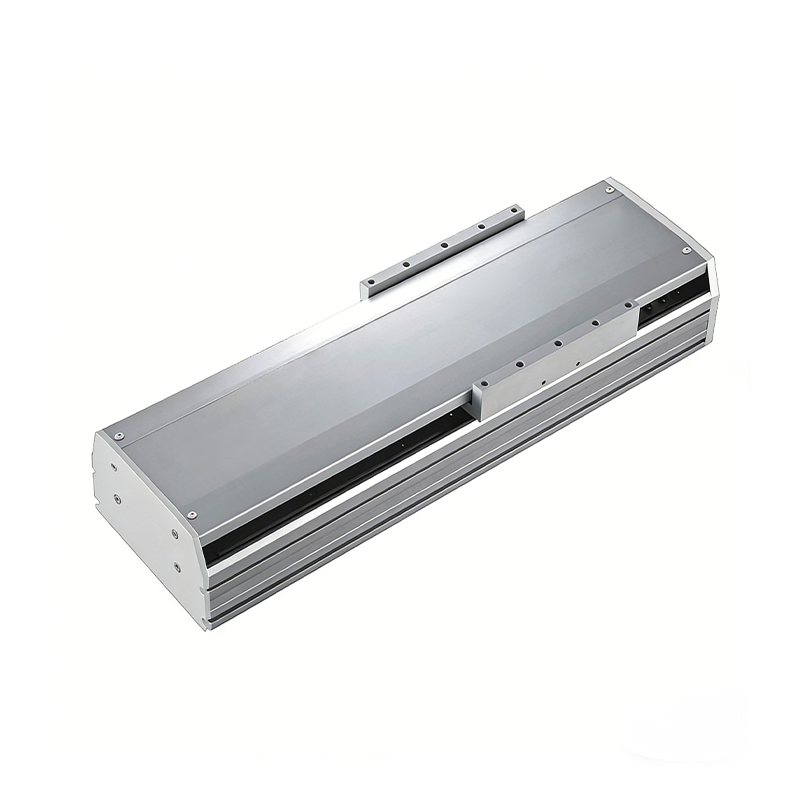 2000mm Long Stroke Ball Screw Linear Module
This 2000mm Long Stroke Ball Screw Linear Module is customized for large-range linear movement automation tasks, support...
READ MOREThis 2000mm Long Stroke Ball Screw Linear Module is customized for large-range linear movement automation tasks, support...
READ MOREThis 2000mm Long Stroke Ball Screw Linear Module is customized for large-range linear movement automation tasks, support...
READ MOREThis 2000mm Long Stroke Ball Screw Linear Module is customized for large-range linear movement automation tasks, support...
READ MORE
If you are interested in our products, please leave us a message. We look forward to providing you with
professional services!
Innovation and transcendence make factory intelligent manufacturing efficient and convenient!
+86 186 2508 0683
19962977901
sales@sz-tys.com
Building 5, Suzhou Mudu International Science and Technology Innovation Park, Jinfeng South Road, Suzhou City, Jiangsu Province, China
