


 English
 Français
 русский
 عربى
عربى Español
 Deutsch
Tel
+86 186 2508 0683

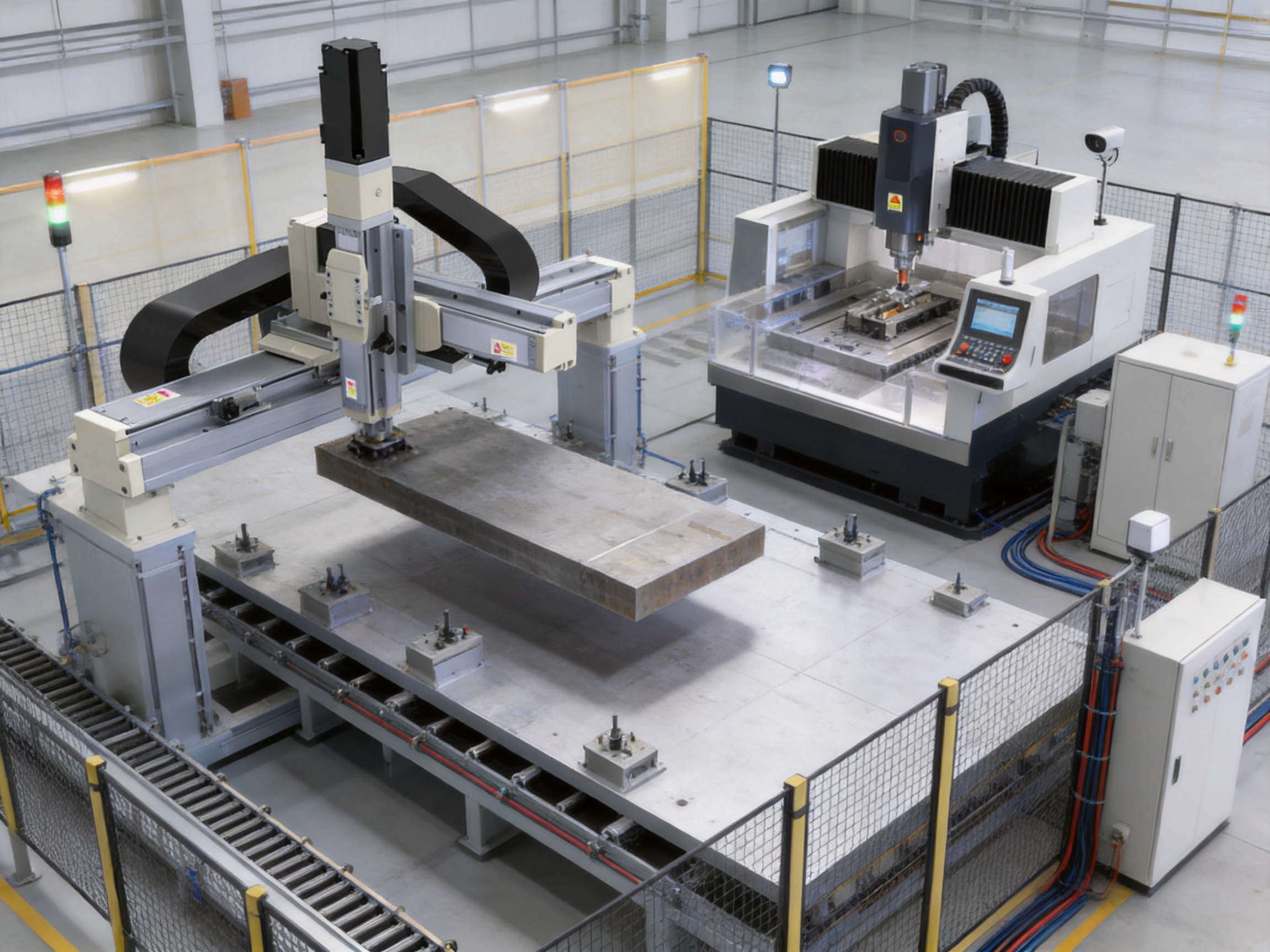
Modern manufacturing increasingly depends on motion systems that can move heavy tools, workpieces, fixtures, and assemblies with repeatable accuracy over substantial working distances. As production lines become more automated, manufacturers need equipment that is not only precise, but also rigid, stable, serviceable, adaptable, and capable of operating continuously in demanding industrial environments. A Cartesian robot designed for linear positioning can provide these qualities through a straightforward mechanical structure, coordinated axis control, and a configuration that can be adapted to the needs of a particular production process.
The XYH432-A Cartesian robot is developed for heavy-duty positioning, handling, assembly, machining automation, and long-distance industrial transmission applications. Although it is marketed around high-precision two-axis linear positioning, its described configuration is a three-axis gantry structure. This allows the system to support two primary horizontal positioning directions while incorporating a third axis for vertical movement or process adjustment. The result is a practical solution for production environments that require a larger work envelope, stronger load-bearing capability, and higher structural stability than a compact desktop positioning mechanism can provide.
Rather than relying on a lightweight frame intended only for low-load laboratory work, the XYH432-A uses a gantry-oriented architecture developed for heavier loads and wider strokes. Its design emphasizes high rigidity, strong stability, and a large carrying capacity. These characteristics make it suitable for industrial applications in which the robot must maintain controlled movement while carrying substantial payloads or supporting a large end effector.
The system is produced by Suzhou Tongyousheng Electronic Technology Co., Ltd., a high-tech enterprise integrating research and development, manufacturing, and sales. The company specializes in electric cylinders, linear motion modules, linear motor modules, servo presses, robotic seventh axes, and multi-degree-of-freedom motion platforms. This broader product portfolio gives the company practical experience in mechanical transmission, servo motion, structural design, control integration, and intelligent manufacturing equipment.
A Cartesian robot moves along mutually independent linear axes. In contrast to an articulated robot, which reaches a position through several rotating joints, a Cartesian robot uses guided linear motion to create a rectangular or cuboid working envelope. This arrangement makes the relationship between commanded coordinates and actual machine movement relatively direct. It also simplifies the design of fixtures, safety areas, tooling paths, and production-line layouts.
The XYH432-A is a gantry-style Cartesian robot intended for applications requiring a combination of long travel, substantial structural support, and reliable positioning. The gantry structure normally spans the working area and carries one or more moving assemblies. Depending on the selected configuration, the two main positioning axes can be used for horizontal movement across a wide area, while the additional axis supports vertical approach, lifting, placement, tool engagement, or process-height adjustment.
This arrangement is particularly useful when a production task cannot be completed efficiently with a short-stroke linear module. A conventional single-axis slide may provide accurate movement, but it does not create the same broad two-dimensional work envelope. A compact articulated robot may offer flexibility, but its payload, reach, and positioning behavior can become more difficult to manage as the arm extends. A gantry robot distributes loads through a fixed structural framework, which can provide a stronger foundation for large workpieces and heavy tooling.
The system can be applied to the movement of components between stations, loading and unloading operations, pallet handling, large-format assembly, machining assistance, inspection positioning, and other repetitive industrial processes. It can also serve as a motion platform for tools that must travel over a large area while maintaining a predictable coordinate relationship with the workpiece.
The most important characteristic of the XYH432-A is its gantry architecture. A gantry robot supports its moving axis from a rigid overhead or elevated framework rather than relying on a cantilevered arm. This arrangement can reduce unsupported bending and create a more stable load path from the tool or payload to the machine foundation.
For heavy-duty handling and large-format assembly, structural behavior is essential. When a machine accelerates, decelerates, or changes direction, the frame must resist vibration, deflection, and twisting. Excessive structural movement can reduce positioning performance, increase settling time, and affect the quality of downstream operations. A rigid gantry structure helps the system maintain more consistent movement under changing loads.
The design is also suitable for applications in which the payload is distributed over a broad area or where the working envelope is too large for a conventional enclosed linear stage. The gantry can be integrated with production tables, machining areas, transfer lines, assembly fixtures, or custom tooling platforms.
High rigidity is valuable not only for static load support, but also for dynamic performance. A robot that moves a heavy payload must withstand inertial forces throughout the motion cycle. If the structure flexes significantly, the motion controller may reach the target coordinate while the end effector continues to oscillate. This can slow production and compromise placement or processing accuracy.
The XYH432-A is intended to address this challenge through a rigid structural concept and a stable gantry arrangement. The resulting system is suited to operations where the robot must carry a tool, fixture, or component while maintaining dependable motion over a long stroke. Strong stability can also improve the consistency of repeated cycles, particularly when the application includes frequent starts and stops or transfers between widely separated stations.
In comparison with lower-cost mechanisms built around minimal frame sections or lightly supported rails, a heavy-duty Cartesian platform provides a stronger base for industrial work. The actual performance of every installation depends on the payload, center of gravity, travel speed, acceleration, guide selection, foundation, and control settings. However, the fundamental structural advantage remains important: a robot designed around stiffness and support is better positioned for demanding duty than one designed only for low-load movement.
Many industrial processes require a robot to reach several stations, cover a large worktable, or move materials across a production line. A limited stroke can force manufacturers to use multiple machines, additional transfer mechanisms, or manual intervention. A wider-stroke gantry system can consolidate these movements into one coordinated platform.
The XYH432-A is designed for wider-stroke applications. This makes it appropriate for long-distance industrial transmission, large-scale assembly, and handling of oversized or distributed workpieces. The machine can be arranged to match the dimensions of the production area, subject to engineering review and configuration requirements.
Wide travel also supports flexible production layouts. A single gantry can serve multiple work zones, move a tool between processing stations, or position an assembly head at different points on a large component. When the robot is combined with suitable sensors, fixtures, and control software, it can become a central motion element in an automated cell.
Long travel must be engineered carefully. Rail alignment, cable management, drive selection, support spacing, and machine foundation all affect the final result. A qualified system provider can evaluate these factors during design and select a structure that balances stroke, speed, payload, and repeatability.
Heavy-duty automation requires more than a motor with sufficient output. The complete system must support the payload, absorb operational forces, and maintain controlled motion throughout the working cycle. The end effector may include grippers, vacuum equipment, clamps, machining tools, welding components, inspection devices, or a combination of these elements. The workpiece itself may be large, irregular, or difficult to handle manually.
The XYH432-A is developed with a large carrying capacity in mind. Its gantry structure offers a suitable foundation for heavy tools and workpieces, while the guided linear axes provide a direct motion path. This can make the system valuable for material transfer, large-part assembly, machine loading, and other operations in which payload is a primary design concern.
Carrying capacity should always be evaluated according to the complete operating condition rather than a single static value. Payload calculations should consider the mass of the workpiece and tooling, the center of gravity, moment loads, acceleration, deceleration, duty cycle, mounting orientation, and the required positioning performance. These factors should be confirmed during technical selection to ensure that the final configuration meets the application requirements.
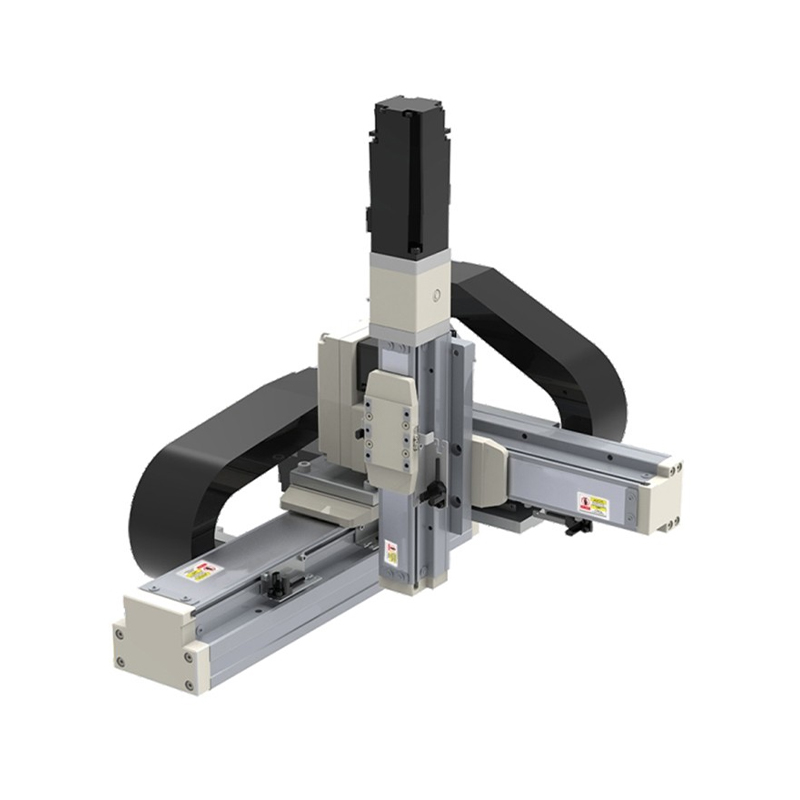
High-Precision 2-Axis Linear Positioning Cartesian Robot
Articulated robots are highly flexible and can approach a workpiece from multiple angles. However, their rotating joints create a more complex relationship between joint coordinates and tool position. For some large-format applications, the arm may require a seventh axis, an extended base, or an additional transfer system to reach all required stations.
A Cartesian gantry robot offers a more direct linear positioning method. Its motion envelope is easier to define, and the work area can be designed around the dimensions of the line or workpiece. For applications involving repeated movements along X, Y, and Z directions, this direct architecture can simplify programming, fixturing, and process planning.
Gantry systems can also provide a more stable platform for heavy loads. An articulated arm carries its payload through a series of joints, and the effective stiffness may vary with posture. A gantry distributes the load through linear guides and a supporting frame. This can be an advantage when the application requires a large tool, a long reach, or consistent positioning over a broad area.
Compact linear modules are useful for short-stroke, moderate-load applications and can be installed quickly in smaller machines. Their compact size is an advantage when space is limited. However, they may not provide the structural span, carrying capability, or work envelope required for large industrial equipment.
The XYH432-A is positioned for a different class of requirement. It is designed for heavier loads and wider strokes, making it better suited to large production cells, long-distance material movement, and large workpiece handling. Instead of treating each motion as an isolated module, the gantry integrates several coordinated axes into a unified structure.
This approach can reduce the need for multiple independent transfer devices. It may also simplify the organization of a large production area by allowing one robot to reach multiple stations or positions. The most suitable choice depends on the required stroke and load, but a heavy-duty gantry becomes increasingly attractive as the application expands in scale.
Manual handling can be appropriate for low-volume or highly variable work, but repetitive lifting and transfer operations may expose employees to ergonomic risks. Manual processes can also introduce differences in cycle time, placement position, and handling quality. When components are heavy, hot, sharp, oversized, or difficult to access, automated movement can improve workplace safety and process consistency.
A Cartesian robot can perform programmed transfer sequences with predictable timing. It can be integrated with sensors, interlocks, fixtures, and production management systems to support a more controlled workflow. Automation does not eliminate the need for human supervision, but it can reduce exposure to strenuous or repetitive tasks and allow personnel to focus on setup, inspection, maintenance, and process improvement.
Large facilities sometimes use several independent conveyors, lifts, slides, and transfer tables to move components between stations. Such systems can work effectively, but they may require more floor space, more interfaces, and more coordination between separate control units. Maintenance responsibilities can also become divided across many mechanisms.
A gantry robot can combine several movement functions within one coordinated system. It may move a component laterally, position it over a workstation, lower it into a fixture, and return to a loading position using a programmed sequence. This integrated approach can reduce mechanical duplication and provide a clearer control architecture for the automation cell.
Suzhou Tongyousheng Electronic Technology Co., Ltd. integrates research and development, production, and sales. This structure allows product development, manufacturing feedback, and customer application requirements to be considered together. For a complex motion product, this is valuable because a successful system must satisfy mechanical, electrical, software, and production requirements simultaneously.
The company maintains an experienced research and development team and uses advanced design software in the development process. Engineering tools support the evaluation of structural layouts, component relationships, installation interfaces, and motion configurations. A systematic design process helps reduce avoidable interference problems and supports more efficient customization for different work envelopes.
The company’s product range includes electric cylinders, linear motion modules, linear motor modules, servo presses, robotic seventh axes, and multi-degree-of-freedom platforms. Experience across these product categories contributes to a broader understanding of motion control and automation integration. The same engineering principles—rigidity, transmission efficiency, positioning, force control, synchronization, and reliability—are relevant across many types of industrial equipment.
High-quality motion equipment depends on the accuracy and consistency of its mechanical components. Linear guides, mounting surfaces, brackets, bearing seats, transmission supports, and structural interfaces must be manufactured with suitable dimensional control. High-precision CNC machining centers can support the production of these components with repeatable processing conditions.
The company operates high-precision CNC machining centers as part of its manufacturing capability. CNC processing can improve repeatability between batches and help maintain controlled relationships between mounting surfaces and moving elements. Proper machining is particularly important for gantry equipment because rail alignment and structural parallelism influence smooth motion, load distribution, and long-term wear.
Manufacturing quality also depends on more than machine tools. It requires appropriate material selection, process planning, fixture design, inspection, surface treatment, assembly procedures, and final verification. When these activities are coordinated, the resulting machine can achieve more reliable mechanical behavior across its service life.
The company has developed a portfolio of core patents and has continued to expand its technical capabilities since its establishment in 2013. Its development history includes linear modules, electric cylinders, servo presses, six-degree-of-freedom motion platforms, algorithmic control software, and multi-degree-of-freedom platform linkage systems.
This technical background is relevant to the XYH432-A because Cartesian motion systems are not isolated mechanical products. They are part of a larger automation ecosystem. A gantry robot may need to communicate with a servo press, a machining center, a vision inspection system, a conveyor, or another robot. Experience with multiple motion products can help the provider understand how the gantry should be integrated into a complete production solution.
Research into control algorithms and linked motion platforms also supports a more advanced approach to synchronization. While the final control architecture depends on the customer’s equipment and automation requirements, a supplier with experience in coordinated motion is better prepared to address multi-axis positioning, sequencing, and system-level communication.
The company collaborates with state-owned enterprises, defense technology institutions, and leading universities to promote the integration of industry, academia, and research. Such cooperation can support the development of new motion technologies, application methods, control strategies, and engineering standards.
Industrial cooperation is especially important for heavy-duty automation because practical requirements often extend beyond a catalogue product. Different sectors may require special environmental protection, unusual payload geometry, enhanced safety systems, high repeatability, long operating cycles, or integration with specialized equipment. Collaboration with technical institutions can provide access to broader engineering knowledge and application experience.
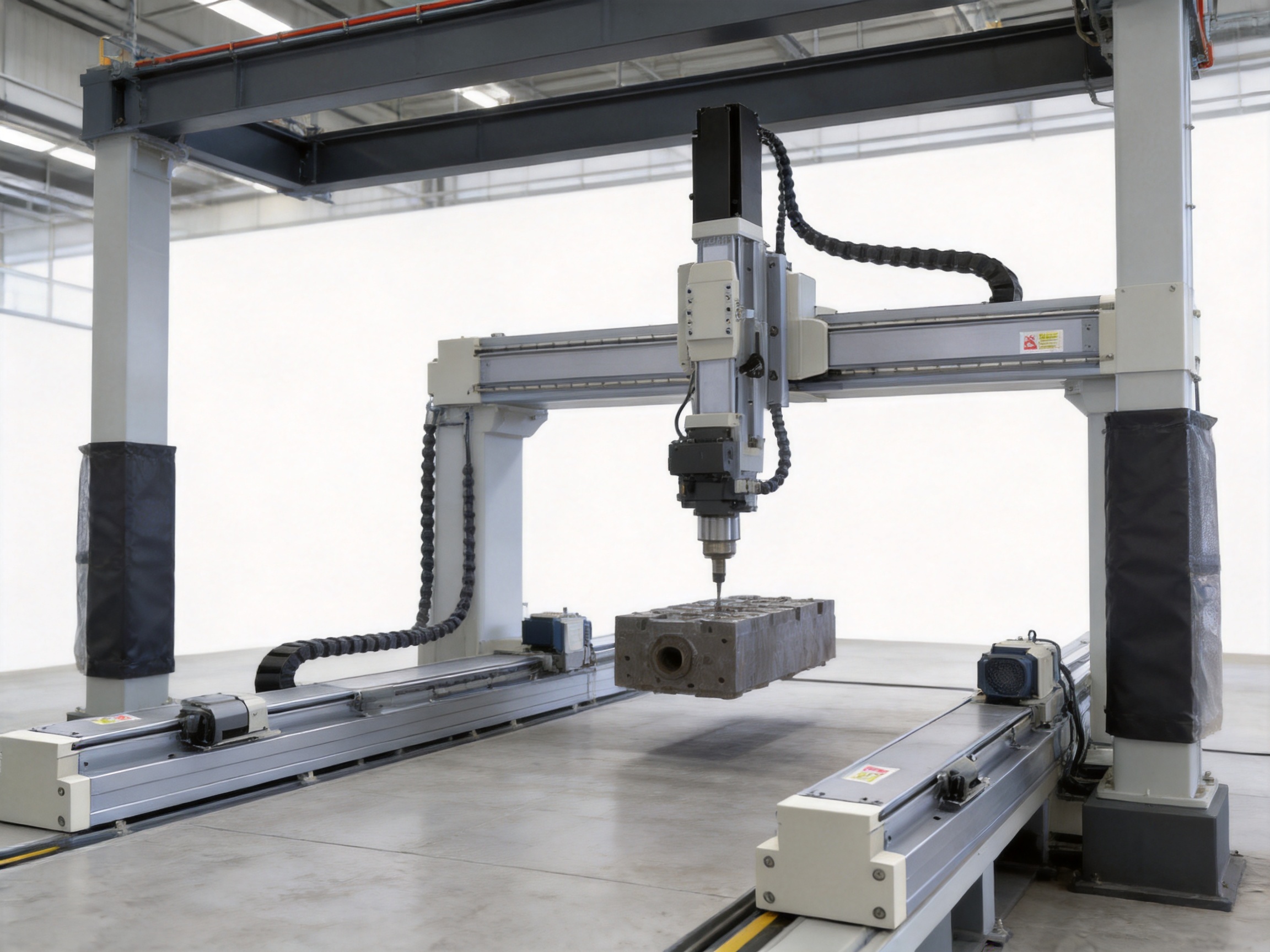
The manufacturing process begins with an understanding of the application. Engineers need to know what the robot will move, where it must travel, how frequently it will operate, and what process must be performed at each location. Important factors include payload mass, tooling mass, center of gravity, work envelope, travel distance, required cycle time, acceleration, environmental conditions, and interface requirements.
For the XYH432-A, application analysis is particularly important because heavy loads and wide strokes influence the entire system design. A payload that is manageable at low speed may produce significant dynamic forces at higher acceleration. A large work envelope may require additional structural support or a different drive and guide arrangement. By studying these conditions before manufacturing, the supplier can develop a more appropriate configuration.
After the application has been defined, the mechanical design team develops the gantry arrangement, axis layout, mounting interfaces, cable routing, and maintenance access. The goal is to create a structure that supports the payload while allowing the axes to move smoothly and safely through their full range.
Structural planning considers the position of the guides, drive components, supporting members, fasteners, and end-effector connection points. It also considers how the robot will be installed on the customer’s floor or machine base. Proper support and leveling are necessary for long-stroke systems because small alignment errors can become more significant over extended travel.
Design software can be used to review component clearances, verify assembly relationships, and evaluate potential interference between the moving parts and surrounding equipment. A well-planned design reduces installation complications and supports a more efficient assembly process.
Once the design is approved, key components are manufactured using appropriate machining processes. High-precision CNC machining centers can produce structural connectors, mounting plates, bearing seats, brackets, and other components with controlled dimensions. Consistent machining helps ensure that the parts fit together accurately during assembly.
Machined components may undergo inspection before moving to the next production stage. Depending on the part and its function, inspection can include dimensional checks, hole-position verification, flatness evaluation, surface review, and confirmation of critical interfaces. Quality control at this stage helps prevent assembly problems later.
Assembly of a gantry robot requires careful attention to the relationship between the frame, linear guides, transmission components, motors, sensors, and moving carriages. The assembly team must ensure that guide surfaces are correctly positioned and that the moving axes operate without abnormal resistance or uneven loading.
Alignment is especially important for wide gantry structures. Parallelism between rails, squareness between axes, and the relationship between the tool mount and the coordinate system all influence positioning behavior. Proper assembly procedures can reduce mechanical stress and support smoother movement throughout the stroke.
Cable chains, protective covers, lubrication points, and maintenance access should also be considered during assembly. These elements may appear secondary compared with the main frame, but they have a direct impact on reliability and serviceability in daily operation.
The robot’s mechanical performance must be matched by an appropriate electrical and control system. Servo motors, drives, sensors, limit devices, emergency stop circuits, and communication interfaces must be coordinated with the machine’s operating sequence. The specific components depend on the customer’s requirements and the selected configuration.
Control integration allows the robot to execute movements in a defined order and respond to signals from surrounding equipment. For example, a gantry may receive a ready signal from a machine tool, move to a loading position, confirm the part is secured, transfer the part, and provide a completion signal to the next station. Interlocks can help prevent movement when a door is open, a fixture is not ready, or a safety condition has not been satisfied.
For more advanced applications, the robot can be connected with vision systems, production databases, programmable logic controllers, and other automation devices. The ability to integrate into a larger system is one of the most important differences between a standalone motion mechanism and an industrial automation solution.
Before delivery, the robot should undergo movement testing and functional verification. Tests may include full-stroke travel, repeated positioning, acceleration and deceleration checks, limit-switch confirmation, emergency-stop response, noise observation, cable-chain movement, and inspection of mechanical interfaces.
For a heavy-duty gantry, testing should consider the intended payload and operating cycle whenever practical. The goal is to confirm that the system moves smoothly, responds correctly to control commands, and maintains stable operation throughout its working range. Final acceptance criteria should be agreed during the technical specification stage.
Documentation is also an important part of delivery. Installation drawings, operating instructions, maintenance recommendations, electrical information, and spare-part guidance can help the customer place the equipment into service more efficiently. Clear documentation supports safer operation and easier troubleshooting.
The XYH432-A can be used for moving heavy components between loading areas, processing stations, storage positions, and assembly fixtures. Its gantry structure is appropriate when the payload is too large or heavy for a compact linear module and when the work area requires broad horizontal movement.
Typical handling sequences may include picking a component from a pallet, transferring it to a machine, removing it after processing, and placing it in a downstream fixture. The system can also support repetitive lifting and positioning tasks that would otherwise require manual labor or multiple transfer devices.
Large assemblies often require tools or components to be positioned at multiple locations across a wide workpiece. A Cartesian robot can move an assembly head, fastener tool, dispenser, inspection device, or fixture along programmed linear paths. Its coordinate-based motion is useful when the assembly pattern is organized around a rectangular workspace.
Because the robot can cover a broad area, it may reduce the need to reposition the workpiece manually. This can improve process continuity and help maintain a consistent relationship between the tool and the assembly reference points.
In machining environments, a gantry robot may assist with loading and unloading, part transfer, fixture service, or movement between process stations. The robot can be installed above or beside the machining area, provided the environmental conditions and protection requirements are properly addressed.
Machining applications require careful consideration of chips, coolant, vibration, temperature, and contamination. The final configuration should include suitable protection and maintenance provisions. The machine’s rigidity and carrying capability can nevertheless make it a useful platform for large-part automation and material transfer.
Production lines with widely separated stations may benefit from a long-stroke Cartesian robot. The system can move components over a defined path while maintaining a repeatable sequence. This is useful in manufacturing environments where a part must be transferred between multiple operations without relying solely on conveyors or manual transport.
A long-distance transmission application should be designed around the required cycle time, transfer mass, acceleration profile, and installation conditions. The combination of a wide travel range and a stable gantry structure allows the robot to serve as a central transport mechanism within an automated cell.
Cartesian robots can also position inspection equipment, measurement probes, cameras, scanners, and process tools. A programmed grid or path can allow the device to examine different areas of a large component. The linear coordinate system simplifies the definition of inspection locations and can support repeatable coverage of the workpiece.
Where inspection accuracy is critical, the machine should be integrated with suitable calibration, environmental control, sensor feedback, and data-processing systems. The robot provides the motion platform, while the complete inspection result depends on the sensor, software, fixturing, and process design.
| Selection Factor | Why It Matters | Recommended Engineering Question |
|---|---|---|
| Payload | The total mass affects motor sizing, guide loading, acceleration, and structural deflection. | What are the workpiece, tooling, and fixture masses, including the center of gravity? |
| Stroke | Travel determines the work envelope, frame size, cable routing, and installation space. | What are the minimum and maximum coordinates required by the process? |
| Cycle Time | Speed and acceleration influence productivity and dynamic loading. | How many transfers or process cycles must be completed per hour? |
| Accuracy and Repeatability | Different operations require different positioning performance. | What positioning tolerance is required at the tool or workpiece? |
| Tooling | End-effectors can create additional mass, moments, and utility requirements. | What gripper, clamp, vacuum device, tool, or inspection head will be installed? |
| Environment | Dust, chips, coolant, temperature, and humidity affect protection and maintenance. | What operating conditions will the robot experience? |
| Integration | Communication and safety interfaces determine how the robot works with the production line. | Which PLC, sensors, machines, safety devices, and data systems must be connected? |
| Installation | Foundation quality and alignment affect long-stroke motion and service life. | How will the gantry be supported, leveled, and accessed for maintenance? |
These factors should be evaluated as a complete system. Selecting a robot only by nominal payload or stroke can lead to an unsuitable configuration if the tooling creates a large moment, if the cycle time demands high acceleration, or if the installation foundation is not sufficiently stable.
Customers should provide application drawings, payload information, movement sequences, production targets, and environmental conditions during the inquiry stage. This allows the supplier’s engineers to recommend an appropriate arrangement rather than applying a one-size-fits-all solution.
Industrial automation equipment must be designed for repeated operation and practical maintenance. The XYH432-A’s heavy-duty application focus means that serviceability should be considered from the beginning of the project. Linear guides, drive systems, sensors, cable chains, lubrication points, and protective components should be accessible for inspection and replacement.
Regular maintenance may include cleaning exposed surfaces, checking fasteners, inspecting cable routing, confirming lubrication, monitoring unusual noise or vibration, and verifying sensor operation. The recommended maintenance interval depends on the duty cycle, load, environment, and selected components.
Operators should also monitor changes in motion quality. Increased vibration, longer settling time, abnormal sound, inconsistent positioning, or higher motor demand may indicate a developing mechanical or electrical issue. Early inspection can prevent a minor problem from becoming a longer production interruption.
Proper installation is equally important. A gantry that is incorrectly leveled or mounted on an unsuitable foundation may experience unnecessary stress. During commissioning, the customer and supplier should confirm the coordinate system, safety functions, homing procedure, motion limits, and process sequence.
The company’s integrated business model supports communication among product development, manufacturing, and customer service teams. This can be useful when a customer needs application-specific adjustment, replacement components, technical guidance, or future expansion of the automation system.
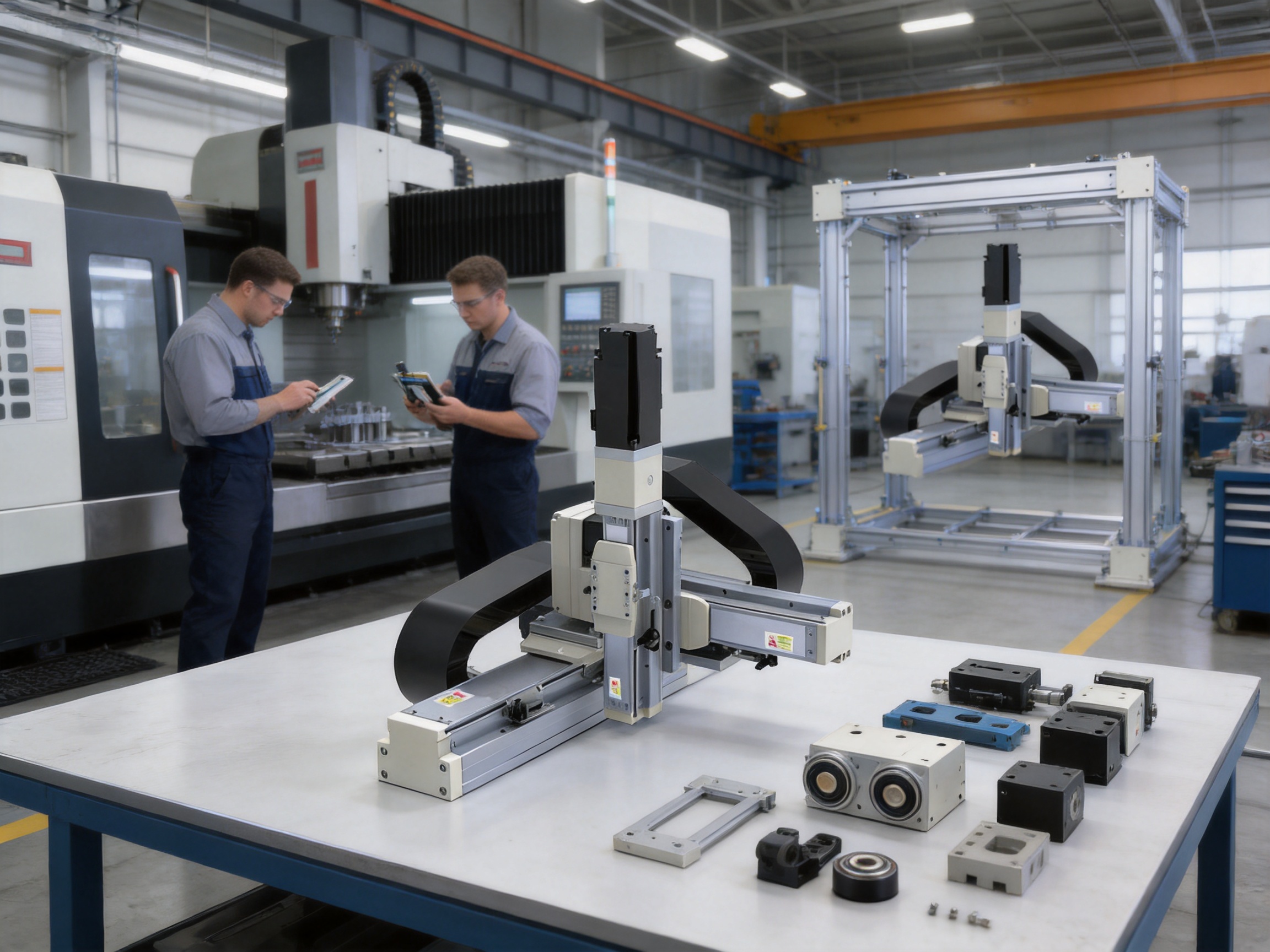
Industrial automation projects often vary significantly in scale and process requirements. The XYH432-A can be considered as a platform for customized engineering rather than only as a fixed-purpose machine. The gantry dimensions, stroke arrangement, tool interface, control method, safety design, and surrounding equipment can be planned around the customer’s production needs.
Customization may involve adapting the robot to a large worktable, integrating it with a machine tool, adding a special gripper, configuring a vertical axis, or connecting it with a transfer line. It may also involve designing the machine around a specific component geometry or production sequence.
A customized system should maintain a clear distinction between confirmed product capabilities and application-specific design targets. Payload, speed, accuracy, environmental protection, and cycle time should be documented in the technical specification. This provides a reliable basis for manufacturing, acceptance testing, and future maintenance.
The company’s additional product categories can support broader automation projects. Electric cylinders may be used for pressing, lifting, clamping, or adjustment. Linear motion modules can provide compact auxiliary movement. Servo presses can add controlled force and displacement. Multi-degree-of-freedom platforms can support simulation or dynamic positioning. These products may be used independently or combined with the Cartesian robot in a larger solution.
Intelligent manufacturing requires equipment that can communicate, collect information, execute repeatable movements, and adapt to changing production requirements. A Cartesian robot provides a clear and structured motion foundation for these functions. Its axes can be coordinated by a controller, monitored through sensors, and connected to other factory equipment.
The XYH432-A is suited to this environment because its primary value is not limited to mechanical movement. It can become part of an automated process that includes production scheduling, material identification, quality inspection, tool management, and equipment status monitoring. The level of integration depends on the selected control system and customer requirements, but the gantry provides the physical movement needed to connect multiple process steps.
Predictable linear motion also supports digital process planning. Positions can be represented as coordinates, transfer paths can be programmed, and process parameters can be adjusted through software. When combined with suitable feedback devices, this can help manufacturers analyze cycle performance and improve production efficiency.
For Industry 4.0 projects, the robot should be evaluated together with its communication protocols, data interfaces, safety architecture, and maintenance strategy. A technically strong mechanical system becomes more valuable when it can operate reliably within the broader information and control structure of the factory.
Suzhou Tongyousheng Electronic Technology Co., Ltd. was established in 2013 and has continued to expand its product development and manufacturing capabilities. Its business focuses on automation equipment and components used in industrial motion, intelligent manufacturing, robotics, and simulation.
The company’s product portfolio reflects a commitment to motion technology across different force, speed, and positioning requirements. Electric cylinders address controlled linear actuation. Linear modules and linear motor modules address guided positioning. Servo presses address controlled force and displacement. Robotic seventh axes extend the working range of robotic systems. Six-degree-of-freedom and multi-degree-of-freedom platforms address complex motion simulation and linked movement.
This range of products provides a foundation for understanding different automation architectures. It also enables the company to participate in projects that require more than one motion product. A customer may need a gantry robot for material transfer, a servo press for assembly, and an electric cylinder for clamping or adjustment. A supplier with experience across these technologies can help coordinate the overall system concept.
The company emphasizes quality, reputation, innovation, and development as core values. Its stated mission is to advance industrial progress through innovation and craftsmanship while building long-term trust with customers worldwide. These principles are relevant to heavy-duty automation because customers typically expect equipment to provide dependable performance over a long operating period, not merely to meet an initial specification.
The company serves customers in automation, robotics, motion simulation, and intelligent manufacturing. Its work with industrial enterprises, technical institutions, and universities supports continued development and application of advanced motion technologies.
Users should begin by mapping the complete process rather than selecting a robot based only on the desired travel distance. The process map should identify every pickup point, placement point, tool position, waiting position, inspection location, and maintenance access area. This information helps determine the actual work envelope.
Payload calculations should include acceleration and deceleration, not just static weight. Tools mounted far from the axis can create moments that affect guide loading and positioning stability. The supplier should receive accurate information about the payload center of gravity and the intended motion profile.
Large gantry robots require appropriate guarding, fencing, light curtains, door interlocks, emergency stops, warning devices, and safe access procedures. The safety concept should account for the complete operating area, including the space swept by the moving axes and the area required for maintenance.
The installation foundation should be sufficiently stable and level for the selected machine. Cable routes, utility connections, operator access, and maintenance clearance should be planned before delivery. Proper preparation can shorten commissioning time and reduce alignment difficulties.
Maintenance responsibilities should be assigned before production begins. Operators can perform routine checks, while trained maintenance personnel can inspect guides, transmission components, electrical connections, sensors, and control-system alarms. A record of maintenance and unusual operating conditions can help identify trends.
The XYH432-A is a Cartesian robot with a gantry structure. It is designed for linear positioning and is intended for heavier-load and wider-stroke industrial applications. The supplied product description identifies it as a three-axis gantry structure while emphasizing high-precision two-axis linear positioning.
The product title emphasizes two-axis linear positioning, while the product description identifies a three-axis gantry structure. In practical terms, the robot may use two primary horizontal axes for planar positioning and a third axis for vertical movement or process adjustment. The final axis arrangement should be confirmed according to the selected application configuration.
The main advantages are high rigidity, strong stability, a large carrying capacity, and suitability for wide working areas. The gantry framework provides a stable support structure for heavy tools and workpieces and can help maintain predictable motion over long travel distances.
Suitable applications include heavy-duty handling, large-scale assembly, machining automation, long-distance industrial transmission, machine loading and unloading, inspection positioning, and other repetitive movements across a broad work envelope.
Industrial Cartesian robots are commonly engineered according to payload, stroke, work envelope, tooling, cycle time, control system, environment, and installation requirements. Customers should provide application information so the technical team can confirm the appropriate configuration and interfaces.
Payload should include the workpiece, end effector, fixture, cables, hoses, and any additional equipment carried by the moving axis. The center of gravity, moment load, acceleration, deceleration, mounting direction, and duty cycle should also be considered.
Yes. The product is designed for heavier loads and wider strokes, making it suitable for large workpieces and large-format production areas. The actual suitability depends on the workpiece mass, dimensions, mounting method, required accuracy, and motion profile.
The company uses advanced design software, high-precision CNC machining centers, experienced research and development personnel, and an integrated research, production, and sales structure. It also has experience with several categories of automation equipment and maintains a portfolio of core patents.
Users should confirm the required axes, stroke, payload, tooling, speed, acceleration, accuracy, repeatability, work environment, safety provisions, installation foundation, control interfaces, and acceptance criteria. Technical drawings and process sequences can help the supplier make an accurate recommendation.
Yes. A Cartesian robot can be integrated with conveyors, machine tools, servo presses, fixtures, vision systems, programmable logic controllers, sensors, safety devices, and factory information systems. The required interfaces should be defined during the engineering stage.
Maintenance may include inspection of guides, drive components, fasteners, cable chains, sensors, lubrication points, protective devices, and electrical connections. Cleaning and inspection frequency should be based on the operating environment, duty cycle, payload, and manufacturer recommendations.
The XYH432-A Cartesian robot is a heavy-duty linear positioning solution for manufacturers that need a stable, rigid, and wide-reaching automation platform. Its gantry structure is designed for larger loads and longer travel than many compact positioning systems, making it suitable for heavy handling, large-scale assembly, machining automation, long-distance transfer, and other industrial processes.
Its principal competitive advantages are the direct motion behavior of a Cartesian architecture, the structural support of a gantry frame, the ability to cover a broad work area, and the capacity to carry substantial tooling or workpieces. Compared with articulated arms, compact linear modules, manual handling, or multiple independent transfer devices, it can offer a more organized and stable approach for large-format linear movement.
The product is supported by a company with experience in electric cylinders, linear modules, linear motors, servo presses, robotic axes, and multi-degree-of-freedom platforms. Integrated research and development, high-precision CNC machining, advanced design software, technical cooperation, and continued patent development provide a strong foundation for customized automation engineering.
For the best result, the robot should be selected as part of a complete application study. Payload, center of gravity, stroke, cycle time, environmental conditions, tooling, safety, foundation, and control integration all influence the final configuration. When these factors are properly evaluated, the XYH432-A can serve as a reliable motion platform for demanding production environments and intelligent manufacturing systems.
1. Product information supplied for the XYH432-A Cartesian robot, including its gantry structure, application range, rigidity, stability, stroke, and carrying-capacity characteristics.
2. Company information supplied for Suzhou Tongyousheng Electronic Technology Co., Ltd., including its research and development, manufacturing, product portfolio, cooperation activities, and corporate values.
3. International Organization for Standardization. Industrial Robots and Robotic Devices: General Concepts and Industrial Robot Safety Principles.
4. International Organization for Standardization. Mechanical Positioning and Performance Evaluation Principles for Industrial Automation Equipment.
5. General engineering practice for Cartesian robot selection, gantry structural design, linear guide alignment, payload calculation, motion control, and automation-cell integration.
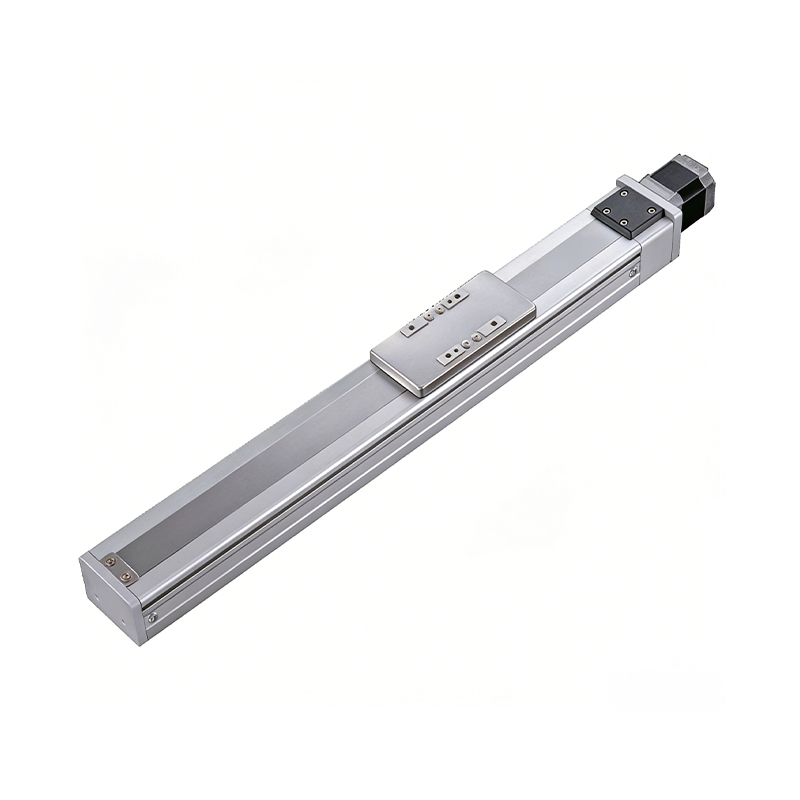 0.01mm High Precision Ball Screw Driven Rail-Embedded Linear Module
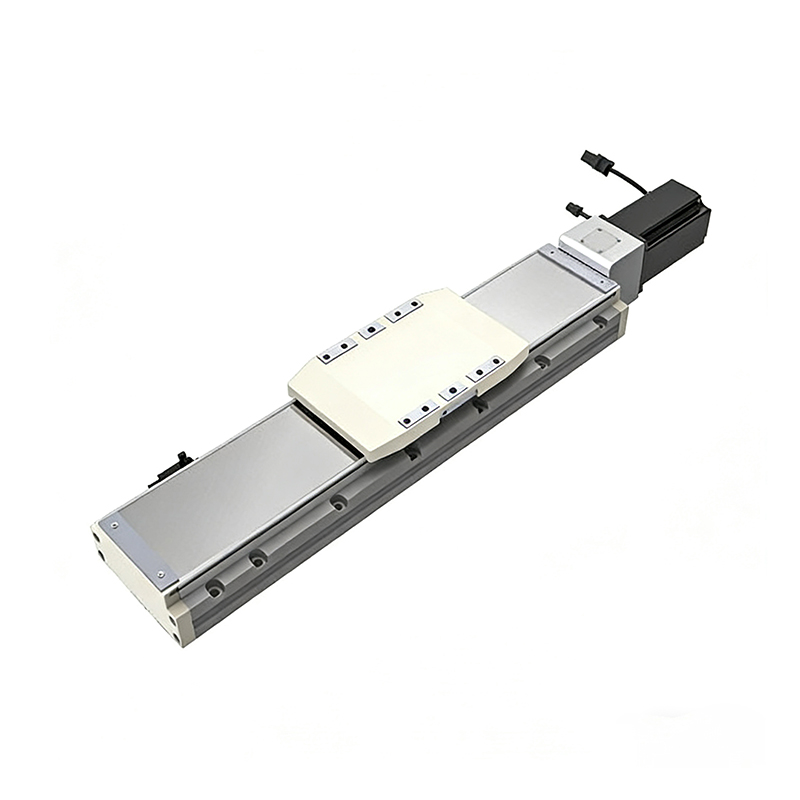 Heavy Load Ball Screw Driven Rail-Embedded Linear Module
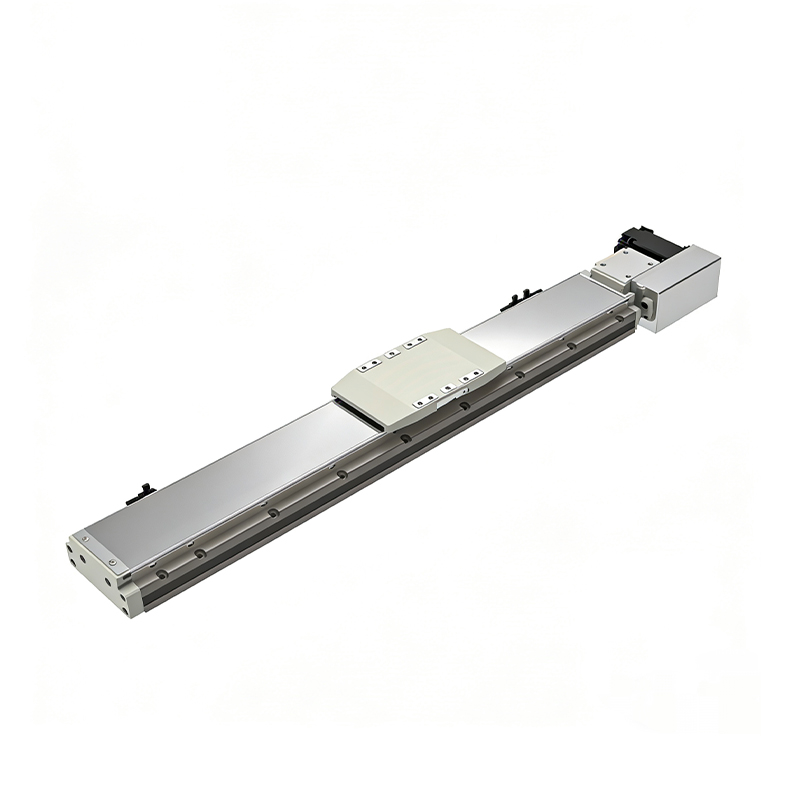 110KG Load Long Stroke Rail-Embedded Linear Module
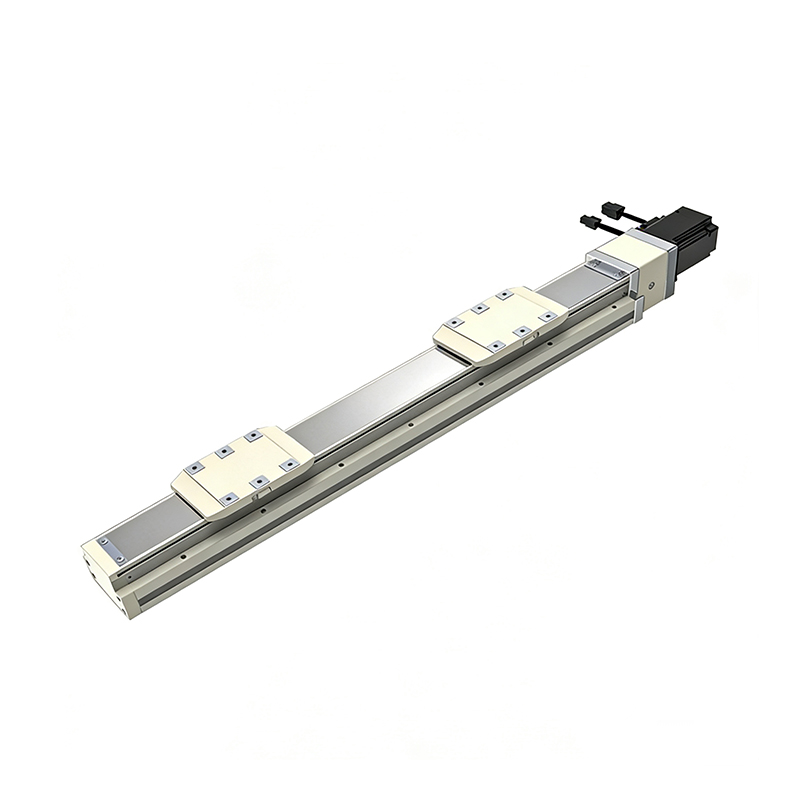 Dual-Slider High Precision Rail-Embedded Linear Module
 Belt Driven Dust-Proof Rail-Embedded Linear Module
 0.01mm High Precision Light Load Ball Screw Linear Module
 Ball Screw Linear Module with Built-in Sensor
 2000mm Long Stroke Ball Screw Linear Module
This 2000mm Long Stroke Ball Screw Linear Module is customized for large-range linear movement automation tasks, support...
READ MOREThis 2000mm Long Stroke Ball Screw Linear Module is customized for large-range linear movement automation tasks, support...
READ MOREThis 2000mm Long Stroke Ball Screw Linear Module is customized for large-range linear movement automation tasks, support...
READ MOREThis 2000mm Long Stroke Ball Screw Linear Module is customized for large-range linear movement automation tasks, support...
READ MORE
If you are interested in our products, please leave us a message. We look forward to providing you with
professional services!
Innovation and transcendence make factory intelligent manufacturing efficient and convenient!
+86 186 2508 0683
19962977901
sales@sz-tys.com
Building 5, Suzhou Mudu International Science and Technology Innovation Park, Jinfeng South Road, Suzhou City, Jiangsu Province, China
