


 English
 Français
 русский
 عربى
عربى Español
 Deutsch
Tel
+86 186 2508 0683

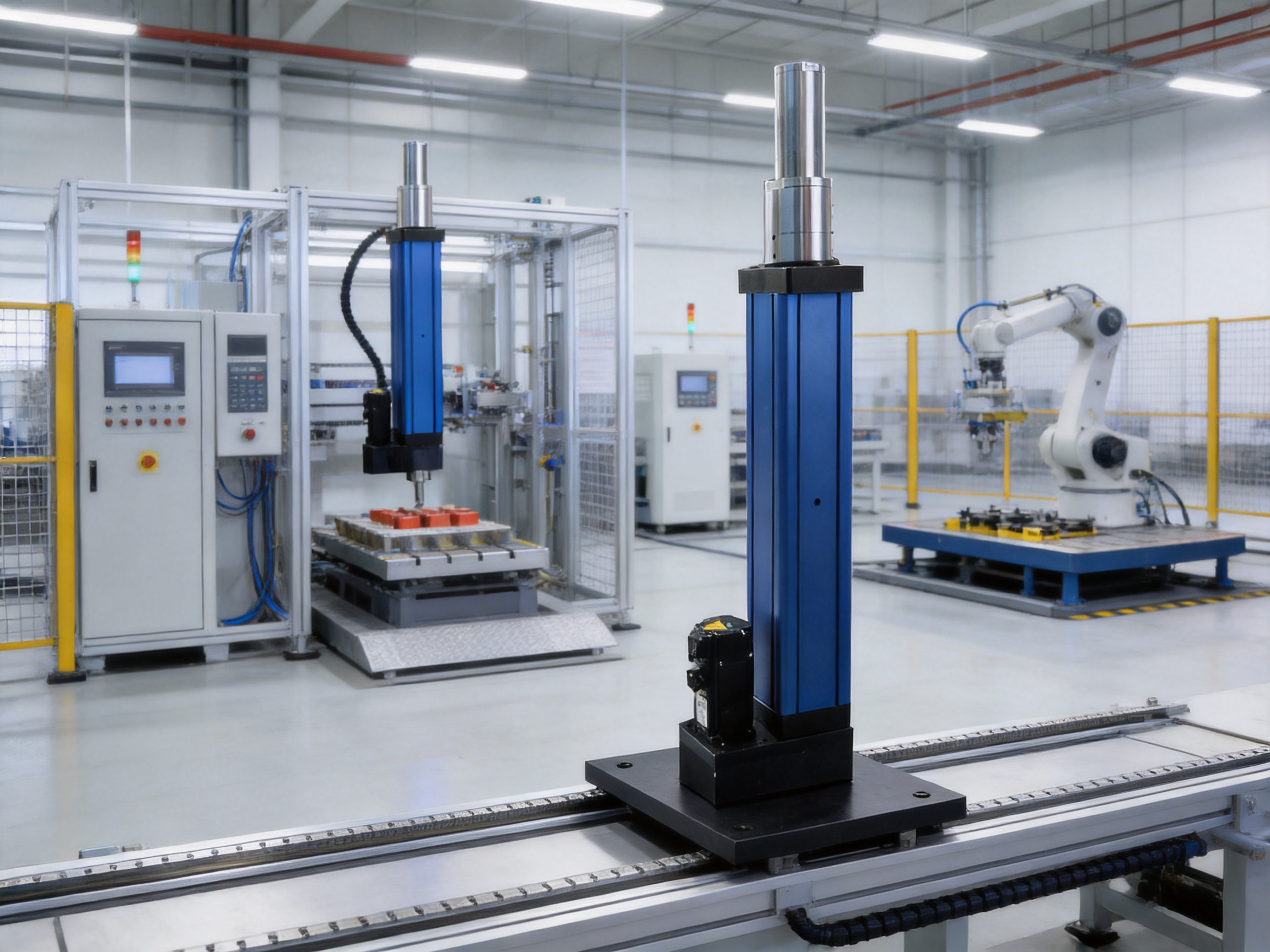
Modern automation equipment increasingly requires long, precise linear travel without sacrificing valuable installation space. Conventional electric cylinders and standard linear actuators can provide reliable motion, but their retracted length may become a major limitation when equipment must remain compact. A long actuator often requires a correspondingly long installation envelope, creating challenges for machine designers working with restricted frames, enclosed workstations, mobile platforms, or multi-axis systems.
The two-stage synchronous telescopic electric cylinder addresses this challenge through a compact multi-stage structure. Its two telescopic stages extend to achieve a long working stroke while the retracted length is substantially reduced. According to the product design information, the retracted length can be approximately one-third of the maximum stroke, providing a practical solution for applications that require extended travel but have limited available installation depth.
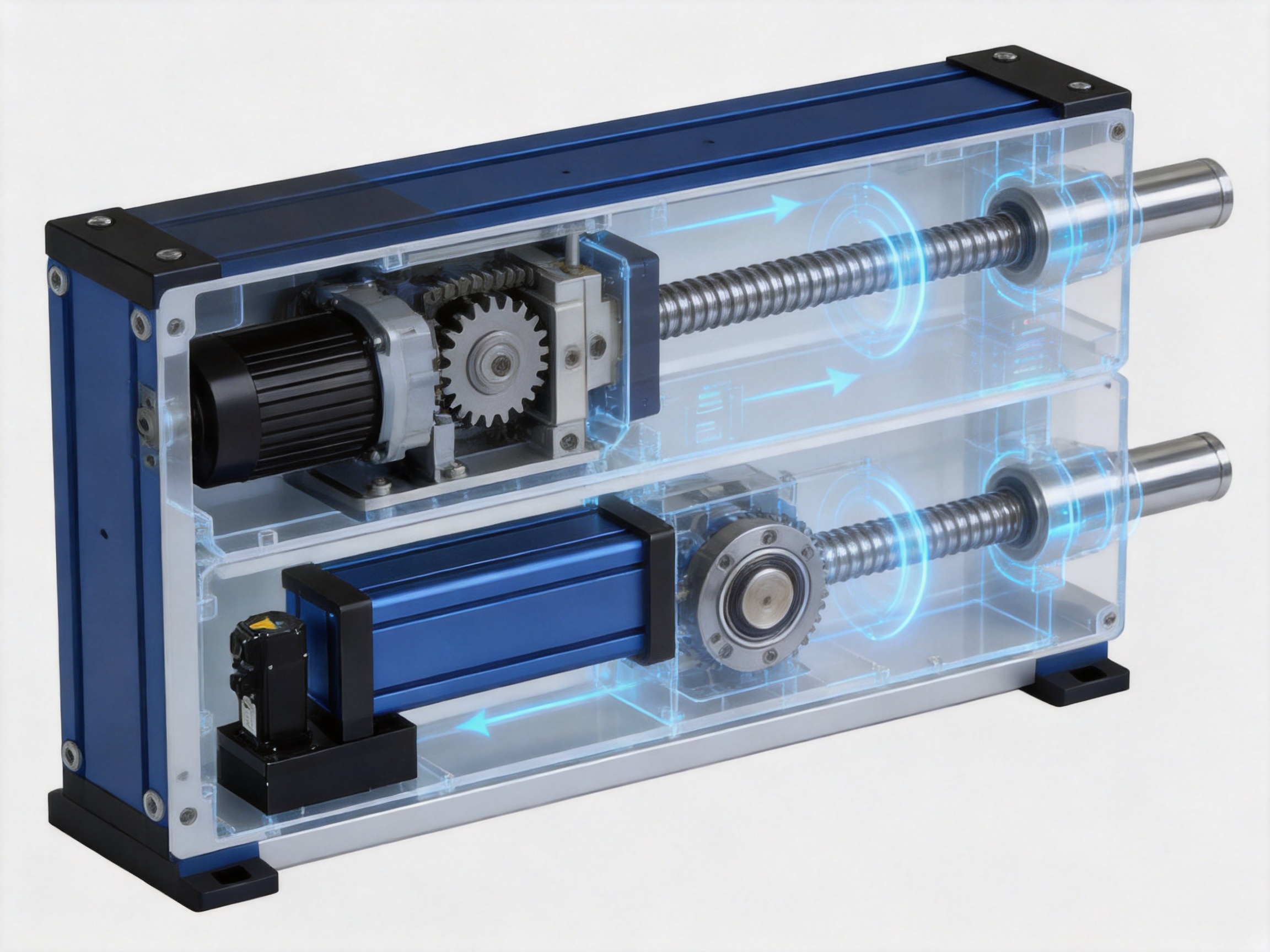
This electric cylinder uses one servo motor to drive both telescopic stages synchronously. Power is transferred through a gearbox and internal multi-stage transmission mechanism, converting rotary motor movement into controlled linear motion. A positioning system monitors the movement of the telescopic rod, supporting accurate stopping, repeatable positioning, and coordinated operation within automated equipment.
Designed for demanding industrial environments, the cylinder combines a high-strength aluminum alloy body, servo-based control, long-stroke capability, and IP65 protection. Available configurations cover rated thrust values from the lower-kilonewton range to higher-load versions, while maximum stroke options extend to 2,000 millimeters for the two-stage product family. Customization is also available for applications with special stroke, load, installation, or control requirements.
Linear motion is a fundamental function in material handling, lifting, forming, molding, testing, packaging, robotics, and production-line automation. In many machines, the actuator must move a load over a long distance while fitting into a space that is considerably shorter than the required stroke. This is particularly common in vertical lifting systems, telescopic handling arms, mold adjustment mechanisms, stage equipment, and enclosed automation cells.
A conventional single-stage actuator generally has a retracted length related closely to its stroke. If a machine requires a 2,000-millimeter stroke, the machine frame may need to reserve a large amount of space even when the actuator is fully retracted. This increases the overall equipment footprint and may force designers to adopt offset mechanisms, chain drives, hydraulic systems, or complex mechanical linkages.
A telescopic electric cylinder changes this relationship. Its nested stages occupy a shorter length when retracted and progressively extend during operation. The result is a longer effective working range within a smaller installation envelope. This arrangement can help simplify machine architecture, improve space utilization, and reduce the need for external mechanisms.
The electric drive also offers advantages compared with many traditional hydraulic or pneumatic solutions. Servo control supports programmable speed, position, acceleration, deceleration, and force-related motion profiles. Electric actuation can reduce the need for hydraulic pumps, valves, hoses, compressed-air preparation equipment, and fluid maintenance. For facilities seeking cleaner, quieter, and more data-capable automation, an electric cylinder is often easier to integrate into a modern control system.
However, a compact long-stroke actuator must be engineered carefully. The transmission must maintain synchronization between stages, the structural body must withstand operating loads, the guides must resist deflection and wear, and the control system must monitor position accurately. The two-stage synchronous design is intended to address these requirements through a single-motor transmission architecture and a rigid aluminum alloy housing.
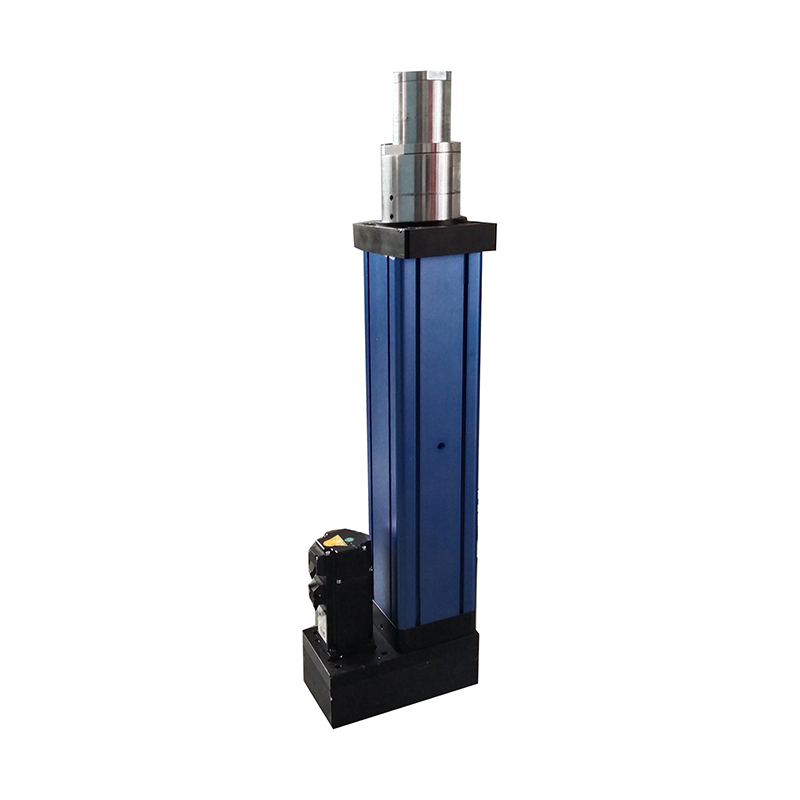
Two-Stage Synchronous Telescopic Electric Cylinder
The principal feature of the product is its two-stage telescopic rod arrangement. Instead of using one long fixed-length rod, the actuator contains nested moving sections. During retraction, the sections overlap within the cylinder body. During extension, the internal transmission mechanism drives the stages outward in a coordinated sequence.
This structure allows the cylinder to achieve a maximum stroke of up to 2,000 millimeters while keeping the retracted length relatively short. The product information identifies a retracted-length relationship of approximately one-third of the maximum stroke. Actual installation dimensions depend on the selected model, stroke, mounting arrangement, sensor configuration, and mechanical interface, so final dimensional confirmation should be completed during the design stage.
The telescopic arrangement is especially useful where a machine needs to reach several working positions along a long vertical or horizontal path. It can support lifting columns, transfer mechanisms, adjustable tooling, mold positioning systems, and other equipment in which long travel and compact storage must coexist.
Both telescopic stages are driven by one servo motor. This is an important design distinction because it avoids the need for separate motors and independent synchronization loops for each stage. A single motor provides the input motion, while the internal gear and transmission system distributes that motion to the telescopic sections.
Using one motor can reduce system complexity. It may lower the number of drives, cables, feedback devices, and control parameters required by the machine builder. It also helps ensure that the stages move together according to the same mechanical input. In a multi-motor arrangement, any difference in motor tuning, feedback resolution, load distribution, or electrical response can create synchronization errors. A mechanically coordinated single-motor drive minimizes these risks.
Single-motor operation can also support efficient energy use. Rather than powering multiple motors for one coordinated linear movement, the system uses one appropriately selected servo motor and a transmission mechanism designed for the required thrust and speed. Energy consumption will vary according to load, duty cycle, speed, acceleration, and control strategy, but the architecture provides a practical foundation for efficient operation.
The servo motor produces rotary motion at a controlled speed and torque. This rotation passes through a gearbox and is transferred to the internal lead screw and related transmission elements. The lead screw converts the rotary input into linear movement, while the telescopic mechanism distributes motion through the two stages.
The selected lead, reduction ratio, motor speed, and motor torque determine the relationship among output speed, thrust, and positioning performance. A larger lead can support higher linear speed under suitable conditions, while a reduction ratio can increase output torque and contribute to controlled movement. These parameters must be matched with the load, duty cycle, acceleration profile, and required service life.
The product data lists servo speeds of up to 3,000 revolutions per minute and lead screw lead options including 1,605/3,005 millimeters, 3,805/4,805 millimeters, 4,205/5,205 millimeters, and 3,005/4,205/5,205/6,205 millimeters, depending on the configuration family. These values should be treated as selection data rather than as one universal combination. Final performance depends on the complete motor, gearbox, screw, load, and control configuration.
Servo control allows the actuator to be integrated into a programmable motion system. The positioning system monitors the telescopic movement in real time, helping the controller determine the current position and command the cylinder to stop at the desired point.
This capability is valuable in applications that require multiple setpoints, repeatable positioning, synchronized machine axes, controlled approach speeds, or automatic recipe changes. For example, a mold adjustment system may require different positions for different products. A stage lifting system may use several programmed heights. A handling machine may need rapid travel during the approach phase and slower movement near the transfer position.
Servo operation also enables motion profiles that can reduce mechanical shock. Acceleration and deceleration can be adjusted to suit the payload and structure. Controlled ramping can reduce vibration, protect tooling, and improve the consistency of the machine cycle.
The strongest advantage of the two-stage design is the combination of long stroke and short retracted length. A maximum stroke of up to 2,000 millimeters provides a substantial working range for industrial equipment. At the same time, the telescopic architecture can reduce the storage length compared with a conventional actuator with an equivalent single-stage stroke.
This compactness can influence the entire machine design. Engineers may be able to shorten the frame, reduce the size of a protective enclosure, place the actuator inside a narrower column, or preserve space for other components. In mobile equipment, a shorter retracted actuator can help reduce the transport envelope. In a production line, it may make it easier to fit a long-stroke mechanism between existing stations.
The listed configurations include rated thrust values from 2 kilonewtons through higher-capacity options of up to 10 kilonewtons. The principal product description identifies a rated load range of approximately 2 to 8 kilonewtons, while the technical table also lists a 10-kilonewton configuration. Because the available load range varies with the model family and configuration, customers should confirm the applicable thrust rating before final selection.
Rated thrust is only one part of actuator sizing. The required selection must also consider static load, dynamic load, acceleration force, eccentric load, side force, duty cycle, mounting orientation, unsupported extension, braking requirements, and the possibility of impact or emergency stopping. The actuator should not be selected solely according to the nominal weight of the payload.
Where the load is guided by an external structure, the electric cylinder should primarily provide axial thrust rather than absorb excessive lateral or moment loads. Proper external guides, linear bearings, rollers, or structural supports can help protect the telescopic stages and transmission components.
The technical information lists rated speeds ranging from approximately 60 millimeters per second to 200 millimeters per second, depending on the motor, lead, reduction ratio, and model configuration. This range allows the actuator to be adapted to different priorities. Some applications need higher thrust and controlled movement, while others prioritize rapid transfer over maximum force.
The lead screw lead and reduction ratio influence this balance. A high reduction ratio can support greater mechanical advantage and controlled output movement. A different lead or motor configuration may support faster linear travel. Engineers should evaluate the full motion cycle rather than selecting the highest speed in isolation. A system that moves quickly but stops abruptly may produce more vibration and mechanical stress than a slightly slower system with a carefully optimized motion profile.
The cylinder body is manufactured from high-strength aluminum alloy. This material choice provides a balance between structural strength and low mass. Compared with a heavier steel housing, aluminum can reduce the weight that must be supported by the machine frame, lifting column, or robotic structure.
Lower actuator mass can be particularly beneficial in moving-axis applications. Reducing the mass of a transfer axis can decrease inertial forces, improve acceleration response, and reduce the size of the supporting drive system. It can also simplify installation and maintenance because technicians are handling a lighter component.
Aluminum alloy also supports effective corrosion-resistant surface treatments and precision machining. The final performance depends on the selected alloy, wall thickness, heat treatment, machining accuracy, surface finish, and assembly process. These details should be confirmed for applications involving high loads, repeated cycles, outdoor exposure, or specialized environmental requirements.
The product is specified with an IP65 protection level. This indicates protection against dust ingress and resistance to water projected by a nozzle from various directions under the applicable test conditions. IP65 can be advantageous in industrial environments where airborne dust, process debris, or routine cleaning spray may be present.
IP65 does not mean that the cylinder is suitable for immersion, high-pressure washdown beyond the applicable test conditions, or every corrosive chemical environment. Cable glands, connectors, mounting interfaces, and adjacent machine components must also be selected and installed in a way that preserves the intended protection level.
The specified working temperature range is -10°C to 40°C. This covers many indoor factory environments, automated handling systems, production lines, and equipment rooms. If the cylinder will operate outside this range, engineering evaluation may be required. Low temperatures can affect lubricant viscosity and material behavior, while elevated temperatures can influence motor performance, encoder reliability, seal life, and electronic components.
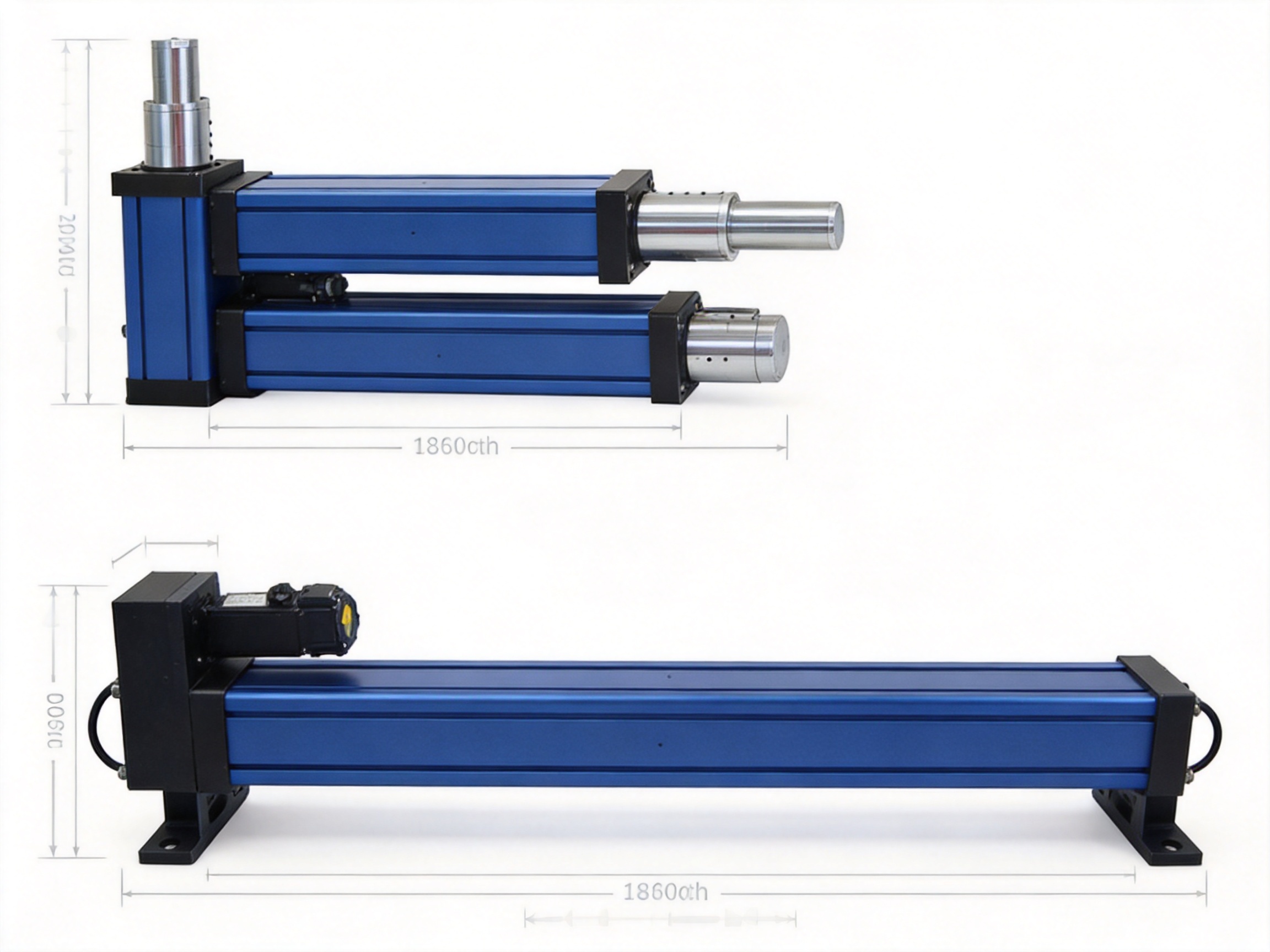
The following table summarizes the available technical information. Because the source specification presents several parameters across different model and configuration columns, the values should be used for preliminary selection. Final combinations, dimensions, mounting details, and performance ratings should be confirmed with the manufacturer for the required application.
| Parameter | Listed configuration information |
|---|---|
| Product type | Two-stage synchronous telescopic electric cylinder |
| Model families | TYSD095, TYSD110, TYSD135, TYSD270 |
| Drive method | One servo motor driving the telescopic stages synchronously |
| Servo power | Approximately 0.4 kW, 0.75 kW, 1 kW, 1.5 kW, and 2 kW configurations are listed |
| Servo speed | Up to 3,000 r/min |
| Rated servo torque | Approximately 1.27, 2.39, 3.18, 4.9, and 6.36 N·m configurations are listed |
| Reduction ratios | Listed options include 4:1, 5:1, 7:1, and 8:1 |
| Rated thrust | Approximately 2 kN to 10 kN across the listed configurations; the principal product range is stated as approximately 2 kN to 8 kN |
| Rated linear speed | Approximately 60, 70, 100, 125, and 200 mm/s configurations are listed |
| Maximum stroke | Up to 2,000 mm for the primary two-stage configurations; longer options may be available in other listed families |
| Body material | High-strength aluminum alloy |
| Control mode | Servo control with real-time position monitoring |
| Protection level | IP65 |
| Working temperature | -10°C to 40°C |
The most direct comparison is with a standard single-stage electric cylinder. A single-stage design may offer a simple structure and a broad range of available sizes, but its required installation length can increase substantially as the stroke becomes longer. The two-stage telescopic design is intended to provide a more favorable relationship between stroke and retracted length.
This advantage can reduce the machine footprint and create more freedom in component placement. It may also allow the actuator to be installed inside a support column or behind a platform where a conventional long cylinder would not fit. The compact retracted form is especially useful when the machine has to pass through a doorway, remain within a guarded zone, or fit into a narrow transport frame.
Pneumatic cylinders are widely used because of their simple construction and rapid response. However, they generally require compressed-air infrastructure, including a compressor, filters, regulators, valves, piping, and air preparation equipment. Air compressibility can also make precise intermediate positioning more challenging, particularly when loads vary or external forces change.
A servo electric cylinder can provide programmable positioning, adjustable speed profiles, and direct integration with digital machine controls. It can eliminate many pneumatic system components and reduce air consumption. For applications where the cylinder must stop at many positions or coordinate with other servo axes, electric actuation may offer greater flexibility.
Pneumatic systems remain useful for many low-cost, high-speed, simple end-position applications. The two-stage synchronous electric cylinder is most advantageous where long stroke, compact installation, positioning accuracy, programmable movement, and energy-conscious operation are important together.
Hydraulic cylinders can generate high force and are suitable for heavy-duty applications. Nevertheless, hydraulic systems often require pumps, reservoirs, valves, hoses, seals, and fluid management. Leakage prevention, noise, temperature control, and maintenance can influence the total cost of ownership.
The electric cylinder provides a cleaner electromechanical alternative for applications within its load and duty-cycle range. It can deliver controlled movement without hydraulic fluid, and its servo interface supports data-rich automation. The aluminum body can also reduce the mass of the actuator compared with some heavy hydraulic assemblies.
Hydraulic technology may remain the preferred choice for extremely high force, shock loading, or specialized harsh-duty applications. Proper engineering comparison should consider not only rated force but also cycle frequency, holding requirements, overload conditions, environmental exposure, safety functions, and maintenance practices.
Some telescopic systems use separate motors for separate stages. This can provide independent control but introduces additional synchronization tasks. Multiple motors may require more servo drives, feedback devices, wiring, tuning, and protective functions. Any mismatch in position or torque can affect the alignment of the stages.
The single-motor synchronous architecture simplifies the motion chain by mechanically coordinating both stages. It can reduce the number of active control axes and make commissioning more straightforward. The result is a compact system with fewer components that must be synchronized electronically.
Independent multi-motor systems may still be appropriate when each stage must operate independently or when a special motion profile requires separate control. For ordinary synchronous telescopic movement, however, a single-motor design can offer a strong balance of simplicity, reliability, and control consistency.
Suzhou Tongyousheng Electronic Technology Co., Ltd. is a high-tech enterprise integrating research and development, production, and sales. Its product scope includes electric cylinders, linear motion modules, linear motor modules, servo presses, robotic seventh axes, multi-degree-of-freedom platforms, and six-degree-of-freedom motion systems.
This broad product portfolio is relevant to the development of telescopic electric cylinders because the company works across mechanical transmission, servo control, motion simulation, structural design, and automation integration. Experience in several motion-product categories can help engineers evaluate an actuator not as an isolated component but as part of a complete machine architecture.
The company has an experienced research and development team and uses advanced design software to develop automation equipment and components. Digital design tools can support three-dimensional mechanical modeling, interference checking, motion simulation, tolerance review, and assembly planning before production begins.
The company operates high-precision CNC machining centers for the manufacture of its products. Precision machining is particularly important for telescopic electric cylinders because the housing, mounting interfaces, guide surfaces, transmission supports, and moving stages must work together with controlled alignment.
Machining accuracy can influence several performance factors. Properly aligned bearing and screw supports can reduce unwanted friction. Consistent mounting surfaces can simplify integration into customer equipment. Accurate telescopic-stage geometry can help maintain smooth extension and retraction. Controlled tolerances can also contribute to repeatability and reduce premature wear.
A professional manufacturing process normally includes engineering drawings, material control, machining process planning, dimensional inspection, surface treatment, assembly, functional testing, and final quality review. The specific inspection equipment and acceptance criteria should be confirmed for each product family and customer project, but the use of precision CNC centers provides an important foundation for repeatable production.
Tongyousheng has developed a portfolio of core patents and technical solutions related to automation equipment and motion systems. Intellectual property in this field can cover mechanical transmission arrangements, compact actuator structures, control algorithms, synchronization methods, platform mechanisms, and specialized machine architectures.
For customers, an internally developed technology base can offer advantages in customization and technical support. Instead of relying solely on standard catalog components, an experienced manufacturer may be able to adapt the stroke, mounting arrangement, motor combination, control interface, or mechanical structure to suit a specific machine.
The company collaborates with state-owned enterprises, defense technology institutions, and leading universities. Such cooperation can contribute to the transfer of engineering knowledge between research and industrial applications. It may also support the development of advanced motion-control methods, high-precision mechanisms, simulation platforms, and specialized automation equipment.
Collaboration with demanding technical organizations can expose product development teams to requirements involving repeatability, structural integrity, synchronized movement, environmental reliability, and long-term operation. These experiences are relevant to customers seeking an electric cylinder for more than basic point-to-point movement.
The company’s product portfolio includes linear motion modules, linear motor modules, servo presses, robotic seventh axes, and multi-degree-of-freedom platforms. This portfolio allows customers to source related motion components from a manufacturer with experience across different actuator technologies.
For a machine builder, this can simplify technical communication. A project may require a telescopic cylinder for lifting, a linear module for horizontal transfer, a servo press for assembly, and a motion platform for testing. A supplier that understands these products collectively can help evaluate compatibility, synchronization, payload distribution, and control-system integration.
Large handling equipment often needs to move products, tools, fixtures, or materials across a broad vertical or horizontal range. A long-stroke telescopic cylinder can provide the reach required for loading and unloading while maintaining a compact retracted profile.
Potential applications include transfer systems, pallet handling devices, material positioning machines, automated storage equipment, and production-line loading mechanisms. In these systems, the actuator can be combined with external guide rails or structural frames to manage the payload and maintain accurate movement.
Stage and platform lifting systems commonly require controlled vertical travel, repeatable positioning, and a relatively compact base structure. The two-stage cylinder can support the lifting mechanism where long travel is needed but a conventional actuator would occupy too much space.
Servo control allows the platform to move between programmed heights and approach each target position at a controlled speed. In applications involving people, platforms, or heavy equipment, the complete system must include appropriate mechanical brakes, anti-fall protection, overload monitoring, guarding, and safety controls. The cylinder should be evaluated as one part of the complete lifting system rather than as the sole safety element.
Large molds and tooling systems may require frequent adjustment during setup, product changeover, maintenance, or process optimization. A long-stroke electric cylinder can support controlled adjustment of mold components, positioning frames, or auxiliary tooling.
The programmable nature of servo control can help operators store and recall multiple adjustment positions. Slow approach movement can improve setup precision, while higher-speed travel can reduce changeover time when the mechanism is moving through an unoccupied range.
Motion simulation platforms and test rigs often require controlled movement over a defined travel range. The electric cylinder can provide linear actuation for calibration equipment, test fixtures, environmental simulation devices, or mechanical endurance rigs.
In test applications, repeatability and position feedback are important because the movement itself may be part of the test profile. Engineers can use controlled acceleration, repeatable stroke limits, and programmed cycles to evaluate products under consistent mechanical conditions.
Robotic systems sometimes require an additional long-travel axis or a compact extension mechanism. The cylinder can be considered for vertical lifting, tool positioning, fixture adjustment, or a specialized seventh-axis arrangement, provided that the load, moment, speed, and control requirements are within the selected configuration’s capability.
In robotic applications, moving mass and cable management are important. The aluminum alloy body can help limit structural weight, while the compact retracted length can simplify the arrangement of the robot cell. External guides may be required where the actuator experiences significant side loads or moments.
Before selecting a model, the machine designer should define the required stroke, retracted length, maximum and minimum speed, acceleration, cycle time, positioning accuracy, repeatability, load direction, and duty cycle. The actual working stroke should include any required clearance, end-of-stroke margin, tooling movement, and safety allowance.
The designer should also identify whether the load is purely axial or whether it creates a bending moment. Telescopic stages can be sensitive to side loads if they are not properly guided. External linear guides or support structures should be considered whenever the payload is offset from the cylinder centerline.
The payload weight is not the only force that the actuator must overcome. Dynamic force is created by acceleration and deceleration. Friction, process resistance, gravity, cable drag, sealing resistance, and external tooling forces may also contribute to the required thrust.
For vertical applications, the designer must determine whether the actuator is lifting, lowering, or holding a load. The servo drive, motor brake, mechanical locking method, or counterbalance system must be selected to manage the load safely during power loss or emergency stop.
A cylinder that can reach a specified peak speed may not be able to operate continuously at that speed under the maximum rated load. The duty cycle should include movement time, dwell time, acceleration, deceleration, pauses, direction changes, and the number of cycles per hour.
High-frequency operation can generate heat in the motor, gearbox, bearings, and screw. Thermal conditions should be assessed together with the specified working temperature range. Where the machine operates continuously or under a high load, the manufacturer should review the complete motion profile.
Mounting surfaces must be sufficiently rigid to prevent distortion during operation. Misalignment between the cylinder and the machine frame can increase friction, reduce positioning accuracy, and accelerate wear. The mounting design should provide access for installation, lubrication or inspection where applicable, cable routing, and eventual replacement.
The telescopic stages should be protected from impact, contamination, and accidental side loading. Guards may be needed around moving sections to protect personnel and prevent foreign objects from entering the mechanism.
The servo motor and positioning system must be matched with the customer’s controller, servo drive, feedback arrangement, and safety architecture. Important integration questions include command type, feedback signal, homing method, limit detection, emergency-stop behavior, overtravel protection, and communication protocol.
The motion controller should be configured so that acceleration and deceleration are appropriate for the payload and mechanical structure. A commissioning procedure should verify travel limits, direction, position reference, synchronization of the telescopic stages, abnormal noise, vibration, temperature, and emergency behavior.
Reliability depends on the interaction of design, material quality, machining accuracy, assembly, lubrication, sealing, electrical control, and operating conditions. The two-stage design provides a compact solution, but the machine builder must still follow the specified load, speed, temperature, and installation requirements.
Regular inspection should include mounting bolts, cable connections, protective covers, unusual noise, vibration, backlash, position deviation, and visible contamination. If the equipment operates in a dusty or wet environment, the condition of seals and cable entry points should be checked periodically.
Lubrication requirements vary according to the internal transmission design and manufacturer instructions. The correct lubricant, quantity, and maintenance interval should be used. Excessive or unsuitable lubricant can be as harmful as insufficient lubrication, particularly in high-speed mechanisms.
Positioning performance should be monitored over the service life of the machine. A gradual increase in position error, operating noise, or temperature may indicate wear, misalignment, overloading, or a problem in the servo-control system. Early inspection can help prevent unplanned downtime.
For safety-critical lifting or holding applications, the electric cylinder should not be treated as the only protective measure. Mechanical stops, brakes, counterbalances, redundant supports, guarding, safety-rated control functions, and risk assessment may be required according to the machine design and applicable regulations.
The product can be customized for applications requiring special stroke lengths, load ratings, mounting arrangements, motor combinations, or control integration. Customization is valuable when standard dimensions do not fit the machine frame or when the actuator must work within a highly specific duty cycle.
A proper customization process begins with technical information from the customer. This should include a dimensional drawing or three-dimensional model, required stroke, retracted length, payload, motion orientation, speed profile, cycle frequency, environmental conditions, installation method, and interface requirements.
The manufacturer can then evaluate the appropriate model family, servo power, torque, lead, reduction ratio, thrust rating, and structural arrangement. Prototype testing or sample validation may be recommended for applications involving high loads, complex motion, high cycle counts, or unusual environmental conditions.
Customization should not be limited to the actuator body. Successful integration may also involve the servo drive, controller, feedback system, cable arrangement, mounting brackets, protective covers, and communication interface. A coordinated engineering review can reduce the risk of selecting a mechanically suitable actuator that later proves difficult to integrate electrically or structurally.
Established in 2013, Suzhou Tongyousheng Electronic Technology Co., Ltd. has expanded its development and manufacturing capabilities across electric cylinders, linear motion products, servo presses, robotic axes, and multi-degree-of-freedom platforms. This development history reflects a continued focus on industrial motion and intelligent manufacturing.
The company’s stated values include quality, reputation, innovation, and development. These values are relevant to customers that need more than a one-time component purchase. Industrial actuators often become part of a machine platform that must operate for years, and long-term value depends on product consistency, technical response, spare-parts support, engineering communication, and the ability to adapt products as the customer’s equipment evolves.
By combining product development, precision machining, system knowledge, and motion-control experience, the company aims to provide practical solutions for automation, robotics, motion simulation, and intelligent manufacturing. The two-stage synchronous telescopic electric cylinder reflects this approach by combining a compact mechanical structure with servo-based control and configurable performance.
For machine builders, the main value proposition is the ability to obtain long linear travel without committing to an equally long retracted actuator. For system integrators, the single-motor synchronous architecture can reduce control complexity. For end users, programmable motion, IP65 protection, aluminum construction, and a range of load and speed options can support reliable operation in many industrial environments.
It is a servo-driven linear actuator with two nested telescopic stages. One motor drives both stages through an internal transmission mechanism so that they extend and retract synchronously. The design provides a long working stroke with a shorter retracted length than many conventional single-stage actuators.
The primary product information specifies a maximum stroke of up to 2,000 millimeters, with customization available. The technical data also contains longer-stroke information associated with other listed configuration families. The exact maximum stroke should be confirmed according to the required model, stage arrangement, load, speed, and installation conditions.
The product description states that the retracted length is approximately one-third of the maximum stroke. The actual overall length depends on the model, selected stroke, mounting configuration, motor arrangement, and required end clearances. A detailed dimensional drawing should be reviewed before final machine layout.
One servo motor mechanically drives both telescopic stages through the internal transmission. This supports synchronous movement while reducing the number of motors, drives, feedback devices, and control loops compared with a system that uses separate motors for each stage.
The principal product description identifies rated load values of approximately 2 to 8 kilonewtons. The supplied technical table also lists a 10-kilonewton configuration. Since thrust depends on the model and complete drive configuration, the required load should be matched with the confirmed technical specification for the selected version.
The listed rated linear speeds include approximately 60, 70, 100, 125, and 200 millimeters per second. Actual speed depends on servo power, motor speed, screw lead, reduction ratio, load, acceleration, and duty cycle.
The product is specified with IP65 protection and a working temperature range of -10°C to 40°C. IP65 provides dust protection and resistance to water jets under defined test conditions, but it does not automatically qualify the cylinder for immersion, severe weather, marine exposure, or highly corrosive environments. Outdoor use should be reviewed according to the actual conditions.
It can be considered for vertical lifting when the load, stroke, speed, duty cycle, structural support, and safety requirements are appropriate. A complete lifting system may require brakes, mechanical locks, anti-fall devices, external guides, guarding, and safety-rated controls. The cylinder should be evaluated as part of the entire system.
High-strength aluminum alloy is used to balance low weight and load-bearing capability. The appropriate strength depends on the body design, wall thickness, telescopic structure, supports, and load conditions. Customers should select a model based on calculated thrust and structural requirements rather than material choice alone.
Important information includes required stroke, retracted length, payload, orientation, speed, acceleration, cycle frequency, external forces, mounting method, environmental conditions, positioning accuracy, control interface, and safety requirements. Providing this information allows the manufacturer to recommend a suitable configuration.
Yes. The product information indicates that stroke and other specifications can be customized. Potential customization areas include stroke length, thrust, servo power, mounting dimensions, control integration, and special application requirements. Technical feasibility should be confirmed before production.
External guides support the payload and absorb side forces or moments that should not be transferred through the actuator’s thrust path. They are particularly important when the load is offset, when the moving structure is wide, or when the application involves high acceleration or a long unsupported extension.
The servo electric cylinder provides programmable position control, adjustable motion profiles, and direct integration with digital automation systems. It can also reduce the need for compressed-air infrastructure. Pneumatic cylinders may remain attractive for simple, fast, low-cost end-position movements, so the best choice depends on the application requirements.
The electric cylinder avoids hydraulic fluid and many hydraulic system components while providing servo-based positioning. Hydraulic systems may still be better for extremely high force, severe shock loading, or applications outside the electric cylinder’s capacity. A complete comparison should include force, duty cycle, maintenance, noise, energy use, safety, and environmental requirements.
The two-stage synchronous telescopic electric cylinder is designed for a central challenge in industrial automation: achieving long linear travel within a compact installation envelope. Its telescopic architecture allows a maximum stroke of up to 2,000 millimeters while substantially reducing the retracted length. A single servo motor drives both stages synchronously, simplifying the motion system and supporting stable, coordinated extension and retraction.
The product combines servo positioning, a high-strength aluminum alloy body, configurable thrust and speed, IP65 protection, and an operating temperature range of -10°C to 40°C. These characteristics make it suitable for large automated handling equipment, stage lifting systems, mold adjustment mechanisms, test equipment, robotics, and other applications that require compact long-stroke motion.
Compared with conventional single-stage electric cylinders, the primary advantage is space efficiency. Compared with pneumatic systems, the product offers more programmable positioning and less dependence on compressed-air infrastructure. Compared with hydraulic systems, it provides a cleaner electromechanical alternative within its rated load and duty-cycle range. Compared with dual-motor telescopic systems, the single-motor transmission can reduce synchronization complexity.
The product’s effectiveness ultimately depends on correct engineering selection. Load calculations, external guidance, mounting rigidity, duty cycle, speed profile, safety functions, and control integration must all be considered. With support from a manufacturer experienced in research and development, precision CNC manufacturing, servo systems, and complete automation solutions, the telescopic electric cylinder can become a reliable foundation for compact, efficient, and intelligent industrial equipment.
1. Product specification information for the two-stage synchronous telescopic electric cylinder, including model families, servo configurations, rated thrust, speed, stroke, protection level, and operating temperature.
2. Internal product description covering the telescopic structure, single-motor synchronous drive, working principle, application areas, and customization capabilities.
3. General principles of servo motor sizing, lead screw transmission, linear actuator selection, and dynamic load calculation for industrial automation.
4. General engineering guidance for IP protection ratings, machine guarding, actuator integration, and industrial motion-system safety.
5. Company information concerning research and development, precision CNC manufacturing, technical patents, industry collaboration, and automation product development.
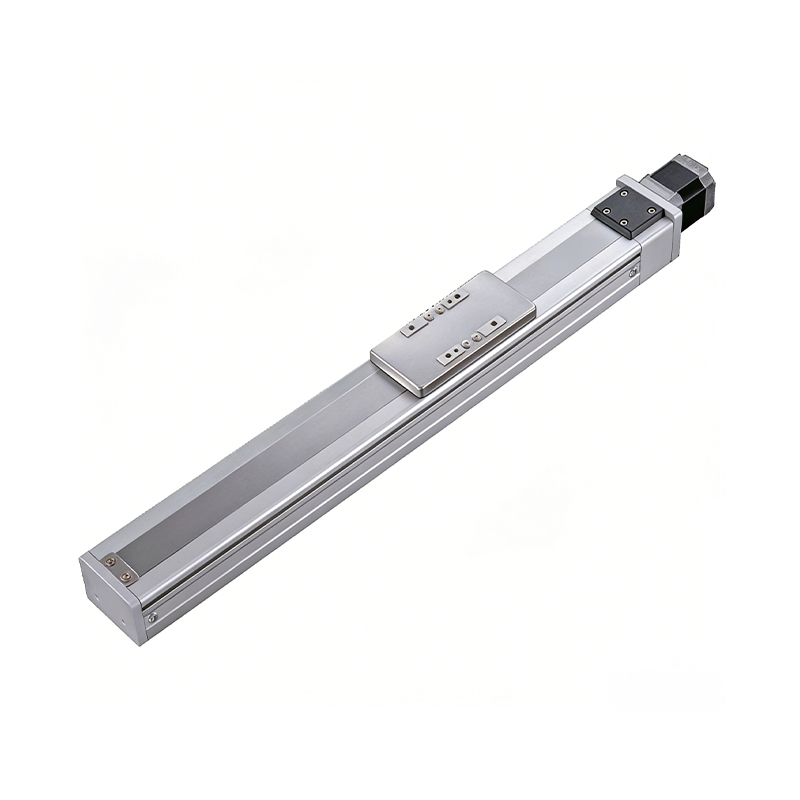 0.01mm High Precision Ball Screw Driven Rail-Embedded Linear Module
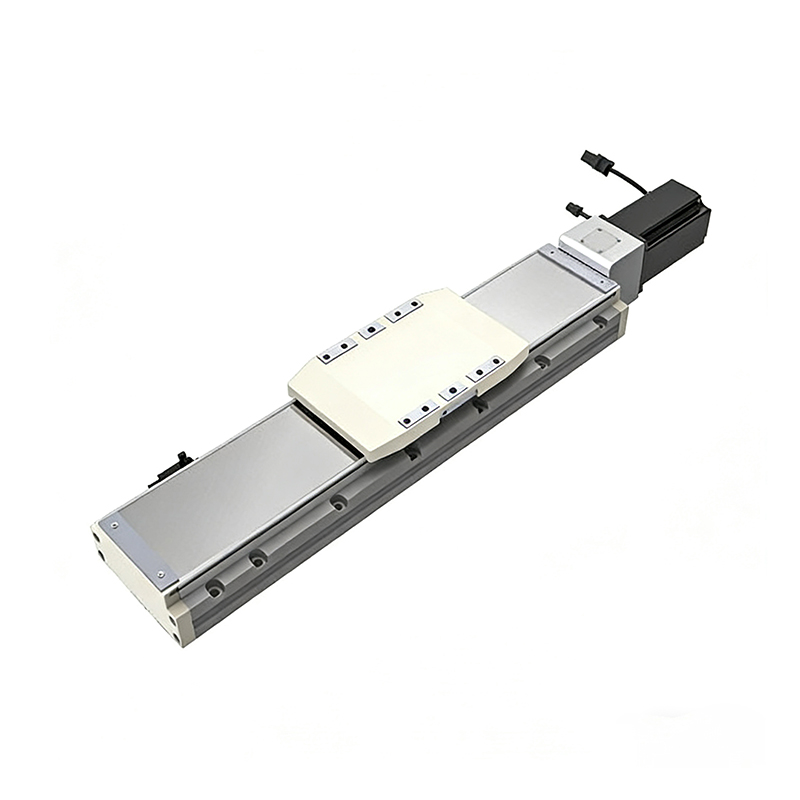 Heavy Load Ball Screw Driven Rail-Embedded Linear Module
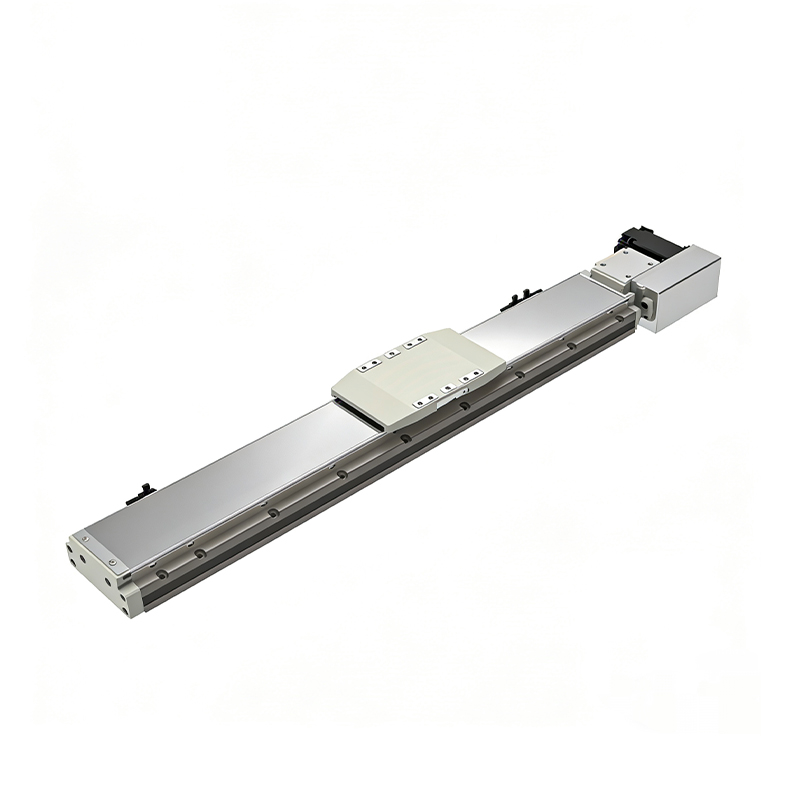 110KG Load Long Stroke Rail-Embedded Linear Module
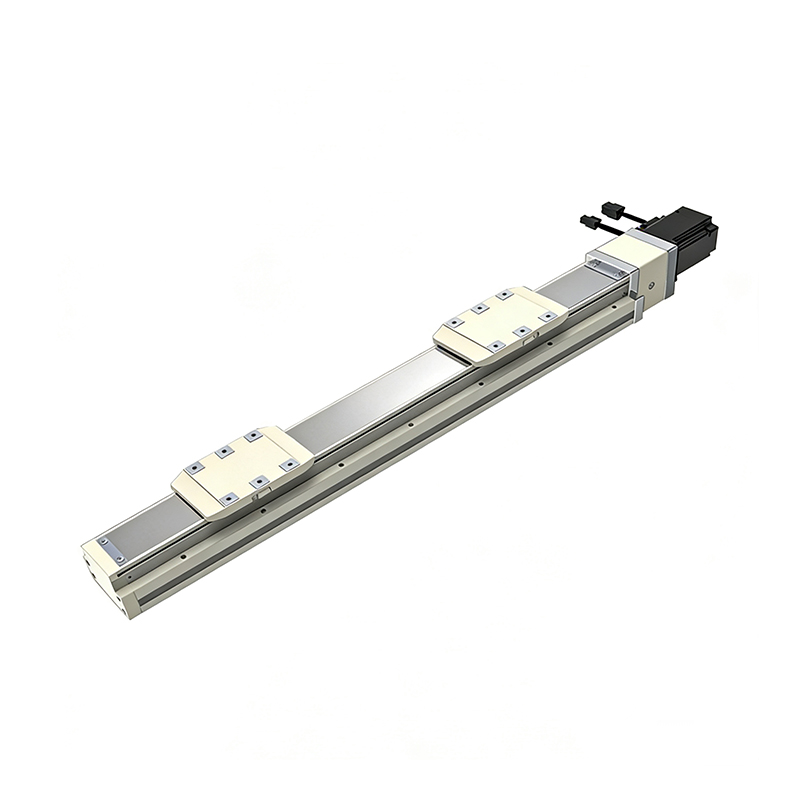 Dual-Slider High Precision Rail-Embedded Linear Module
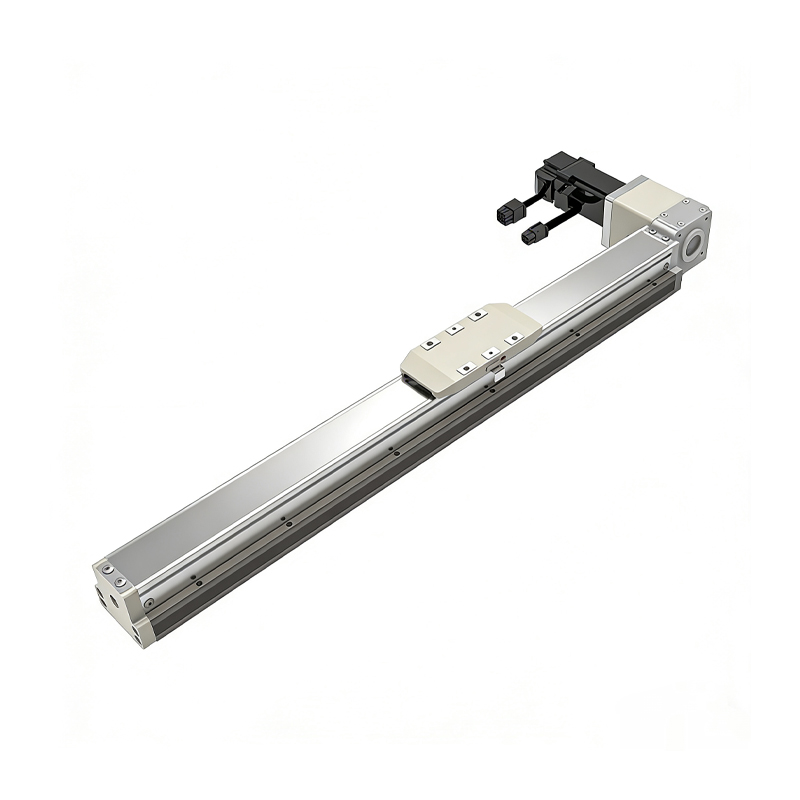 Belt Driven Dust-Proof Rail-Embedded Linear Module
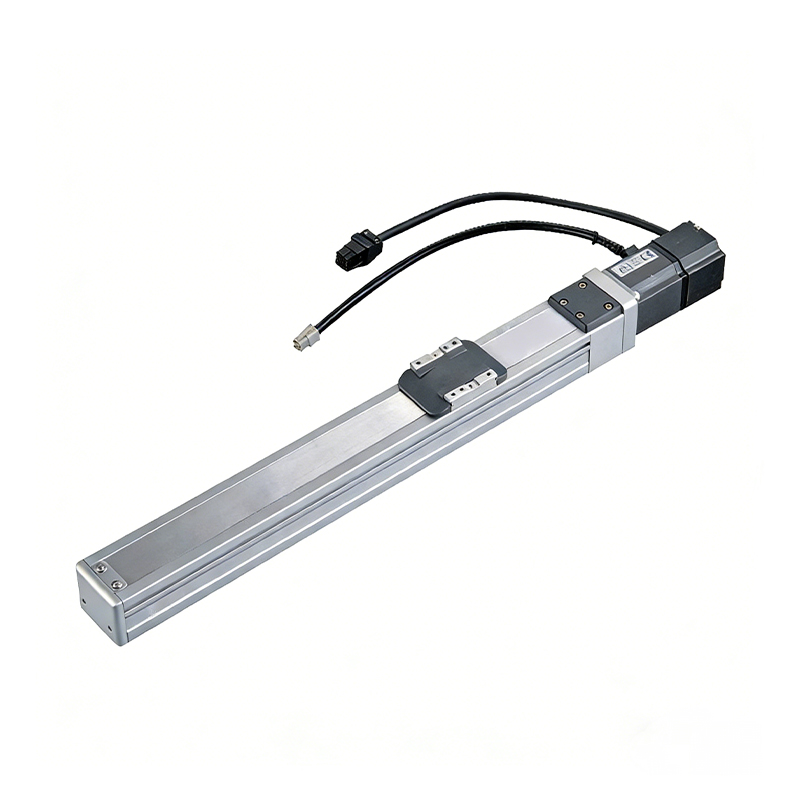 0.01mm High Precision Light Load Ball Screw Linear Module
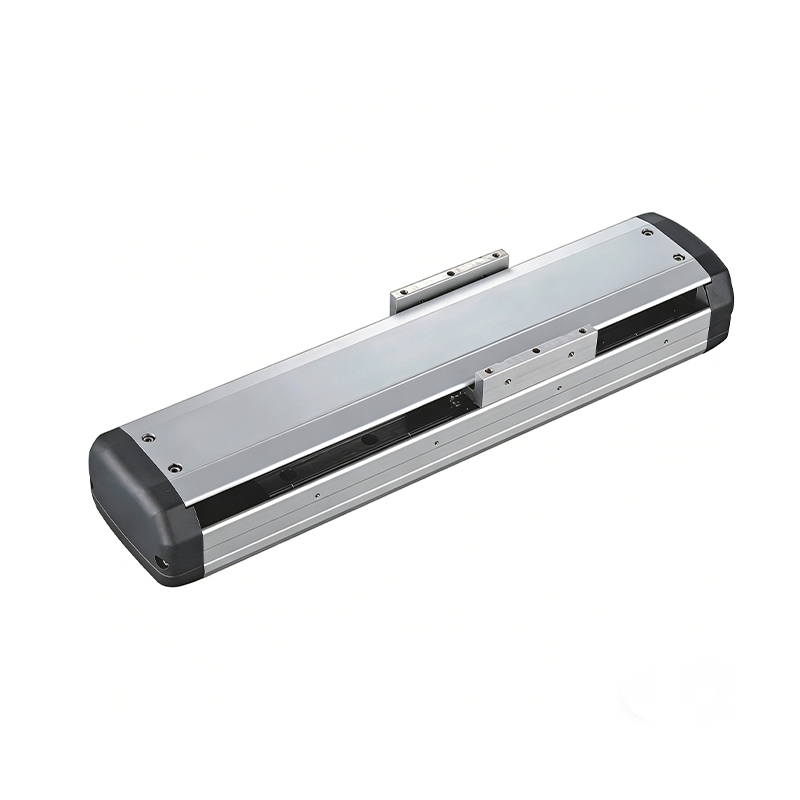 Ball Screw Linear Module with Built-in Sensor
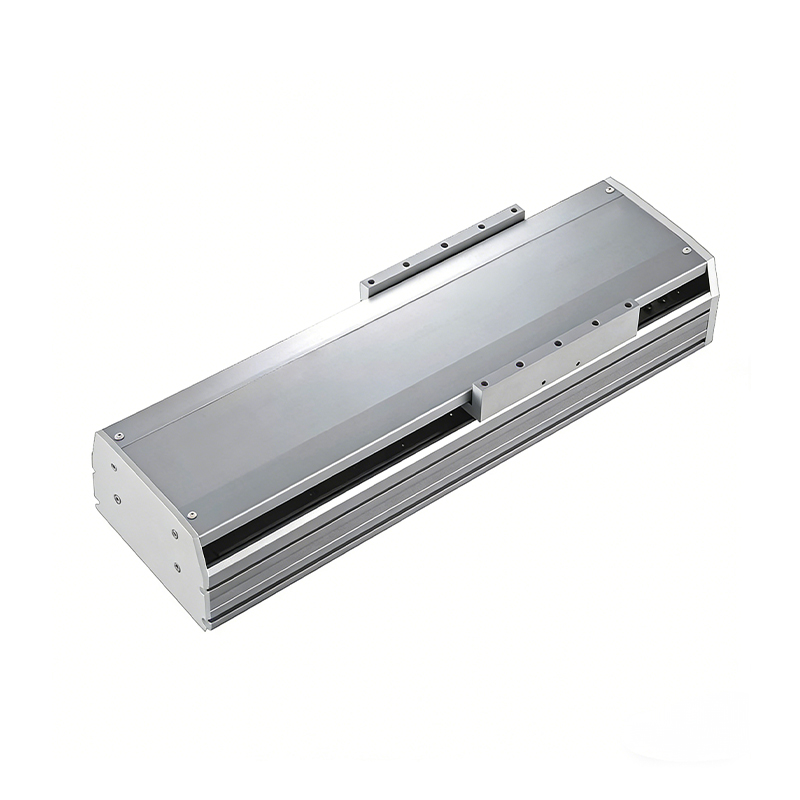 2000mm Long Stroke Ball Screw Linear Module
This 2000mm Long Stroke Ball Screw Linear Module is customized for large-range linear movement automation tasks, support...
READ MOREThis 2000mm Long Stroke Ball Screw Linear Module is customized for large-range linear movement automation tasks, support...
READ MOREThis 2000mm Long Stroke Ball Screw Linear Module is customized for large-range linear movement automation tasks, support...
READ MOREThis 2000mm Long Stroke Ball Screw Linear Module is customized for large-range linear movement automation tasks, support...
READ MORE
If you are interested in our products, please leave us a message. We look forward to providing you with
professional services!
Innovation and transcendence make factory intelligent manufacturing efficient and convenient!
+86 186 2508 0683
19962977901
sales@sz-tys.com
Building 5, Suzhou Mudu International Science and Technology Innovation Park, Jinfeng South Road, Suzhou City, Jiangsu Province, China
