


 English
 Français
 русский
 عربى
عربى Español
 Deutsch
Tel
+86 186 2508 0683

Modern industrial automation increasingly depends on motion systems that can deliver high force, accurate positioning, stable speed control, and dependable operation in demanding environments. In applications involving dust, moisture, combustible materials, heavy machinery, or continuous production cycles, a standard actuator may not provide the necessary combination of safety and performance. The servo-driven explosion-proof electric cylinder is designed to address these challenges through an integrated mechanical structure, high-precision servo control, and enhanced environmental protection.
With a rated force of up to 400 kN, a screw stroke range from 1 to 3,000 mm, a positioning repeatability of ±0.02 mm, and an IP65 protection rating, the TYSC270 electric cylinder is suitable for force-intensive and precision-oriented automation tasks. It can be configured for pushing, pulling, lifting, pressing, telescoping, and positioning operations. Direct motor connection, multiple reduction ratios, optional anti-rotation systems, limit switches, and various load connection methods allow the actuator to be adapted to different machine architectures.
Unlike conventional pneumatic cylinders, the electric cylinder does not require compressed air preparation, air storage, or continuous pneumatic energy consumption. Compared with ordinary electric cylinders, the servo-driven explosion-proof version offers a wider speed adjustment range, more responsive motion control, stable torque output, and improved coordination with PLC, HMI, robotic, and factory-control systems. These capabilities make it particularly valuable for precision instrument manufacturing, explosion-proof production lines, mining equipment, heavy-duty machinery, and intelligent manufacturing systems.
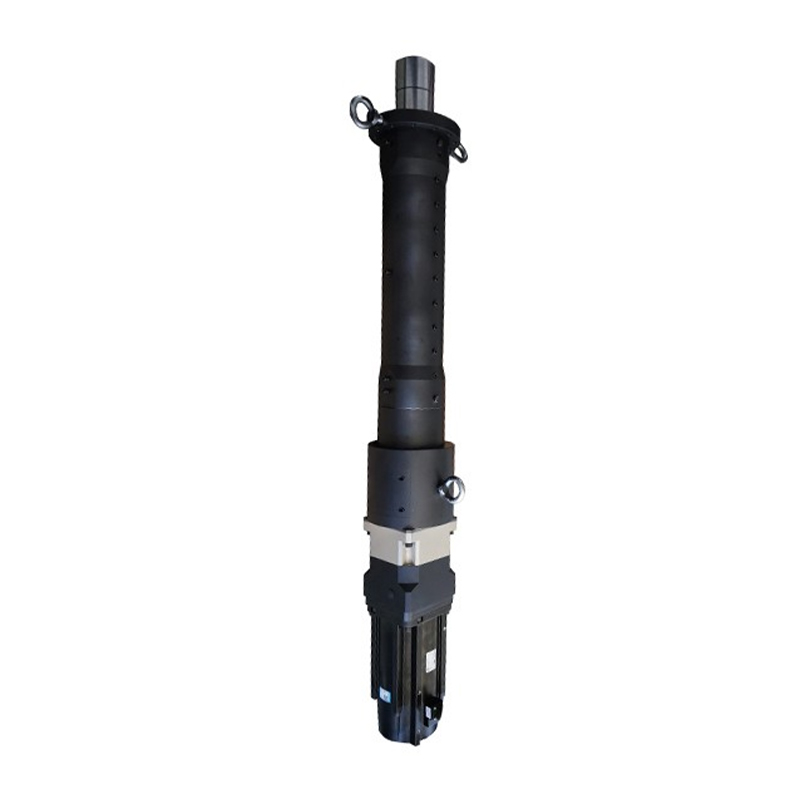
Servo Driven Explosion-proof Electric Cylinder
A servo-driven explosion-proof electric cylinder is an electromechanical linear actuator that converts rotary motor movement into controlled linear motion. Its operating principle is based on a precision screw mechanism, transmission components, a motor connection structure, and an electronic control system. When the servo motor rotates, the screw converts rotational movement into the extension or retraction of the actuator rod.
The servo system continuously monitors position, speed, and torque. This closed-loop control allows the cylinder to move to programmed positions, maintain stable speed, respond to load changes, and repeat a motion sequence with high consistency. The actuator can therefore perform much more than a simple extend-and-retract cycle. It can execute multi-point positioning, controlled acceleration and deceleration, synchronized movement, force-related operations, and programmable production sequences.
The explosion-proof design is intended for environments where dust, water vapor, particles, or potentially hazardous operating conditions can affect electrical and mechanical equipment. The sealed structure helps reduce the risk of external contaminants entering the actuator. It also helps isolate internal electrical components so that operating conditions are controlled and the possibility of electrical faults producing sparks is reduced. The final suitability of any installation must be confirmed according to the applicable hazardous-area classification, environmental conditions, and certification requirements.
An explosion-proof electric cylinder should not be viewed simply as a standard electric actuator placed inside a protective housing. Its effectiveness depends on the relationship between enclosure design, sealing, cable routing, motor connection, thermal management, grounding, surface treatment, component selection, and control-system integration. Proper design must consider the complete actuator and the way it will be installed in the machine.
The TYSC270 is a high-capacity electric cylinder intended for applications that require substantial thrust together with controlled linear movement. Its configuration supports a screw diameter of 100 mm and a screw lead of 25 mm. Depending on the selected transmission arrangement and application requirements, the actuator can be supplied with reduction ratios of 1:4, 1:5, 1:10, 1:20, or 1:50.
The rated force is listed as 400 kN, placing the cylinder in a heavy-duty category. This level of output makes it suitable for large presses, forming equipment, lifting systems, industrial fixtures, mining machinery, and other mechanisms where a compact but powerful linear drive is required. The actual usable force, duty cycle, speed, service life, and thermal behavior should be verified against the specific operating profile before final selection.
The stroke range is 1 to 3,000 mm. This broad range allows the same general product platform to support short-stroke clamping and pressing operations as well as long-travel lifting, transfer, and positioning tasks. A selectable stroke is especially useful for equipment manufacturers that need to create different machine models from a common actuator family.
The nominal rated speed is specified as 250, while the actual linear speed depends on the selected screw lead, reduction ratio, motor speed, load, acceleration profile, and control settings. Because the servo drive can adjust speed dynamically, the cylinder can be programmed for rapid approach, controlled working motion, soft deceleration, and precise final positioning.
| Specification | TYSC270 Configuration |
|---|---|
| Product type | Servo-driven explosion-proof electric cylinder |
| Motor connection | Direct connection |
| Screw diameter | 100 mm |
| Screw lead | 25 mm |
| Available screw stroke | 1–3,000 mm |
| Rated force | 400 kN |
| Reduction ratios | 1:4, 1:5, 1:10, 1:20, or 1:50 |
| Motor power options | 3 kW, 4 kW, 5.5 kW, 7.5 kW, or 11 kW |
| Rated speed | 250 |
| Repeatability | ±0.02 mm |
| Anti-rotation | Optional |
| Limit switch | Optional |
| Protection rating | IP65 |
| Load connection | External thread, internal thread, rod-end bearing, double pin holes, or customized connection |
| Mounting options | Bottom threaded hole, base plate, front flange, tail flange, tail projection pin, or tail pin hole |
The specifications demonstrate that the actuator is not limited to one fixed machine layout. Its mechanical and electrical options allow engineers to select the most suitable configuration for the load direction, installation space, required response, and machine interface.
Precision is one of the primary advantages of a servo-driven electric cylinder. The product description identifies millisecond-level positioning control and a positioning accuracy of approximately ±0.01 mm, while the technical information lists repeatability of ±0.02 mm. These values should be understood as application-dependent performance indicators. Final results are influenced by load inertia, screw condition, mounting rigidity, temperature, control tuning, mechanical backlash, external forces, and measurement method.
Even with these considerations, the servo architecture provides a significant improvement over simple open-loop motorized actuators. A servo controller can compare the commanded position with feedback from the motor or position-sensing system. If a deviation occurs, the controller adjusts the motor output to reduce the error. This closed-loop response helps maintain consistent operation under changing loads and different production conditions.
In a precision assembly line, for example, the actuator may need to approach a component quickly and then slow down before contact. In a pressing operation, it may need to move rapidly during the idle stroke, apply controlled force during the working stroke, and stop at a defined position without impact. In a lifting system, it may need to compensate for changing load conditions while maintaining smooth travel. A servo-driven cylinder can support these sequences through programmable speed, position, acceleration, deceleration, and torque parameters.
Stable motion also improves product quality. Jitter, overshoot, sudden stops, and inconsistent acceleration can damage components, produce dimensional variation, or shorten the life of connected mechanisms. The servo system is designed to provide smooth output and stable operation, reducing unwanted vibration during positioning and working cycles.
Compared with pneumatic cylinders, the electric cylinder offers more precise control because pneumatic compressibility can make exact positioning difficult, particularly under changing loads. Compared with basic electric actuators using fixed-speed motors, the servo-driven model can respond more intelligently to real-time operating requirements.
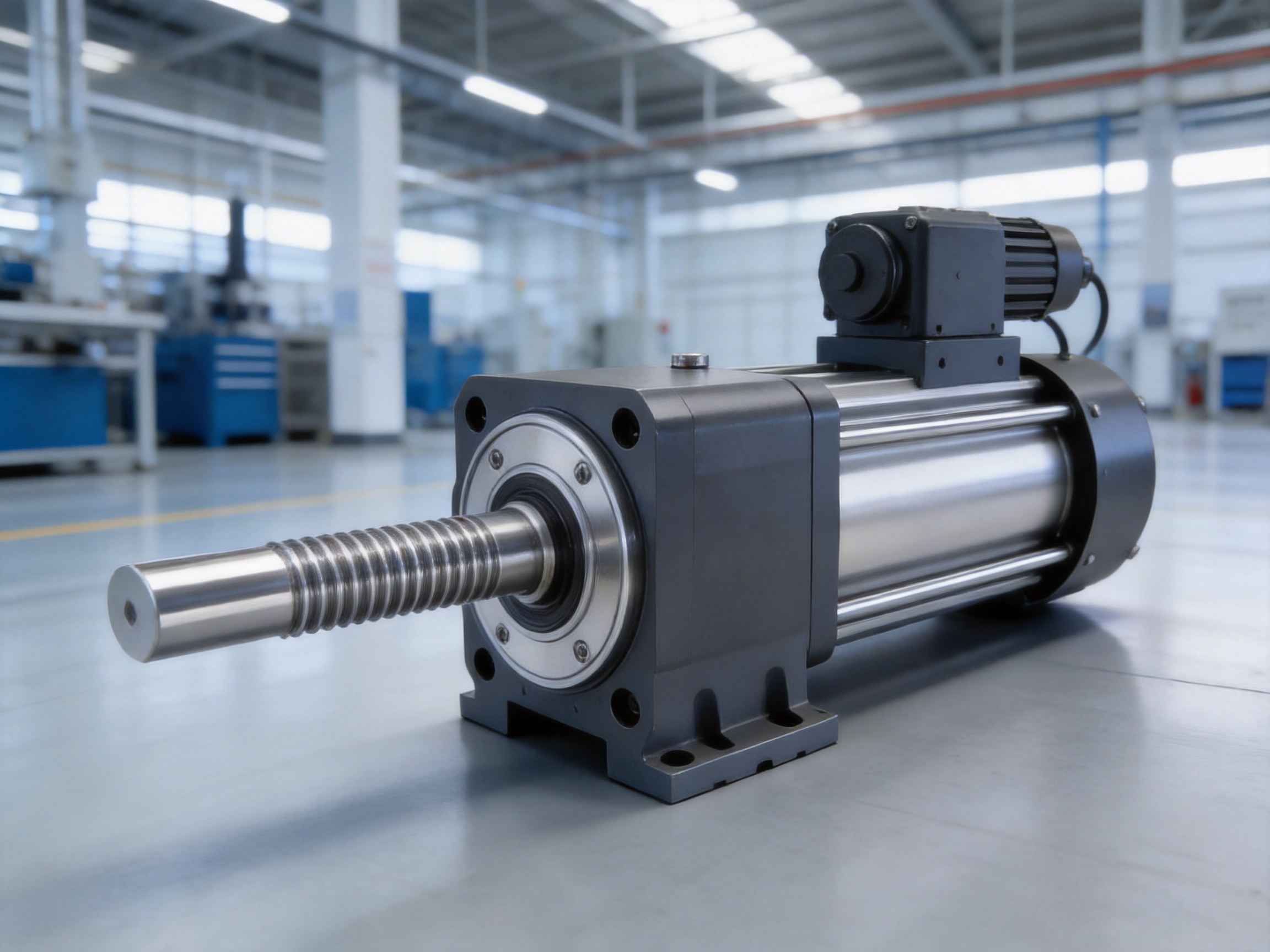
The TYSC270 provides a rated force of 400 kN, making it appropriate for heavy-duty linear applications that would otherwise require large hydraulic or pneumatic systems. Its screw-based transmission converts motor torque into axial force in a controlled and repeatable manner. The choice of screw diameter, lead, reduction ratio, motor power, and mechanical support determines the final performance of the complete actuator assembly.
High force is important in applications such as metal forming, material testing, industrial clamping, die positioning, compacting, heavy lifting, and machine-tool operations. In these situations, the actuator must not only generate force but also maintain structural stability under repeated loading. The supporting housing, screw assembly, rod, bearings, mounting interfaces, and load connection must work as one integrated system.
The availability of multiple reduction ratios allows users to balance speed and output force. A lower reduction ratio may support faster motion where the load is moderate and cycle time is important. A higher reduction ratio can provide greater mechanical advantage and improved control for high-load or slower working processes. This flexibility reduces the need to select a completely different actuator design for every application.
Motor power options from 3 kW to 11 kW provide additional configuration flexibility. The appropriate motor should be selected according to peak load, continuous load, acceleration demand, duty cycle, travel speed, and thermal conditions. For demanding processes, engineers should evaluate both the maximum force and the time for which that force must be maintained.
A high-capacity electric cylinder can also simplify machine architecture. Instead of combining a hydraulic power unit, valves, hoses, filters, and pressure-management devices, a machine builder may use an electromechanical actuator with a servo drive and a suitable controller. This can reduce the number of auxiliary components, simplify maintenance access, and make the machine easier to integrate into an automated production line.
Industrial environments may expose automation equipment to dust, water vapor, oil mist, particles, cleaning fluids, and temperature variations. These factors can interfere with electrical connections, damage bearings, contaminate lubricants, or reduce the service life of sensitive components. The actuator uses an explosion-proof structural concept and an IP65 protection rating to improve resistance to external environmental conditions.
IP65 generally indicates protection against dust ingress and protection against water jets from different directions when the product is correctly assembled and installed. It does not mean that the actuator is suitable for immersion, uncontrolled chemical exposure, or every hazardous location. The application engineer must verify the environmental requirements, cable glands, connectors, mounting orientation, maintenance procedures, and surrounding equipment.
The explosion-proof structure is intended to help prevent external dust and moisture from entering areas where they could affect internal electrical components. Sealing interfaces, protected cable connections, robust housing design, and appropriate separation of components are all important aspects of this approach. Correct grounding and installation are equally important because protection performance depends on the complete system, not only the actuator body.
For hazardous-area applications, buyers should request the relevant technical documentation and confirm that the selected configuration matches the required protection concept and certification category. The motor, drive, connector, cable, control cabinet, and installation method may each have separate requirements. An actuator should never be installed in a classified environment based only on a general description without reviewing the formal technical documentation.
When correctly specified and installed, the product can support applications such as enclosed production cells, dusty material-handling areas, mining equipment, explosion-sensitive automatic lines, and industrial processes where moisture and contaminants are present. Its sealed construction also benefits ordinary industrial environments by reducing contamination-related maintenance problems.
Energy efficiency is a major factor in the selection of industrial motion equipment. Pneumatic systems often require compressors to operate continuously, even when individual cylinders are not moving. Compressed air production can involve significant losses through heat, leakage, pressure regulation, and throttling. Hydraulic systems can also consume energy during standby and may require pumps, reservoirs, cooling systems, valves, and fluid maintenance.
An electric cylinder uses energy primarily when the motor performs work or maintains a controlled position. The servo drive can adjust motor output according to the required load and motion profile. When the machine is moving lightly or waiting between cycles, the system can reduce unnecessary energy use. During acceleration, working motion, and deceleration, the drive can regulate power more precisely than a fixed-output system.
The product description emphasizes automatic adjustment of speed and thrust according to load changes. This capability helps prevent the actuator from operating at full output when full output is not required. Over a long production cycle, this can reduce energy consumption and operating costs, although actual savings depend on the machine design, operating schedule, motor efficiency, control strategy, and load profile.
Electric motion also avoids compressed-air leakage and hydraulic-fluid leakage. This can contribute to a cleaner working environment and reduce the amount of supporting infrastructure required around the machine. For factories pursuing efficient production and better resource management, a servo-controlled cylinder can become part of a broader energy-optimization strategy.
Machine builders often work with limited installation space and different load geometries. The TYSC270 supports multiple mounting methods, including bottom threaded holes, base plates, front flanges, tail flanges, tail projection pins, and tail pin holes. These options allow the cylinder to be connected to frames, brackets, pivoting structures, and guided mechanisms according to the machine layout.
Load connection options include external threads, internal threads, rod-end bearings, double pin holes at the rod end, and customized connection designs. An external thread may be appropriate for a standard clevis, coupling, or threaded load attachment. An internal thread can provide a clean connection when the mating component is designed to enter the rod end. A rod-end bearing can accommodate limited angular movement and help reduce side loading when used correctly.
Double pin holes can be useful in linkage systems where a mechanical pin connection is preferred. Customized interfaces may be specified when the actuator must connect to a specialized machine component or when the available space prevents the use of standard hardware.
Mounting flexibility does not eliminate the need for correct mechanical design. The cylinder should be aligned with the load direction, and lateral force should be controlled through external guides. Electric cylinders are designed primarily for axial loads. Side loads, bending moments, misalignment, and unsupported loads can increase wear and reduce accuracy. A properly designed guide system is therefore essential for achieving the expected service life.
The optional anti-rotation function can help prevent unwanted rotation of the rod or connected tooling. This is useful when the load must maintain a fixed orientation during extension and retraction. The optional limit switch can provide an additional position-monitoring or safety function, subject to the control architecture and machine risk assessment.
A modern actuator must operate as part of a larger control system. The servo-driven electric cylinder can be connected with PLCs, touch screens, motion controllers, and other automation equipment. This makes it suitable for production lines where movement sequences, recipes, alarms, data collection, and quality checks are managed centrally.
A PLC can issue commands for position, speed, direction, and operating sequence. An HMI can allow operators to select a product recipe, adjust permitted parameters, view actuator status, and diagnose alarms. In a robotic cell, the cylinder can work as a fixture actuator, linear positioning unit, gripper mechanism, or auxiliary axis. In a multi-axis machine, several cylinders can be coordinated to perform synchronized operations.
Digital control also improves traceability. The system can record position, cycle count, operating time, alarm history, and selected process values. In precision manufacturing, this information can help identify deviations before they become quality problems. In predictive maintenance programs, cycle data and load behavior can support decisions about inspection and replacement.
For integration, engineers should define the command interface, feedback requirements, emergency-stop behavior, limit-switch logic, homing method, acceleration profile, and fault-reset procedure. They should also consider what happens if communication is interrupted, a sensor fails, or the load exceeds the permitted operating range. Good system integration is as important as the actuator’s mechanical specification.
Ordinary electric cylinders may provide reliable linear motion, but they are not always designed for hazardous or heavily contaminated environments. The explosion-proof version adds environmental protection and structural safeguards intended for more demanding operating conditions. This is a significant advantage in applications where dust, moisture, or electrical safety concerns limit the use of conventional products.
The servo-driven configuration also offers more advanced control than a basic motor-and-screw actuator. It can support smoother acceleration, controlled deceleration, improved positioning, load-responsive output, and more flexible speed regulation. These features are valuable when the same cylinder must perform multiple phases of a production cycle.
The TYSC270 further distinguishes itself through its combination of high force and long available stroke. Many precision actuators are optimized for light loads and short travel, while many heavy-duty systems sacrifice positioning flexibility. A 400 kN rated force and a stroke range up to 3,000 mm provide a broader design envelope for industrial equipment manufacturers.
Multiple reduction ratios and motor power options help users optimize the cylinder for speed, thrust, duty cycle, and available electrical capacity. Optional anti-rotation, limit switches, mounting arrangements, and load connections reduce the need for extensive adaptation after delivery.
The actuator can also reduce dependence on auxiliary pneumatic or hydraulic equipment. This may simplify machine design, improve cleanliness, reduce leakage-related losses, and support more direct digital control. The most suitable technology still depends on the application, but the electric cylinder offers a strong alternative when programmable precision and efficient operation are priorities.
Pneumatic cylinders are widely used because they are simple, fast, and economical for basic two-position operations. However, they can be less suitable for applications requiring precise intermediate positioning, programmable force, repeatable slow movement, or detailed data feedback. Air compressibility, pressure fluctuation, valve response, and leakage can affect positioning consistency.
The servo-driven electric cylinder provides direct digital control of motion parameters. It can be programmed to stop at multiple positions, vary speed throughout a stroke, and respond to changes in load. This makes it better suited to flexible production systems and processes where quality depends on accurate movement.
Hydraulic cylinders can deliver high force and are often used in heavy equipment. However, hydraulic systems usually require a pump station, fluid lines, valves, reservoirs, filters, and cooling arrangements. They may also create noise, heat, and fluid-maintenance requirements. An electric cylinder can provide high axial force in a more integrated package, particularly where the machine benefits from decentralized motion control.
Electrical systems are not automatically superior in every situation. Hydraulic systems may remain appropriate for extremely high continuous force, shock loading, or specialized mobile equipment. Pneumatics may be preferred for simple, low-cost repetitive movement. The advantage of the TYSC270 is its combination of high force, servo precision, programmable control, environmental protection, and integration capability in one electromechanical solution.
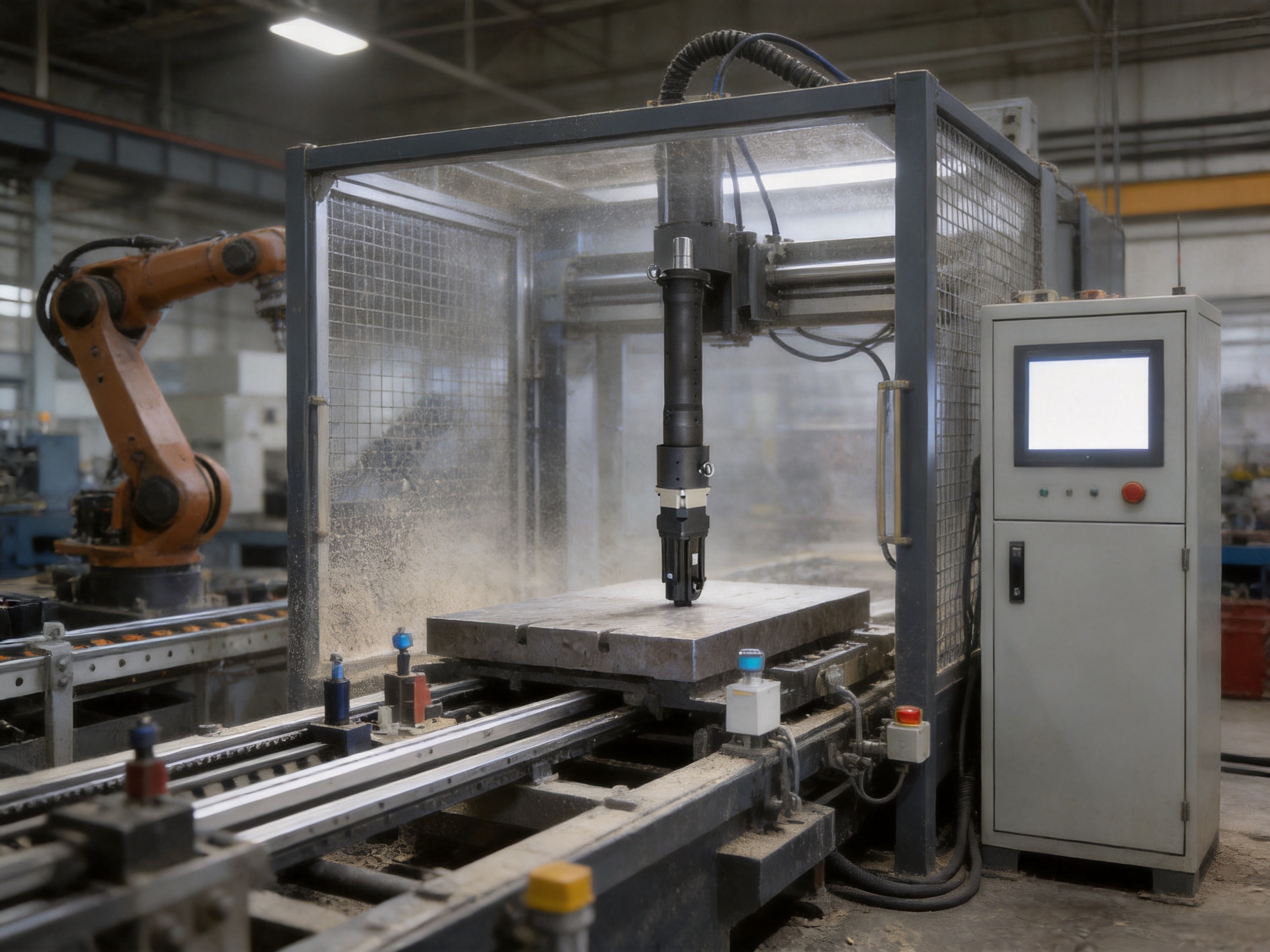
Precision instrument manufacturing requires controlled motion, low vibration, stable positioning, and repeatable operation. The actuator can be used for component insertion, fixture adjustment, testing equipment, controlled clamping, material transfer, and precision pressing. Its servo control allows different movement profiles to be stored for different product models.
In an assembly machine, the cylinder may rapidly approach a workpiece and then move slowly during final insertion. In a testing system, it may apply a controlled displacement while the measurement system records force or position. In a fixture, it can hold a component at a defined position and release it according to the production sequence.
The ability to connect with PLC and touch-screen systems allows operators to change recipes without manually adjusting mechanical stops. This supports shorter changeover times and more flexible production. The machine can also use position feedback and limit monitoring to confirm that each operation has been completed correctly.
Explosion-proof production lines may handle combustible powders, dust-producing materials, volatile substances, or processes where electrical safety is a major consideration. In such environments, actuator selection must be based on the complete risk assessment and relevant protection requirements. The explosion-proof structural design and IP65 rating make the product a candidate for carefully evaluated installations.
Potential functions include opening and closing process gates, adjusting feed mechanisms, operating clamps, positioning workpieces, controlling inspection fixtures, and moving equipment within enclosed production cells. Servo control is particularly useful when the line must coordinate motion with sensors, conveyors, robots, and process equipment.
Because hazardous environments require disciplined engineering, the actuator should be paired with suitable cables, glands, control equipment, grounding, protective devices, and installation procedures. Maintenance personnel should follow documented inspection schedules and avoid modifications that could compromise the enclosure or protection design.
Mining machinery and heavy industrial equipment often operate under dust, vibration, high load, and variable environmental conditions. A powerful electric cylinder can support lifting, positioning, tensioning, discharge control, gate movement, equipment adjustment, and heavy-duty clamping.
The 400 kN rated force provides a substantial output capacity for mechanisms that must move or hold large components. The long-stroke option can support equipment with considerable travel requirements. IP65 protection helps reduce the effect of dust and water jets, although the actual suitability of the actuator must be verified against the specific mining environment, temperature, impact exposure, and hazardous-area classification.
Electric control can also improve remote operation. A PLC or supervisory control system can monitor actuator position and command movement without requiring operators to work directly beside the mechanism. This can support safer machine layouts and better coordination with other automated equipment.
Servo pressing requires carefully controlled movement rather than simple maximum force. The actuator may need to move quickly during approach, slow down before contact, apply force through a controlled travel range, hold pressure or position, and retract smoothly. These phases can be programmed through the servo system.
Repeatable pressing motion helps maintain product dimensions and reduce damage to workpieces. It can also support different pressing recipes for different materials or component sizes. When combined with force sensors or external measurement systems, the cylinder can be part of a monitored pressing process in which unacceptable force-displacement curves trigger an alarm or reject action.
The high rated force makes the TYSC270 suitable for larger pressing systems, provided that the frame, tooling, guides, and safety enclosure are designed to withstand the loads. The cylinder should not be treated as the only load-bearing element. A complete press system requires appropriate structural analysis, guarding, emergency-stop systems, and controlled access.
Suzhou Tongyousheng Electronic Technology Co., Ltd. integrates research and development, production, and sales. Its manufacturing capability is supported by an experienced R&D team, advanced design software, high-precision CNC machining centers, and accumulated technical patents. These resources are important when producing high-force actuators that require accurate alignment, consistent dimensions, reliable sealing, and repeatable assembly.
Advanced design software allows engineers to evaluate mechanical structures, transmission arrangements, mounting interfaces, and load paths before production. Digital design can reduce development errors and make it easier to create customized configurations for stroke, motor connection, installation method, and load connection.
High-precision CNC machining centers support the manufacture of actuator housings, end components, mounting plates, threaded interfaces, and other precision parts. Consistent machining is essential for maintaining coaxiality and reducing mechanical resistance. It also supports interchangeability and more predictable assembly quality across production batches.
Manufacturing a high-capacity electric cylinder requires more than machining individual parts. Components must be inspected, cleaned, assembled, lubricated, adjusted, and tested according to controlled procedures. Screw systems and bearing arrangements must be properly aligned. Sealing components must be installed without damage. Electrical connections must be checked for continuity, insulation, grounding, and correct routing.
Quality control should include dimensional inspection of critical components, verification of stroke and travel, no-load and loaded operation, speed and positioning checks, noise and vibration observation, sealing inspection, and confirmation of optional components. For applications requiring explosion-proof compliance, relevant design and certification documentation should be reviewed as part of the product approval process.
The company’s ability to combine mechanical engineering, servo control, automation integration, and customized manufacturing is a significant advantage for customers developing complete equipment. Instead of purchasing a generic actuator and solving every interface issue independently, machine builders can work with a supplier capable of adapting the cylinder to the intended application.
The company was established in 2013 and has expanded its capabilities across linear modules, electric cylinders, servo presses, six-degree-of-freedom motion platforms, robotic seventh axes, algorithmic control software, and multi-degree-of-freedom linkage systems. This broader product background supports the development of motion products that must operate as part of integrated automation systems.
Collaboration with state-owned enterprises, defense technology institutions, and leading universities contributes to the exchange of engineering knowledge and application experience. Such cooperation can support research into motion control, structural design, simulation, precision manufacturing, and system integration.
Experience across different motion platforms is also valuable for electric-cylinder development. Lessons learned from linear motor modules, robotic axes, servo presses, and motion simulation platforms can inform control algorithms, mechanical stiffness, synchronization, and feedback management. Customers benefit when a supplier understands not only the actuator but also the complete motion system in which it will be installed.
The company’s stated values include quality, reputation, innovation, and development. These principles are particularly relevant to industrial actuators because product performance must remain stable over repeated cycles, and customer trust depends on technical support, documentation, consistent manufacturing, and responsive customization.
Although the TYSC270 has a defined platform specification, industrial projects often require custom details. The stroke may need to match a particular machine envelope. The rod end may require a special thread or pin arrangement. The rear mounting structure may need to fit an existing frame. Anti-rotation and limit-switch functions may be necessary for a specific motion sequence.
Customization may also involve motor power, reduction ratio, cable routing, connector selection, control parameters, mounting orientation, protective treatment, and integration with the customer’s servo drive or PLC architecture. Each change should be evaluated for its effect on force, speed, heat generation, service life, and environmental protection.
A professional customization process begins with application data. The supplier should receive the required load, stroke, cycle time, maximum speed, acceleration, duty cycle, installation orientation, ambient temperature, contamination level, hazardous-area information, mounting dimensions, and control requirements. More complete data allows the engineering team to recommend a configuration rather than simply matching one isolated specification.
Load connection design deserves particular attention. A threaded rod end, bearing connection, or double-pin arrangement can change how forces enter the actuator. If the connected machine component creates bending or side loading, additional guides or flexible couplings may be needed. Careful interface design protects the cylinder and improves positioning accuracy.
Correct installation is necessary to achieve the advertised performance. The actuator should be mounted on a rigid structure with accurate alignment between the cylinder axis and the load path. External guides should support the load and prevent side forces from acting on the rod. Fasteners should be tightened according to the applicable engineering requirements, and the mounting surface should be free from distortion or contamination.
The cable route should protect the electrical connection from abrasion, sharp edges, excessive bending, heat, and moving equipment. For protected or hazardous installations, cable glands and connectors must match the required environmental and safety conditions. Grounding should be completed before operation.
Before commissioning, engineers should verify the stroke limits, direction of movement, emergency-stop response, limit-switch behavior, servo parameters, and communication with the PLC or controller. Initial operation should begin at low speed and reduced load so that alignment, vibration, noise, and temperature can be checked.
Routine maintenance may include inspection of mounting hardware, rod surfaces, seals, cable connections, limit switches, anti-rotation components, lubrication condition, and abnormal noise. The maintenance interval should be based on operating cycles, load, speed, environment, and manufacturer recommendations. Dust, moisture, or process residue should not be allowed to accumulate around sealing interfaces or connectors.
Any repair or modification that affects the enclosure, cable entry, sealing, grounding, or explosion-proof structure should be performed only by qualified personnel using approved procedures. Unauthorized drilling, welding, replacement of incompatible components, or removal of protective parts can compromise safety and product performance.
The first selection factor is the required axial force. Engineers should distinguish between static load, continuous working load, peak load, impact load, and holding load. A cylinder should not be selected solely by comparing the maximum nominal force with the machine’s average load. Acceleration and deceleration can create additional dynamic forces.
The second factor is stroke. The required travel should include the complete working movement while allowing appropriate mechanical clearance and safety margins. Long strokes may require additional guidance or structural support to prevent deflection.
The third factor is speed and cycle time. The machine specification should identify approach speed, working speed, return speed, acceleration, deceleration, and the number of cycles per minute or hour. These values determine the appropriate motor power and reduction ratio.
The fourth factor is precision. If the application requires high repeatability, the machine frame, guide system, coupling, tooling, feedback method, and servo tuning must be designed to support the target. A precision actuator cannot compensate for a flexible or misaligned machine structure.
The fifth factor is environment. Temperature, dust, water, oil, vibration, corrosive chemicals, cleaning methods, and hazardous-area classification should all be considered. The IP65 rating provides useful protection, but it must be evaluated against the actual conditions.
The sixth factor is control integration. The customer should identify the PLC or motion controller, required feedback signals, communication interface, safety circuits, limit-switch logic, and data-management requirements. Early coordination can prevent delays during commissioning.
| Selection Question | Why It Matters |
|---|---|
| What is the maximum and continuous load? | Determines force capacity, motor power, screw loading, and service life. |
| What stroke is required? | Determines actuator length, guide requirements, and machine envelope. |
| What speed and cycle time are needed? | Influences reduction ratio, motor selection, acceleration, and thermal performance. |
| Is anti-rotation required? | Prevents rod rotation when the load must maintain a fixed orientation. |
| Are limit switches necessary? | Provides additional travel monitoring and control-system feedback. |
| What mounting interface is available? | Ensures the actuator can be installed without structural redesign. |
| What is the environmental classification? | Confirms sealing, cable, grounding, and hazardous-area requirements. |
| Which controller will be used? | Determines communication, feedback, parameter, and commissioning requirements. |
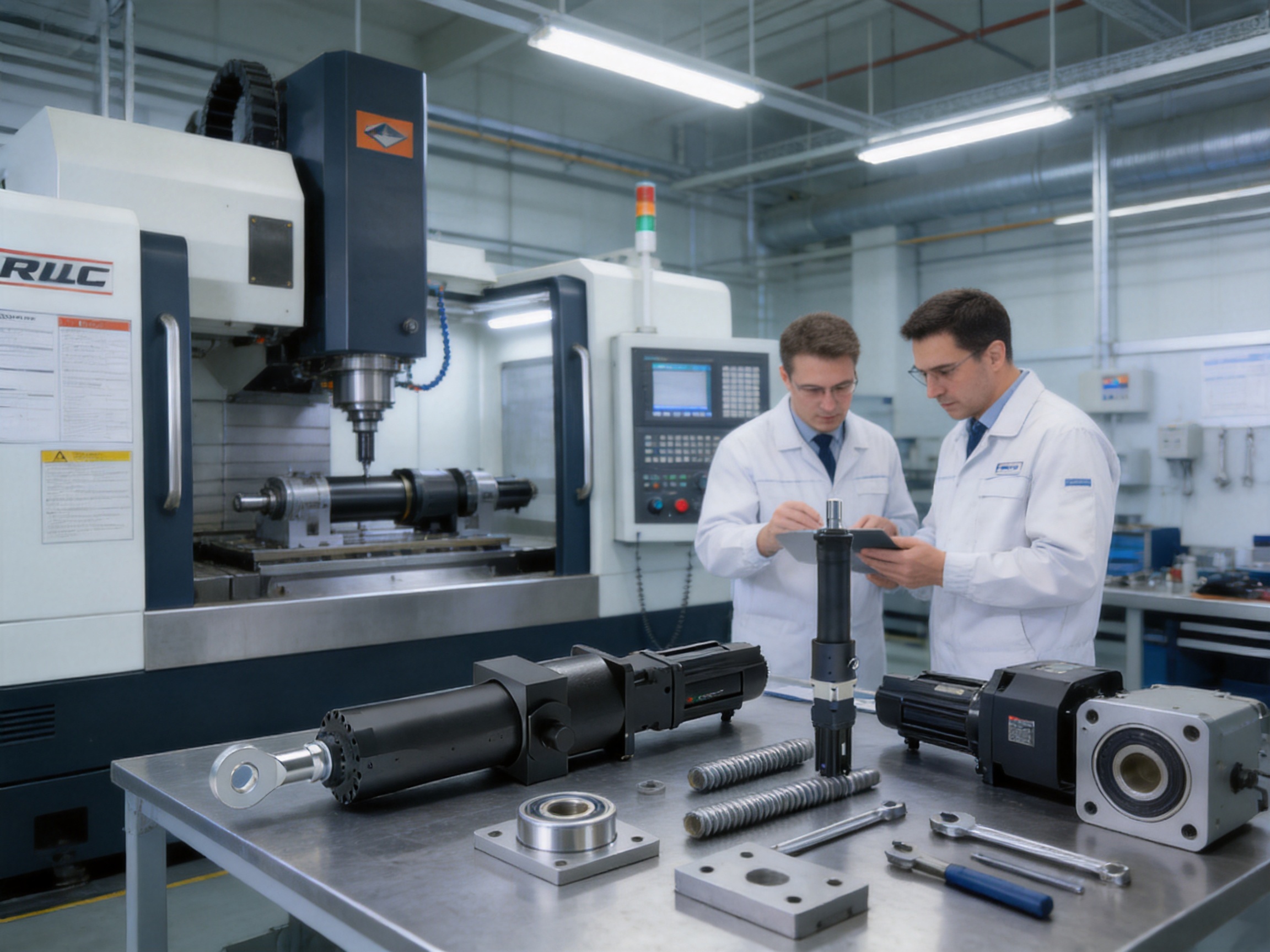
Explosion-proof equipment must be selected and installed with a complete understanding of the working environment. The term “explosion-proof” may refer to a specific protection concept, and requirements differ according to the hazardous substance, zone or division, temperature classification, gas or dust group, and local regulations.
Before ordering, the user should identify the applicable standards and certification requirements. The supplier should then confirm whether the proposed actuator configuration is suitable for those requirements. The motor connection, cable entry, drive system, and control cabinet must be considered together. A compliant actuator can still be installed incorrectly if the surrounding components or wiring are unsuitable.
Safety design should also address mechanical hazards. The cylinder may generate significant force, so guards, interlocks, emergency stops, overload protection, and safe access procedures are essential. A high-force actuator must not be operated where personnel can be trapped between the rod, tooling, frame, or moving load.
Commissioning documents should define operating limits, inspection points, lubrication requirements, permitted load directions, and emergency procedures. Operators should be trained to recognize abnormal vibration, noise, overheating, leakage, or position errors. Early detection can prevent equipment damage and unplanned downtime.
Choosing a manufacturer with experience in multiple automation technologies can simplify project development. Suzhou Tongyousheng Electronic Technology Co., Ltd. supplies electric cylinders and related motion products, including linear motion modules, linear motor modules, servo presses, robotic seventh axes, and multi-degree-of-freedom platforms.
This product range indicates experience with different types of load, motion profile, precision requirement, and control architecture. A supplier with this background can provide more than a catalog component. It can help evaluate whether the cylinder should be used alone, paired with external guides, synchronized with another axis, or integrated into a larger servo system.
The company’s R&D capabilities, CNC machining resources, technical patents, and industry collaborations support the development of customized industrial solutions. This is important for customers who need nonstandard stroke lengths, specialized mounting interfaces, custom load connections, or integration assistance.
Manufacturing and engineering support also influence the total cost of ownership. A product that is correctly selected, accurately manufactured, properly documented, and supported during commissioning can reduce installation delays and maintenance problems. For automation equipment manufacturers, this can improve delivery reliability and help them offer more capable machines to their own customers.
The servo-driven explosion-proof electric cylinder combines high axial force, programmable servo motion, environmental protection, and flexible mechanical integration. The TYSC270 platform provides a 100 mm screw diameter, 25 mm screw lead, stroke options from 1 to 3,000 mm, rated force up to 400 kN, multiple reduction ratios, motor power options from 3 kW to 11 kW, optional anti-rotation and limit-switch functions, repeatability of ±0.02 mm, and IP65 protection.
Its principal advantages over ordinary electric cylinders include enhanced environmental protection, broader application potential, high-force capability, flexible configuration, and more advanced speed and torque control. Compared with pneumatic and hydraulic alternatives, it can offer more direct digital integration, accurate positioning, reduced dependence on auxiliary systems, and potentially lower energy consumption in applications with variable load and programmable motion.
The product is suitable for precision manufacturing, explosion-proof automatic lines, mining machinery, servo pressing, heavy-duty positioning, lifting, clamping, and other industrial applications. Its success depends on correct selection, alignment, control integration, safety evaluation, and maintenance. The rated specifications should always be verified against the actual duty cycle and operating environment.
Supported by research and development, high-precision CNC machining, automation experience, and customization capability, Suzhou Tongyousheng Electronic Technology Co., Ltd. is positioned to provide electric-cylinder solutions for intelligent manufacturing and Industry 4.0 projects. For customers seeking a powerful and controllable linear actuator for demanding environments, the servo-driven explosion-proof electric cylinder is a strong option for building safer, cleaner, and more flexible automated equipment.
The listed rated force is 400 kN. The appropriate operating force should be determined by considering the load profile, duty cycle, acceleration, speed, mounting condition, and required service life.
The listed stroke range is 1 to 3,000 mm. The final stroke should be selected according to the machine travel, clearance, guide arrangement, and installation space.
IP65 generally indicates dust-tight protection and protection against water jets. It does not indicate suitability for immersion or every chemical, thermal, or hazardous environment. The complete installation must be evaluated.
The product uses an explosion-proof structural design intended for demanding and potentially hazardous environments. Users must confirm the applicable hazardous-area classification, certification documentation, installation requirements, and compatibility of all connected equipment before deployment.
Yes. The product is intended to connect with PLCs, touch screens, and other automation equipment. The exact wiring, feedback, communication, and drive configuration should be confirmed during system design.
The available motor power options are 3 kW, 4 kW, 5.5 kW, 7.5 kW, and 11 kW. The correct motor depends on force, speed, acceleration, cycle time, and thermal requirements.
The listed reduction ratios are 1:4, 1:5, 1:10, 1:20, and 1:50. The selected ratio affects the balance between speed, torque, force, and control response.
An anti-rotation function is available as an option. It should be selected when the connected load must maintain a fixed orientation during actuator movement.
Limit switches are listed as optional. Their use depends on the machine’s travel-monitoring, homing, safety, and control requirements.
Options include an external thread, internal thread, rod-end bearing, double pin holes at the rod end, and customized connection designs.
No. Electric cylinders are strong alternatives in many high-force and precision applications, but final selection depends on continuous force, shock loading, speed, duty cycle, environmental conditions, and safety requirements. Hydraulic systems may remain preferable for certain specialized applications.
External guides help control side loads and bending moments. Electric cylinders are primarily designed for axial loading, so appropriate guidance improves positioning accuracy, reduces wear, and supports longer service life.
Important information includes required force, stroke, speed, cycle time, acceleration, duty cycle, installation orientation, ambient conditions, hazardous-area classification, mounting dimensions, load connection, control system, and feedback requirements.
The product is supplied by Suzhou Tongyousheng Electronic Technology Co., Ltd., located in Suzhou, Jiangsu Province, China. The company develops and manufactures electric cylinders and other automation and motion-control products.
1. Product technical information for the TYSC270 servo-driven explosion-proof electric cylinder.
2. General principles of electromechanical actuator selection, screw transmission design, and servo motion control.
3. Industrial guidance for ingress protection classifications and enclosure selection.
4. Industrial automation engineering practices for PLC, HMI, servo-drive, and motion-system integration.
5. General hazardous-area equipment selection, grounding, installation, and maintenance principles.
6. Manufacturer information regarding electric cylinders, linear motion modules, servo presses, robotic axes, and multi-degree-of-freedom motion platforms.
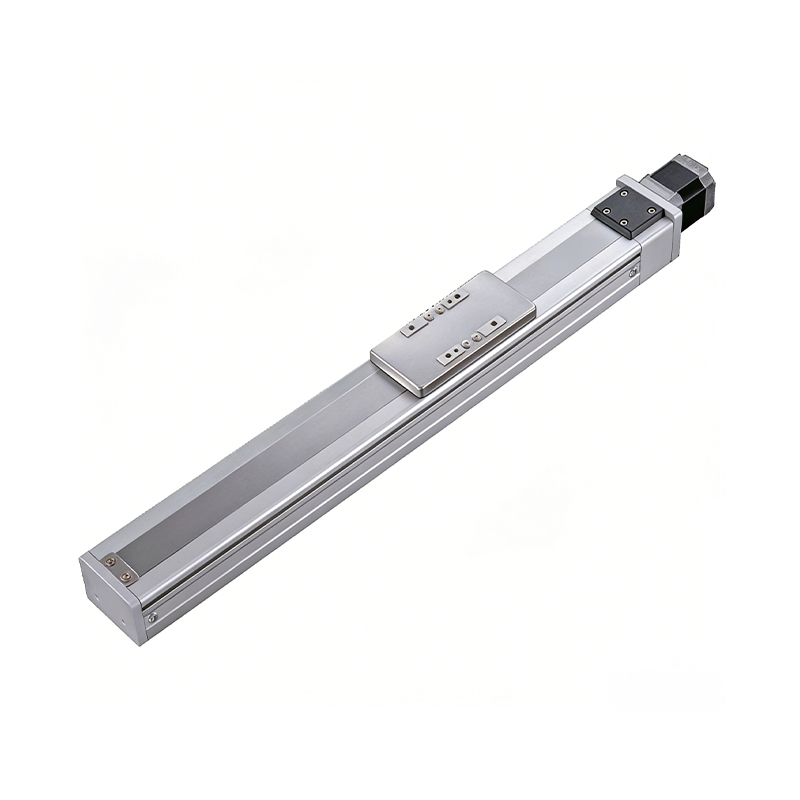 0.01mm High Precision Ball Screw Driven Rail-Embedded Linear Module
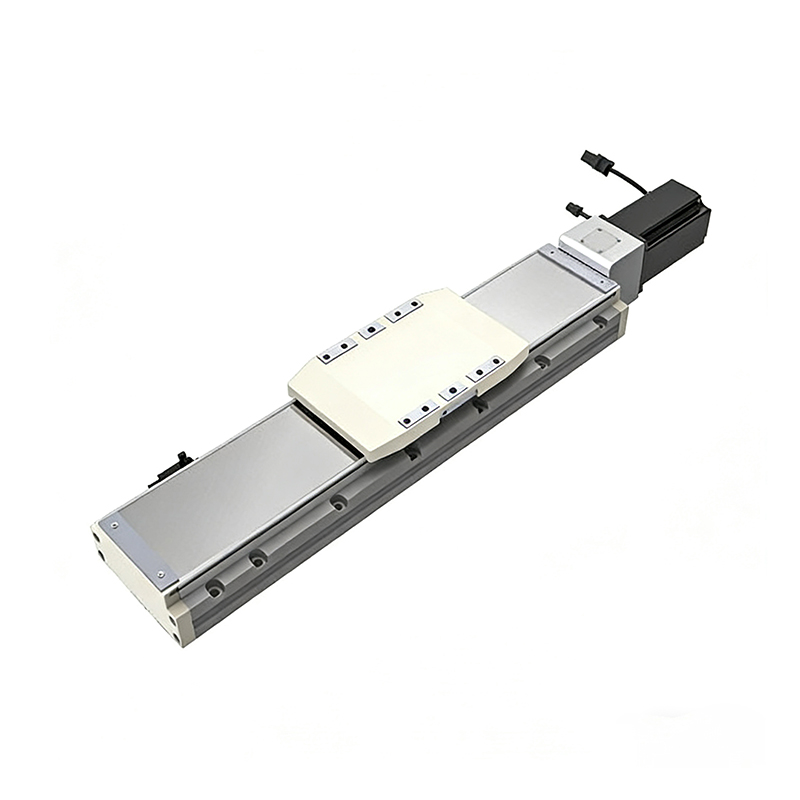 Heavy Load Ball Screw Driven Rail-Embedded Linear Module
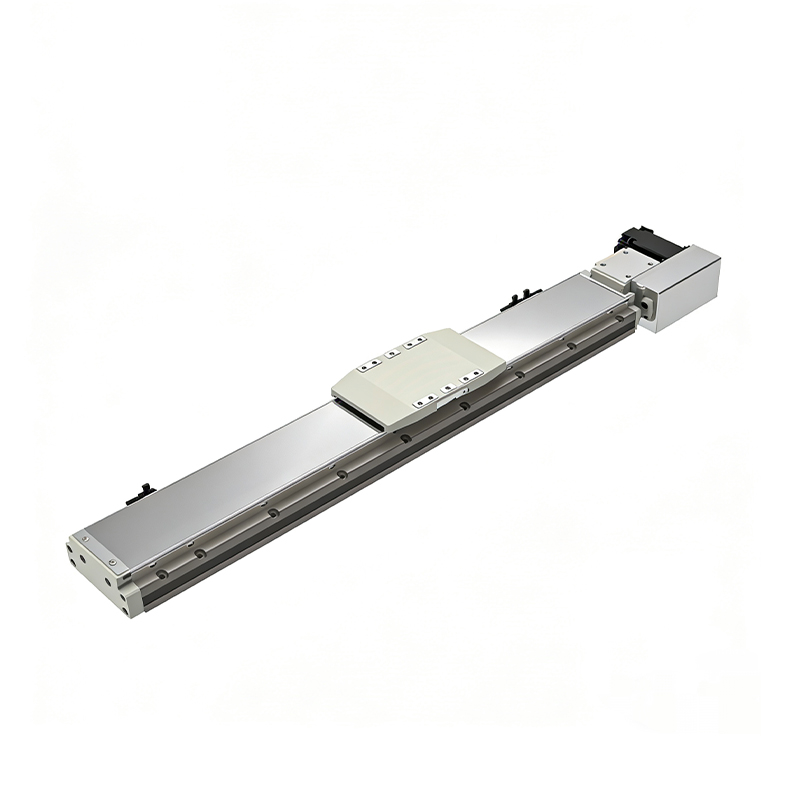 110KG Load Long Stroke Rail-Embedded Linear Module
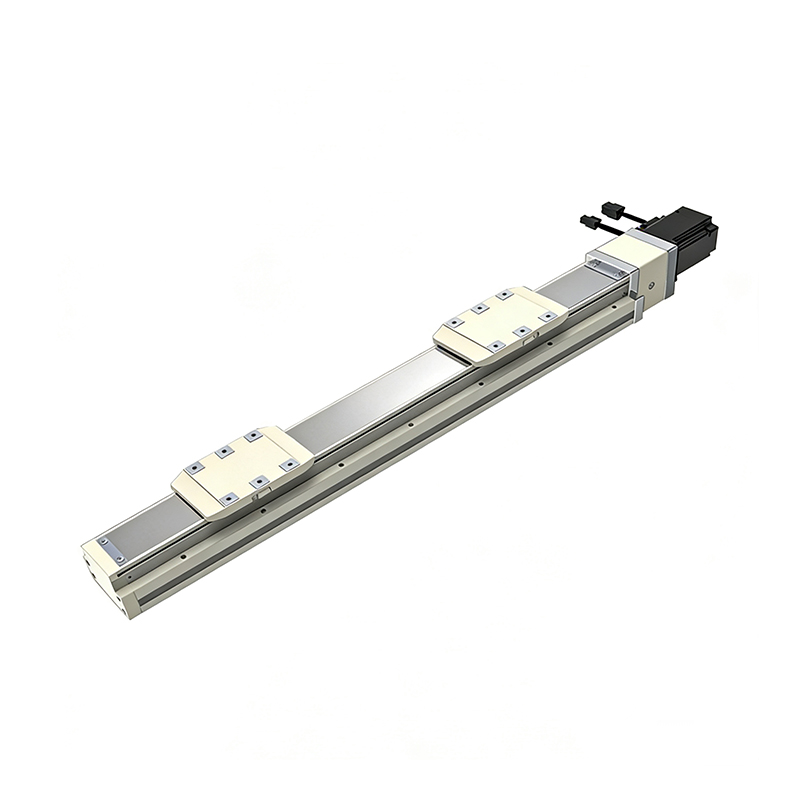 Dual-Slider High Precision Rail-Embedded Linear Module
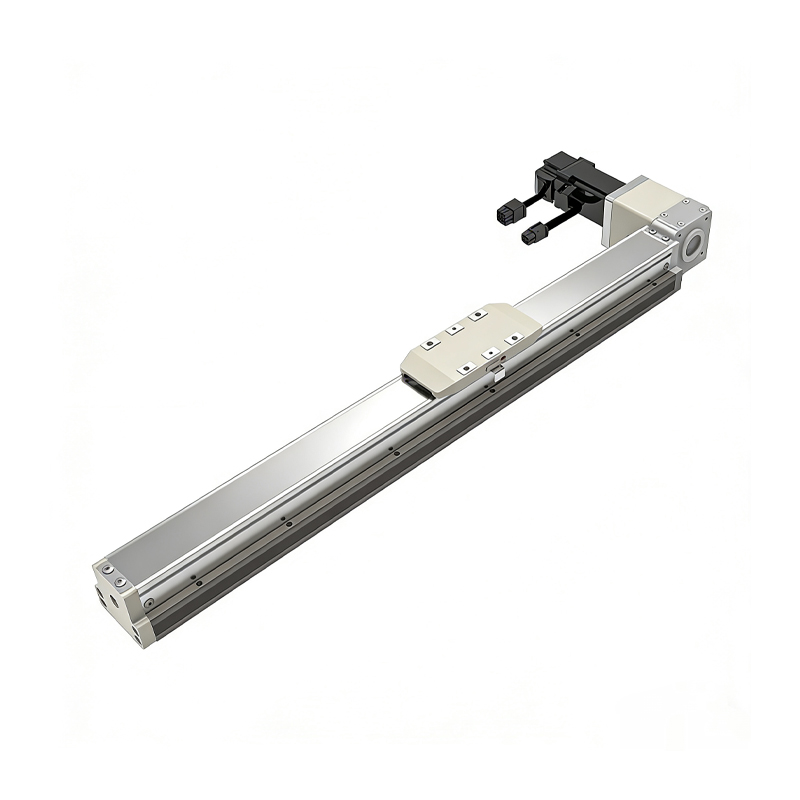 Belt Driven Dust-Proof Rail-Embedded Linear Module
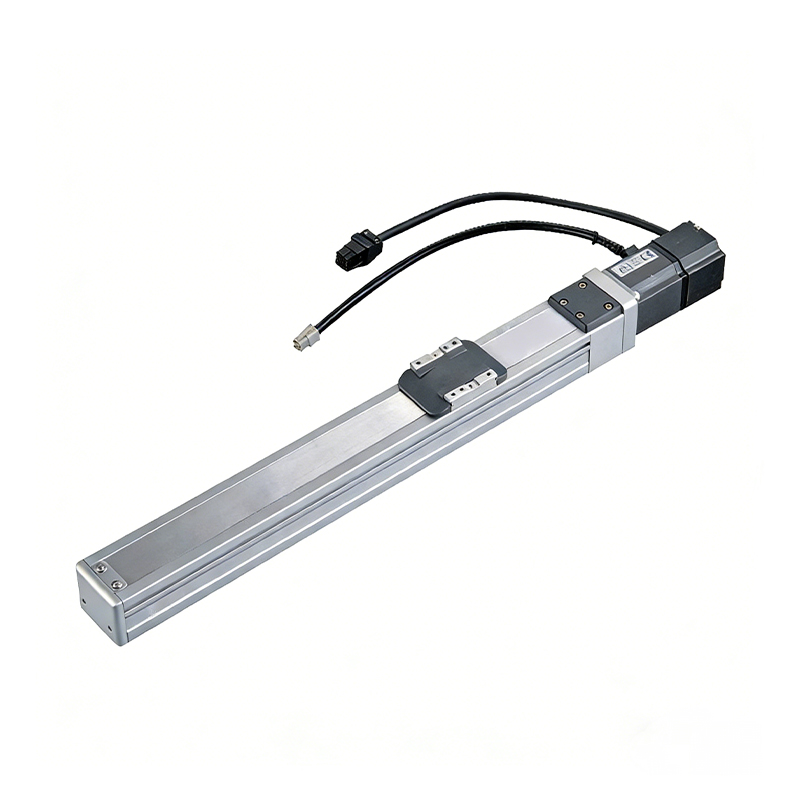 0.01mm High Precision Light Load Ball Screw Linear Module
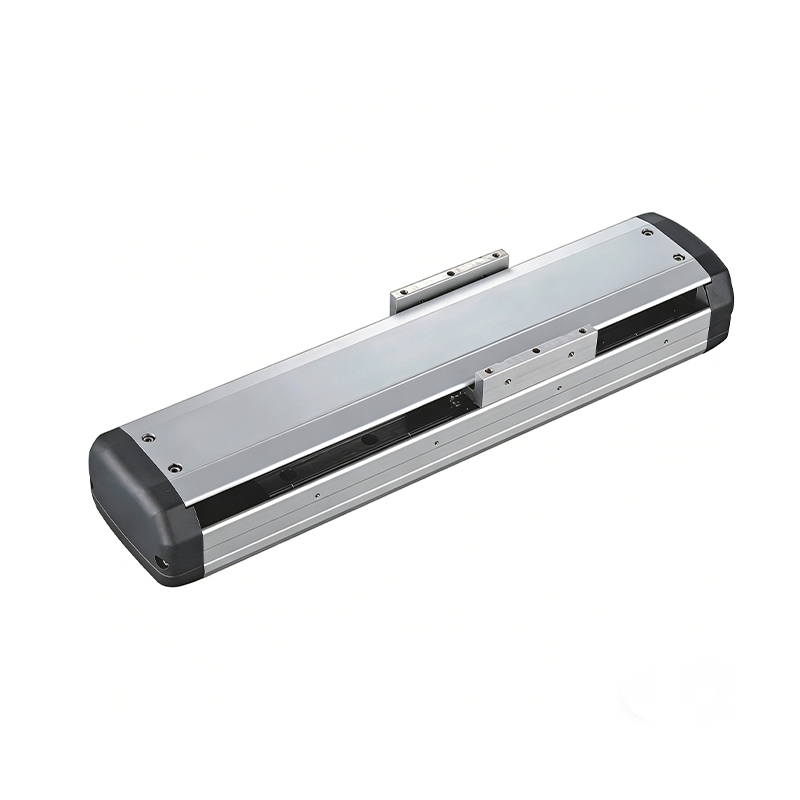 Ball Screw Linear Module with Built-in Sensor
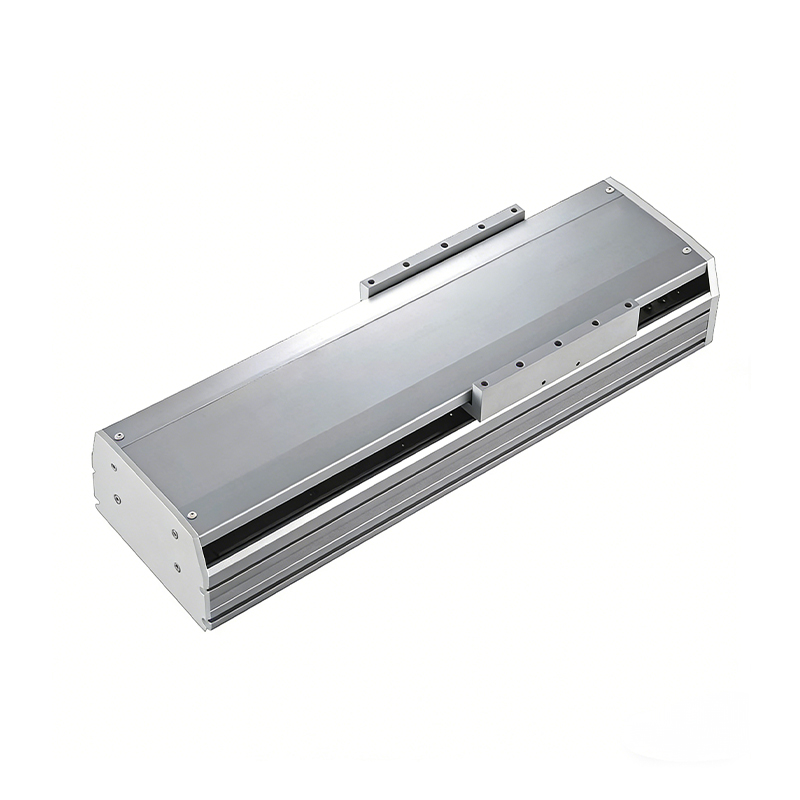 2000mm Long Stroke Ball Screw Linear Module
This 2000mm Long Stroke Ball Screw Linear Module is customized for large-range linear movement automation tasks, support...
READ MOREThis 2000mm Long Stroke Ball Screw Linear Module is customized for large-range linear movement automation tasks, support...
READ MOREThis 2000mm Long Stroke Ball Screw Linear Module is customized for large-range linear movement automation tasks, support...
READ MOREThis 2000mm Long Stroke Ball Screw Linear Module is customized for large-range linear movement automation tasks, support...
READ MORE
If you are interested in our products, please leave us a message. We look forward to providing you with
professional services!
Innovation and transcendence make factory intelligent manufacturing efficient and convenient!
+86 186 2508 0683
19962977901
sales@sz-tys.com
Building 5, Suzhou Mudu International Science and Technology Innovation Park, Jinfeng South Road, Suzhou City, Jiangsu Province, China
